
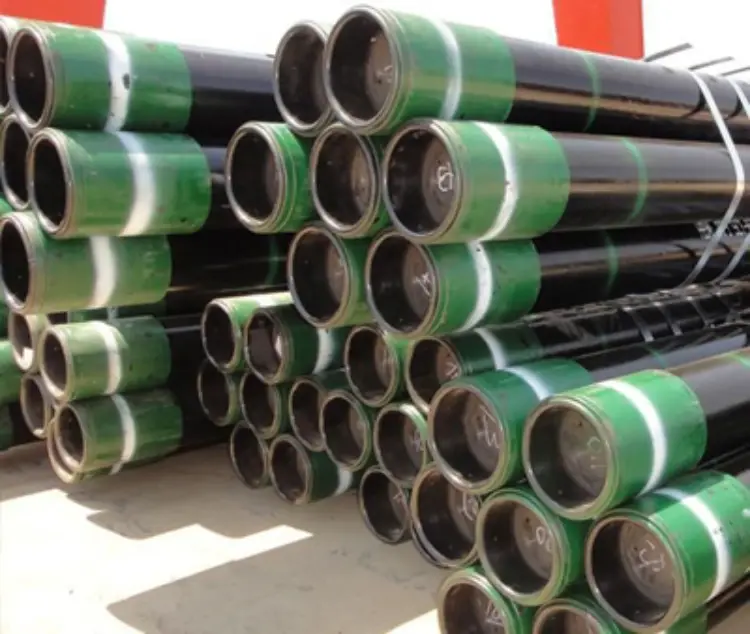
GB/T 1591 Q390C LSAW Pipe
GB/T 1591 Q390C LSAW Pipe: Comprehensive Material Data for High-Strength Structural Steel
Explore the standardized chemical, mechanical, and physical properties of Q390C low-alloy steel under GB/T 1591, widely used for LSAW pipes in oil & gas and structural applications.
Hot rolling, normalizing, TMCP, cold bending, welding (SAW, GMAW), cutting, machining
- Phone : +8618037372205
- Email : [email protected]
- WhatsApp: Contact via Whtsapp
- WeChat: +8618037372205
GB/T 1591 Q390C LSAW Pipe Introduction
Q390C is a Chinese high-strength low-alloy structural steel grade defined in GB/T 1591. It offers a minimum yield strength of 390 MPa and is characterized by good weldability, toughness at 0°C, and excellent formability. When manufactured into LSAW (Longitudinal Submerged Arc Welded) pipes, Q390C serves demanding applications such as
- oil and gas transmission pipelines
- offshore structural members
- high-pressure vessel shells
This grade ensures reliable performance in heavy-load and low-temperature environments, making it a cost-effective choice for large-diameter welded pipes.
GB/T 1591 Q390C LSAW Pipe Chemical Composition
Chemical composition according to GB/T 1591-2018 for Q390C grade. Values are maximum unless a range or minimum is indicated. Impurity elements are tightly controlled to ensure good weldability and low-temperature toughness. Key microalloying elements (Nb, V, Ti) refine grain size and enhance strength via precipitation hardening.
| Element | Standard Value | Notes |
|---|---|---|
| C | ≤0.18 | |
| Si | ≤0.50 | |
| Mn | ≤1.70 | |
| P | ≤0.030 | Quality grade C limit |
| S | ≤0.030 | |
| Nb | ≤0.07 | Microalloying element |
| V | ≤0.20 | Microalloying element |
| Ti | ≤0.20 | Microalloying element |
| Cr | ≤0.30 | Residual element |
| Ni | ≤0.30 | Residual element |
| Cu | ≤0.50 | Residual element |
| Mo | ≤0.10 | |
| B | ≤0.004 | |
| Altotal | ≥0.015 | Fine-grain killing element |
| Nb+V+Ti | ≤0.22 | Combined total |
| N | ≤0.015 | For aluminium-killed fine-grain steels |
GB/T 1591 Q390C LSAW Pipe Thermal & Electrical Physical Properties
The following thermal and electrical parameters are typical for carbon‑manganese‑microalloyed steels like Q390C. They are not specified in GB/T 1591 and serve as engineering reference data. Actual values may vary slightly with processing conditions and temperature.
| Property | Typical Value | Unit | Test Condition / Remarks |
|---|---|---|---|
| Density (ρ) | 7.85 | g/cm³ | Room temperature |
| Elastic Modulus (E) | 206 | GPa | Room temperature |
| Shear Modulus (G) | 79.3 | GPa | Calculated from E and ν |
| Poisson's Ratio (ν) | 0.3 | - | Room temperature |
| Thermal Expansion (α) | 11.6 × 10⁻⁶ | /K | 20°C to 100°C |
| Thermal Conductivity (λ) | 50 | W/(m·K) | Room temperature |
| Specific Heat Capacity (c) | 460 | J/(kg·K) | Room temperature |
| Electrical Resistivity (ρₑ) | 0.15 × 10⁻⁶ | Ω·m | Room temperature |
GB/T 1591 Q390C LSAW Pipe Mechanical Properties
Mechanical properties are based on GB/T 1591-2018 for Q390C steel. All values are minimum unless specified (e.g., tensile strength range). Impact test is conducted on longitudinal Charpy-V specimens. Bending test is 180° with specified mandrel diameter. Properties may vary for pipes; pipe properties shall meet the derived product standard.
| Property | Standard Requirement | Unit | Test Condition / Thickness |
|---|---|---|---|
| Yield Strength (ReH) | ≥390 | MPa | t ≤ 16 mm |
| Yield Strength (ReH) | ≥380 | MPa | 16 mm < t ≤ 40 mm |
| Yield Strength (ReH) | ≥360 | MPa | 40 mm < t ≤ 63 mm |
| Yield Strength (ReH) | ≥350 | MPa | 63 mm < t ≤ 80 mm |
| Yield Strength (ReH) | ≥330 | MPa | 80 mm < t ≤ 100 mm |
| Tensile Strength (Rm) | 490 – 650 | MPa | t ≤ 40 mm |
| Tensile Strength (Rm) | 470 – 620 | MPa | 40 mm < t ≤ 100 mm |
| Elongation (A) | ≥20 | % | t ≤ 40 mm, transverse, gauge 5.65√So |
| Elongation (A) | ≥19 | % | 40 mm < t ≤ 100 mm, transverse |
| Bending Test (180°) | d = 2a | - | t ≤ 16 mm, mandrel diameter = 2 times thickness |
| Bending Test (180°) | d = 3a | - | 16 mm < t ≤ 40 mm |
| Bending Test (180°) | d = 3a | - | 40 mm < t ≤ 63 mm |
| Bending Test (180°) | d = 4a | - | 63 mm < t ≤ 100 mm |
| Impact Energy (KV2) | ≥34 (average) | J | 0°C, longitudinal, 10×10×55 mm specimen |
GB/T 1591 Q390C LSAW Pipe Internationally Equivalent Standard Grades
| Country/Region | Standard | Grade | Remarks |
|---|---|---|---|
| European Union | EN 10025-3 | S420N | Yield ≥420 MPa, impact -20°C, closest but stronger; check thickness. |
| USA | ASTM A572/A572M | Grade 60 [415] | Yield ≥415 MPa, tensile ≥520 MPa, no impact requirement as standard; supplementary. |
| Japan | JIS G3106 | SM490C | Yield 325‑365 MPa (thickness dependent), impact 0°C; generally lower strength. |
| International | ISO 4950-2 | E390 DD | Yield ≥390 MPa, impact -20°C; similar strength but lower temperature toughness. |
GB/T 1591 Q390C LSAW Pipe Application Introduction
Q390C, particularly in the form of LSAW pipe, is engineered for heavy-duty applications requiring high strength, reliable toughness at 0°C, and good weldability. It serves industries where structural integrity under static and dynamic loads is critical, often in thick-wall sections above 20 mm.
Product Applications: Longitudinally Submerged Arc Welded (LSAW) pipes up to 1422 mm OD, Spiral submerged arc welded (SSAW/HSAW) pipes, Hot-rolled steel plates and sheets for structural fabrication, Built-up girders and box columns, Pipe piles for foundation and coastal protection
Processed into products: Oil and gas line pipe segments, Circumferential weld joints in pipelines, Tower flanges and shell courses for wind turbines, Bridge girders, truss members, connection plates, Offshore jacket braces and nodes, Pressure vessel shell courses requiring moderate toughness
Application industries: Oil & Gas (transmission pipelines, station piping), Civil Engineering (bridges, stadiums, high-rise buildings), Marine & Offshore (platform legs, jackets, subsea structures), Energy (wind turbine towers, penstocks), Pressure Vessels (large storage tanks, reactors if supplementary requirements met), Heavy Machinery (excavator booms, crane structures)
GB/T 1591 Q390C LSAW Pipe Similar Alternative Materials with Proximate Properties
| Country/Region | Standard | Grade | Remarks |
|---|---|---|---|
| China | GB/T 1591 | Q420C | Higher strength (≥420 MPa), similar toughness; may require welding adjustment. |
| China | GB/T 1591 | Q345D | Lower strength (≥345 MPa), better toughness at -20°C; commonly used in pipelines. |
| EU | EN 10025-2 | S355J2+N | Lower yield (≥355 MPa), impact -20°C; widely available structural steel. |
| USA | ASTM A572 | Grade 50 [345] | Lower strength, good weldability; often used in bridge and building structures. |
| Russia | GOST 19281 | 09G2S (S345) | Comparable to Q345, moderate strength, frequently used in welded structures. |
Notes:
LSAW pipe considerations: For pipe manufacture, the base Q390C steel must meet additional requirements per GB/T 9711 or API 5L (e.g., PSL 2 with notch toughness). The longitudinal weld shall be tested for tensile strength and impact. Delivery condition of pipe is normally as-welded, but stress-relief or normalizing may be specified for critical services. Heat input control during welding is essential to avoid grain coarsening in the heat-affected zone (HAZ).
- Share



