
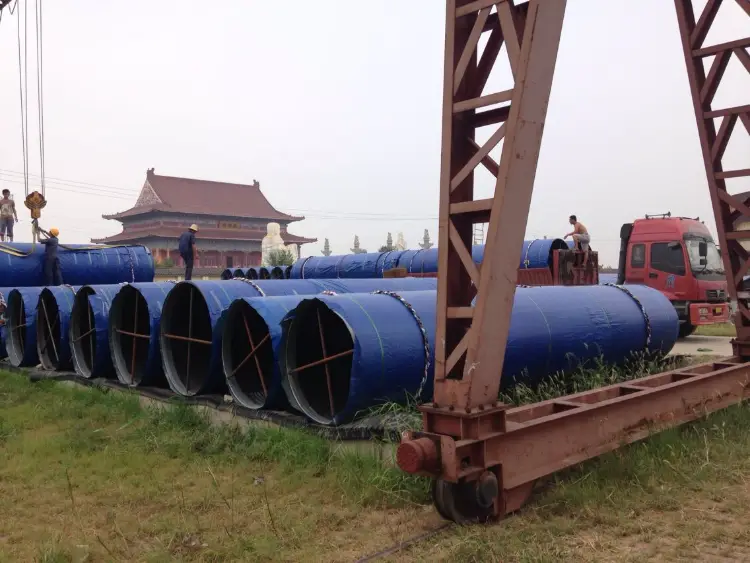
GB 5310 15NiMnMoNbCu Boiler Steel Pipe
GB 5310 15NiMnMoNbCu Boiler Steel Pipe - High-Strength Low-Alloy Heat Resistant Material
Explore the chemical composition, mechanical and thermo-physical properties of 15NiMnMoNbCu boiler steel pipe according to GB 5310. Find equivalent grades and application guidance for this high-strength Ni-Cu-Mo-Nb alloy used in critical power plant components.
Hot-rolled or cold-drawn seamless tube; Normalized and tempered
- Phone : +8618037372205
- Email : [email protected]
- WhatsApp: Contact via Whtsapp
- WeChat: +8618037372205
GB 5310 15NiMnMoNbCu Boiler Steel Pipe Introduction
15NiMnMoNbCu is a low-alloy heat-resistant steel grade specified in GB 5310 for seamless steel tubes used in high-pressure boilers. It is characterized by a carefully balanced addition of nickel, copper, molybdenum, and niobium, which provides excellent elevated-temperature strength, good weldability, and resistance to graphitization and oxidation up to approximately 500°C. The steel is typically supplied in the normalized and tempered condition, achieving a fine-grained bainitic/ferritic microstructure that ensures high yield strength (≥440 MPa) and good toughness.
- Key features include high creep rupture strength in the 400–500°C range, superior to conventional C-Mn or Cr-Mo steels.
- Frequently used for water wall panels, superheater, and reheater tubing in subcritical and supercritical utility boilers.
- International equivalent designations include 15NiCuMoNb5-6-4 (1.6368) per EN 10216-2 and similar grades in ASTM specifications.
GB 5310 15NiMnMoNbCu Boiler Steel Pipe Chemical Composition
The chemical composition of 15NiMnMoNbCu according to GB 5310 ensures a balanced combination of solid-solution strengthening, precipitation hardening (NbC), and improved oxidation resistance (Cu). Nickel is primarily added to enhance toughness, while molybdenum and niobium jointly elevate creep strength. Strict limits on phosphorus and sulfur maintain cleanliness and weldability.
| Chemical Element | Specified Value | Remarks |
|---|---|---|
| Carbon (C) | 0.12 – 0.20 | |
| Silicon (Si) | 0.25 – 0.50 | |
| Manganese (Mn) | 0.80 – 1.20 | |
| Phosphorus (P) | ≤ 0.025 | |
| Sulfur (S) | ≤ 0.015 | |
| Chromium (Cr) | ≤ 0.30 | Residual element |
| Nickel (Ni) | 1.00 – 1.30 | |
| Molybdenum (Mo) | 0.25 – 0.50 | |
| Copper (Cu) | 0.50 – 0.80 | |
| Niobium (Nb) | 0.015 – 0.07 | |
| Aluminum (Alt) | ≥ 0.020 | Total aluminum for deoxidation |
| Nitrogen (N) | ≤ 0.020 | Residual element |
GB 5310 15NiMnMoNbCu Boiler Steel Pipe Thermal and Electrical Physical Properties
The physical property data provided below are typical values for 15NiMnMoNbCu (similar to 1.6368/15NiCuMoNb5) in the normalized and tempered condition. These properties are not part of the GB 5310 mandatory requirements but are essential for design and heat transfer calculations.
- Density is approximately 7.85 g/cm³.
- Thermal conductivity and thermal expansion vary with temperature; the table shows key data points.
- Young's modulus decreases significantly above 400°C, which must be considered in stress analysis.
| Property | Typical Value | Unit | Test Condition / Temperature |
|---|---|---|---|
| Density (ρ) | 7.85 | g/cm³ | 20°C |
| Modulus of Elasticity (E) | 210 | GPa | 20°C |
| Modulus of Elasticity (E) | 205 | GPa | 100°C |
| Modulus of Elasticity (E) | 199 | GPa | 200°C |
| Modulus of Elasticity (E) | 193 | GPa | 300°C |
| Modulus of Elasticity (E) | 185 | GPa | 400°C |
| Modulus of Elasticity (E) | 176 | GPa | 500°C |
| Shear Modulus (G) | ~80 | GPa | 20°C, typical |
| Poisson's Ratio (ν) | ~0.3 | - | 20°C |
| Thermal Expansion Coefficient (α) | 11.1 | 10⁻⁶ /K | 20 – 100°C |
| Thermal Expansion Coefficient (α) | 11.9 | 10⁻⁶ /K | 20 – 200°C |
| Thermal Expansion Coefficient (α) | 12.6 | 10⁻⁶ /K | 20 – 300°C |
| Thermal Expansion Coefficient (α) | 13.2 | 10⁻⁶ /K | 20 – 400°C |
| Thermal Expansion Coefficient (α) | 13.7 | 10⁻⁶ /K | 20 – 500°C |
| Thermal Conductivity (λ) | 41 | W/(m·K) | 20°C |
| Thermal Conductivity (λ) | 42 | W/(m·K) | 100°C |
| Thermal Conductivity (λ) | 41 | W/(m·K) | 200°C |
| Thermal Conductivity (λ) | 40 | W/(m·K) | 300°C |
| Thermal Conductivity (λ) | 38.5 | W/(m·K) | 400°C |
| Thermal Conductivity (λ) | 37 | W/(m·K) | 500°C |
| Specific Heat Capacity (c) | 460 | J/(kg·K) | 20°C |
| Specific Heat Capacity (c) | 480 | J/(kg·K) | 100°C |
| Specific Heat Capacity (c) | 500 | J/(kg·K) | 200°C |
| Specific Heat Capacity (c) | 520 | J/(kg·K) | 300°C |
| Specific Heat Capacity (c) | 540 | J/(kg·K) | 400°C |
| Specific Heat Capacity (c) | 570 | J/(kg·K) | 500°C |
| Electrical Resistivity (ρ_e) | 0.21 | μΩ·m | 20°C |
GB 5310 15NiMnMoNbCu Boiler Steel Pipe Mechanical Properties
Mechanical properties for 15NiMnMoNbCu seamless tubes are tested at room temperature after normalizing and tempering. The specified minimum values depend on wall thickness.
- Yield strength (ReH) reduces slightly with increasing thickness.
- High toughness is required: longitudinal impact energy (KV₂) ≥ 40 J at 0°C.
- Flattening or drift expanding tests are applied for tube formability; bending test (mandrel diameter) is not typically required for boiler tubes.
| Property | Specified Value | Unit | Test Condition |
|---|---|---|---|
| Yield Strength (ReH) | ≥ 440 | MPa | Wall thickness t ≤ 16 mm, room temperature |
| Yield Strength (ReH) | ≥ 430 | MPa | Wall thickness 16 < t ≤ 40 mm, room temperature |
| Tensile Strength (Rm) | 610 – 780 | MPa | Room temperature |
| Elongation after Fracture (A) | ≥ 18 (longitudinal) | % | Gauge length 5.65√S₀ |
| Elongation after Fracture (A) | ≥ 16 (transverse) | % | For transverse specimens |
| Impact Energy (KV₂) | ≥ 40 (longitudinal) | J | At 0°C |
| Impact Energy (KV₂) | ≥ 27 (transverse) | J | At 0°C |
| Hardness | ≤ 240 HBW | - | For reference, not always mandatory |
GB 5310 15NiMnMoNbCu Boiler Steel Pipe Exact Equivalent Material Standards and Replaceable Grades
| Country/Region | Standard | Grade | Remarks |
|---|---|---|---|
| Germany | DIN 17175 / VdTÜV 377 | 15NiCuMoNb5 (1.6368) | Identical chemical and mechanical design, also known as WB 36. |
| European Union | EN 10216-2 | 15NiCuMoNb5-6-4 (1.6368) | Fully equivalent to GB 5310 15NiMnMoNbCu for high-temperature seamless tubes. |
| USA | ASTM A213/A213M | Grade T36 (UNS K20901) | Considered the closest ASTM grade; check detailed composition and mechanical property limits, essentially interchangeable. |
| USA | ASTM A335/A335M | Grade P36 | Pipe version of T36, seamless ferritic alloy steel for high-temperature service. |
| International | ISO 9329-2 | TS 26 | Some ISO references map to similar Mo-Ni-Cu heat resistant steels. |
GB 5310 15NiMnMoNbCu Boiler Steel Pipe Application Introduction
15NiMnMoNbCu boiler steel pipe is specifically engineered for high-pressure, high-temperature sections of fossil-fuel-fired power plants. It is most effective in environments where operating metal temperatures range from 350°C to 500°C. Preheating (typically 150–200°C) and post-weld heat treatment (PWHT at 580–620°C) are mandatory to avoid cold cracking and to restore toughness. The steel is not recommended for prolonged exposure above 550°C due to microstructural instability and reduced creep strength.
Product Applications: High-pressure boiler water wall panels, Superheater and reheater tube bundles, Main steam pipelines and hot reheat pipes, Boiler headers and interconnecting piping, Heat exchanger tubes in high-temperature processes
Processed into products: Seamless tubes: water wall tubes, screen tubes, Superheater U-bend tubes, Reheater pendants, Steam transfer pipes between headers, Thick-walled forged fittings (equal tees, reducers) from the same grade
Application industries: Power generation (coal-fired, oil-fired, gas-fired supercritical and ultra-supercritical boilers), Industrial boiler manufacturing, Heat recovery steam generators (HRSG), Chemical and petrochemical plants requiring high-temperature piping, Nuclear power conventional island (secondary circuit piping)
GB 5310 15NiMnMoNbCu Boiler Steel Pipe Similar / Alternative Material Recommendations
| Country/Region | Standard | Grade | Remarks |
|---|---|---|---|
| China | GB 5310 | 15CrMoG | Classical Cr-Mo heat resistant steel, lower strength and maximum service temperature (≤550°C) but widely used; not a direct substitute for 15NiMnMoNbCu without re-evaluation. |
| China | GB 5310 | 12Cr1MoVG | Higher alloy content than 15CrMoG, but still lacks Ni and Cu; different creep and corrosion profile. |
| Germany | DIN 17175 | 13CrMo4-5 (1.7335) | Standard 1¼Cr-½Mo steel for boilers; lower hot strength, needs thickness increase or derating to replace 15NiMnMoNbCu. |
| USA | ASTM A213 | T22 (2¼Cr-1Mo) | Higher Cr content provides better oxidation resistance, but different mechanical properties; not a like-for-like substitution. |
| EU | EN 10216-2 | 10CrMo9-10 (1.7380) | 2¼Cr-1Mo similar to T22; alternative when higher oxidation resistance is needed but strength matching must be calculated. |
Notes:
- Welding: Use matching filler metal (e.g., wire/flux with Ni, Cu, Mo, Nb); preheat to 150–200°C; interpass temperature ≤300°C; post-weld heat treatment at 580–620°C per wall thickness.
- Cold bending: Possible after full anneal or stress relief; hot bending at 900–1050°C followed by normalizing and tempering is preferred.
- Inspection: Eddy current or ultrasonic testing per GB/T 5777 for seamless pipes; hardness and impact tests required per lot.
- Resistance to strain aging: Aluminum addition (Alt ≥0.020%) suppresses strain aging embrittlement, ensuring long-term toughness.
- Share



