
GB 5310 10Cr9MoW2VNbBN Boiler Steel Pipe Material
GB 5310 10Cr9MoW2VNbBN Boiler Steel Pipe - High-Performance Martensitic Heat-Resistant Steel
Detailed material data for 10Cr9MoW2VNbBN seamless steel pipe under GB 5310 for high-temperature boiler applications, including chemical composition, mechanical properties, and physical performance.
Hot forming, cold working, bending, welding (with PWHT), normalizing + tempering
- Phone : +8618037372205
- Email : [email protected]
- WhatsApp: Contact via Whtsapp
- WeChat: +8618037372205
GB 5310 10Cr9MoW2VNbBN Boiler Steel Pipe Introduction
10Cr9MoW2VNbBN is a martensitic creep-resistant 9% chromium steel specified in GB/T 5310-2017 for seamless steel tubes used in high-pressure boilers. It is micro-alloyed with tungsten, molybdenum, vanadium, niobium, nitrogen, and controlled boron, which together provide excellent oxidation resistance and high creep rupture strength up to 600–650 °C. The steel is typically supplied in normalized and tempered condition, offering a balanced microstructure of tempered martensite. Key characteristics include:
- High creep strength and long-term aging stability
- Good weldability with appropriate preheat and post-weld heat treatment
- Resistance to steam oxidation and hot corrosion
- Used in critical components of ultra-supercritical (USC) boilers
GB 5310 10Cr9MoW2VNbBN Boiler Steel Pipe Chemical Composition
The chemical composition meets the requirements of GB/T 5310-2017 for 10Cr9MoW2VNbBN. All elements listed are mandatory; Ni and Cu are residual limits. Boron and nitrogen are controlled to optimize creep strength via fine MX carbonitrides.
| Element | Specified Value (%) | Remarks |
|---|---|---|
| Carbon (C) | 0.07 – 0.13 | Key for martensite formation and carbide precipitation |
| Silicon (Si) | ≤ 0.50 | Deoxidizer; high levels may affect toughness |
| Manganese (Mn) | 0.30 – 0.60 | Improves hardenability |
| Phosphorus (P) | ≤ 0.020 | Impurity; controlled for creep ductility |
| Sulfur (S) | ≤ 0.010 | Impurity; very low content required |
| Chromium (Cr) | 8.50 – 9.50 | Provides oxidation resistance and solid-solution strengthening |
| Molybdenum (Mo) | 0.30 – 0.60 | Solid-solution strengthening and creep resistance |
| Tungsten (W) | 1.50 – 2.00 | Primary solid-solution strengthener at high temperature |
| Vanadium (V) | 0.15 – 0.25 | Forms fine V(C,N) precipitates for creep strength |
| Niobium (Nb) | 0.04 – 0.09 | Forms stable Nb(C,N) carbonitrides |
| Nitrogen (N) | 0.03 – 0.07 | Essential for nitride and carbonitride formation |
| Boron (B) | 0.001 – 0.006 | Segregates to boundaries, stabilizes M23C6 carbides |
| Nickel (Ni) | ≤ 0.40 | Residual element limit |
| Copper (Cu) | ≤ 0.30 | Residual element limit |
| Aluminium (Al) | ≤ 0.040* | *Only if intentionally added; not mandatory in standard |
GB 5310 10Cr9MoW2VNbBN Boiler Steel Pipe Physical Properties
Physical data correspond to typical values for the P92/T92 grade and are not mandatory in GB/T 5310. They are provided as design reference for heat transfer and stress analysis. Density is measured at 20 °C; thermal expansion, thermal conductivity, and specific heat are given for a range of service temperatures.
| Property | Value | Unit | Temperature / Condition |
|---|---|---|---|
| Density (ρ) | 7.85 | g/cm³ | At 20 °C |
| Elastic Modulus (E) | 216 | GPa | At 20 °C |
| Elastic Modulus (E) | 198 | GPa | At 200 °C |
| Elastic Modulus (E) | 182 | GPa | At 400 °C |
| Elastic Modulus (E) | 166 | GPa | At 600 °C |
| Shear Modulus (G) | 84 | GPa | At 20 °C (calculated, ν=0.3) |
| Poisson's Ratio (ν) | 0.3 | – | At 20 °C |
| Thermal Expansion (α) | 10.5 ×10⁻⁶ | 1/K | 20–100 °C |
| Thermal Expansion (α) | 11.0 ×10⁻⁶ | 1/K | 20–200 °C |
| Thermal Expansion (α) | 11.5 ×10⁻⁶ | 1/K | 20–300 °C |
| Thermal Expansion (α) | 11.8 ×10⁻⁶ | 1/K | 20–400 °C |
| Thermal Expansion (α) | 12.0 ×10⁻⁶ | 1/K | 20–500 °C |
| Thermal Expansion (α) | 12.3 ×10⁻⁶ | 1/K | 20–600 °C |
| Thermal Conductivity (λ) | 26 | W/(m·K) | At 20 °C |
| Thermal Conductivity (λ) | 28 | W/(m·K) | At 100 °C |
| Thermal Conductivity (λ) | 29 | W/(m·K) | At 200 °C |
| Thermal Conductivity (λ) | 30 | W/(m·K) | At 300 °C |
| Thermal Conductivity (λ) | 31 | W/(m·K) | At 400 °C |
| Thermal Conductivity (λ) | 32 | W/(m·K) | At 500 °C |
| Thermal Conductivity (λ) | 33 | W/(m·K) | At 600 °C |
| Specific Heat Capacity | 440 | J/(kg·K) | At 20 °C |
| Specific Heat Capacity | 480 | J/(kg·K) | At 200 °C |
| Specific Heat Capacity | 520 | J/(kg·K) | At 400 °C |
| Specific Heat Capacity | 560 | J/(kg·K) | At 600 °C |
| Electrical Resistivity (ρe) | 0.60 | μΩ·m | At 20 °C |
GB 5310 10Cr9MoW2VNbBN Boiler Steel Pipe Mechanical Properties at Room Temperature
Properties are obtained after normalizing (1040–1090 °C) + tempering (760–780 °C). Test specimens are taken from the pipe wall in accordance with GB/T 5310-2017. Impact test is required only for wall thickness ≥ 10 mm, with longitudinal Charpy V-notch specimens.
| Property | Required Value | Unit | Test Condition / Remarks |
|---|---|---|---|
| Yield Strength (ReH or Rp0.2) | ≥ 440 | MPa | At room temperature |
| Tensile Strength (Rm) | ≥ 620 | MPa | At room temperature |
| Elongation (A) | ≥ 20 (longitudinal) | % | Gauge length 5.65√S0; for transverse ≥ 18% |
| Impact Energy (KV2) | ≥ 40 (longitudinal) | J | Charpy V-notch at 20 °C; wall thickness ≥ 10 mm |
| Brinell Hardness | ≤ 250 | HBW | Alternative to Rockwell |
| Rockwell Hardness | ≤ 25 | HRC | For reference; not a mandatory requirement |
GB 5310 10Cr9MoW2VNbBN Boiler Steel Pipe Direct International Equivalent Standards and Substitute Grades
| Country/Region | Standard | Grade/Designation | Remarks |
|---|---|---|---|
| USA | ASTM A213 / A213M | T92 | Seamless ferritic/austenitic tube for boiler and superheater |
| USA | ASTM A335 / A335M | P92 | Seamless ferritic alloy-steel pipe for high-temperature service |
| USA | ASME SA-213 / SA-335 | T92 / P92 | ASME Boiler & Pressure Vessel Code adoption |
| EU | EN 10216-2 | X10CrWMoVNb9-2 (1.4901) | Seamless steel tubes for pressure purposes – high temperature |
| Japan | JIS G3458 | STPA 29 | Alloy steel pipes for high temperature service |
| Japan | JIS G3462 | STBA 29 | Alloy steel tubes for boiler and heat exchanger |
| ISO | ISO 9329-2 | X10CrWMoVNb9-2 | Seamless steel tubes for pressure purposes |
GB 5310 10Cr9MoW2VNbBN Boiler Steel Pipe Application Introduction
10Cr9MoW2VNbBN (P92) is specifically designed for the highest-temperature sections of advanced fossil-fired power plants. Its superior creep strength allows wall-thickness reduction, which improves thermal flexibility and reduces weight. The steel is formable by hot bending and weldable using matched filler metals (e.g., Thermanit MTS 616 or equivalent). A strict post-weld heat treatment (PWHT at 740–770 °C) is required to restore toughness and reduce residual stress.
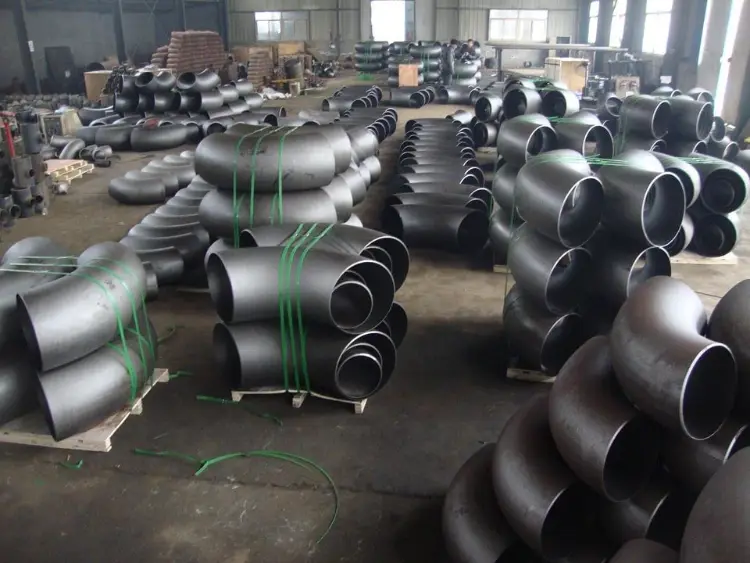
Product Applications: Final superheater and reheater tube assemblies, Main steam and hot reheat steam piping, High-temperature outlet headers, Tee-pieces, reducers, and elbows for piping systems, Collecting headers for water walls
Processed into products: Superheater pendant tubes, Reheater serpentine coils, Butt-welded pipe spools, Forged fittings (tees, wyes, caps), Steam-line supports and hangers, Desuperheater shells and injection nozzles
Application industries: Ultra-supercritical (USC) coal-fired power generation, Combined-cycle gas turbine (CCGT) heat recovery steam generators, Petrochemical – high-temperature process piping, Nuclear – secondary circuit piping (non-irradiated zones), Biomass and waste-to-energy boilers (high steam parameters)
GB 5310 10Cr9MoW2VNbBN Boiler Steel Pipe Similar or Alternative Materials with Comparable Performance
| Country/Region | Standard | Grade | Remarks |
|---|---|---|---|
| China | GB/T 5310 | 10Cr9Mo1VNb (T91/P91) | Lower W content; used up to ~580°C, lower creep strength but more economical |
| EU | EN 10216-2 | X10CrMoVNb9-1 (1.4903) | Original 9Cr-1Mo-V-Nb grade, excellent track record but lower upper temperature limit |
| USA | ASTM A213/A335 | T91/P91 | Same as above; widely used for subcritical and supercritical boilers |
| China | GB/T 5310 | 10Cr11MoW2VNbCu1BN (T122/P122) | 12% Cr steel with higher oxidation resistance, suitable up to 620°C, more complex welding |
| EU | EN 10302 | X12CrMoWVNbN10-1-1 | Similar 12Cr-W-Mo-V-Nb steel, used in heavy-wall components |
Notes:
Important considerations:
- Strictly follow recommended preheating (200–250 °C) and PWHT temperatures to avoid cold cracking.
- Long-term service at 600–620 °C may lead to Type IV cracking in fine-grain heat-affected zones; design must account for weld strength reduction factors.
- Surface decarburization shall not exceed the limits specified in GB/T 5310.
- Ultrasonic or eddy current testing is mandatory per standard.
- Hardness measurement after PWHT must comply with ≤250 HBW to confirm adequate softening.
- Share



