
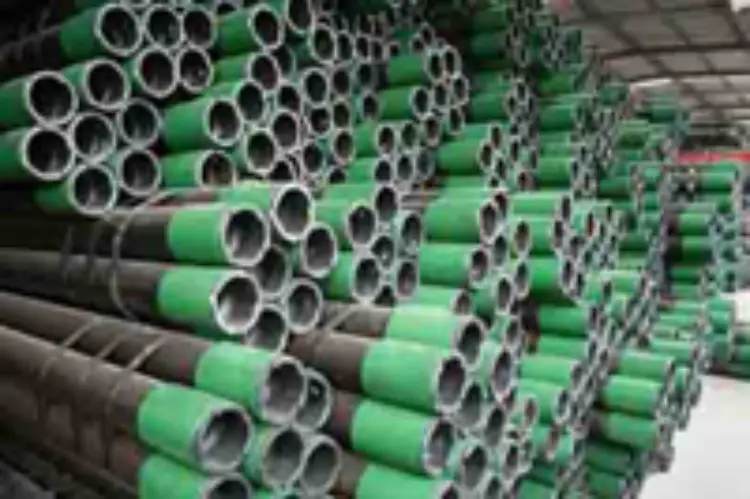
FH40 ERW Pipe Material
FH40 ERW Pipe: High-Strength Shipbuilding Steel for Low-Temperature Applications
Comprehensive material data for FH40 ERW pipe, including chemical composition, mechanical properties, physical properties, and international equivalents as per IACS UR W11 and major classification society standards.
Electric Resistance Welding (ERW), cutting, bending, welding, machining
- Phone : +8618037372205
- Email : [email protected]
- WhatsApp: Contact via Whtsapp
- WeChat: +8618037372205
FH40 ERW Pipe Introduction
FH40 ERW pipe is manufactured from FH40 grade high-strength shipbuilding structural steel plates, complying with the unified requirements of the International Association of Classification Societies (IACS UR W11). The steel exhibits a minimum yield strength of 390 MPa and is specifically designed for excellent notch toughness at sub-zero temperatures down to -60°C. Typical applications include critical structural components in ships, offshore platforms, and marine piping systems where high strength and resistance to brittle fracture in cold environments are essential. The ERW (Electric Resistance Welded) pipe form offers good dimensional accuracy, surface finish, and cost-effectiveness for medium-diameter tubular products.
FH40 ERW Pipe Chemical Composition
The chemical composition of FH40 steel is controlled to ensure weldability, strength, and low-temperature toughness. Limits are as per IACS UR W11 and ASTM A131 for Grade FH40. Microalloying elements such as Nb, V, Ti, or Al are commonly added for grain refinement.
- Carbon equivalent (CE) is controlled to ensure good weldability without preheat for moderate thicknesses.
- Total aluminum content is minimum when used for grain refinement.
| Element | Standard Value (max unless range given) | Remarks |
|---|---|---|
| C | 0.18 | Ladle analysis |
| Mn | 0.90 - 1.60 | Ladle analysis |
| Si | 0.10 - 0.50 | Ladle analysis |
| P | 0.035 | max |
| S | 0.035 | max |
| Al (total) | ≥ 0.015 | When used for grain refinement |
| Nb | 0.02 - 0.05 | Typical addition range (optional) |
| V | 0.05 - 0.10 | Typical addition range (optional) |
| Ti | 0.007 - 0.05 | Typical addition range (optional) |
| Cu | 0.35 | max |
| Cr | 0.20 | max |
| Ni | 0.40 | max |
| Mo | 0.08 | max |
| N | 0.009 | max (if applicable) |
FH40 ERW Pipe Thermal and Electrical Physical Properties
Physical properties for FH40 steel are typical for low-alloy structural steels and are provided as approximate reference data at room temperature unless otherwise indicated. These values are not mandatory in material standards but are useful for design calculations and thermal analysis. Density is used for weight estimation. Elastic Modulus (E) and Shear Modulus (G) are essential for stiffness calculations. Thermal expansion coefficient (α) is relevant for welding and thermal cycling.
| Property | Typical Value | Unit | Condition / Remarks |
|---|---|---|---|
| Density (ρ) | 7.85 | g/cm³ | 20°C |
| Elastic Modulus (E) | 205 - 210 | GPa | Room temperature |
| Shear Modulus (G) | 80 - 81 | GPa | Calculated from E and ν |
| Poisson's Ratio (ν) | 0.29 - 0.30 | – | Room temperature |
| Thermal Expansion Coefficient (α) | 11.5 - 12.5 | 10−⁸/K | 20 - 100°C range |
| Thermal Expansion Coefficient (α) | 12.5 - 13.5 | 10−⁸/K | 20 - 200°C range |
| Thermal Expansion Coefficient (α) | 13.5 - 14.5 | 10−⁸/K | 20 - 400°C range |
| Thermal Conductivity (λ) | 48 - 54 | W/(m·K) | 20°C |
| Specific Heat Capacity (c) | 430 - 480 | J/(kg·K) | 20 - 100°C |
| Electrical Resistivity (ρe) | 0.22 - 0.28 | μΩ·m | 20°C |
FH40 ERW Pipe Mechanical Properties
Tensile and impact properties for FH40 steel (plate thickness ≤ 50 mm) per IACS UR W11 and ASTM A131. ReH = Upper yield strength (or 0.2% proof strength). Rm = Tensile strength. A = Percentage elongation on gauge length 5.65√So. Longitudinal Charpy V-notch impact energy (KV) is tested at -60°C. Values for thicker sections or transverse orientation may differ and require agreement.
| Property | Standard Requirement | Unit | Test Condition |
|---|---|---|---|
| ReH (Yield Strength) | ≥ 390 | MPa | Room temperature, transverse or longitudinal |
| Rm (Tensile Strength) | 510 - 650 | MPa | Room temperature |
| A (Elongation after fracture) | ≥ 20 | % | Gauge length 5.65√So, ≤50 mm thickness |
| KV (Charpy V-notch impact energy) | ≥ 34 (longitudinal) | J | -60°C, standard 10x10 mm specimen |
| KV (Charpy V-notch impact energy) | ≥ 24 (transverse) | J | -60°C, standard 10x10 mm specimen |
| Bend test (mandrel diameter) | No cracks | – | 180° bend, d=3a (thickness ≤25 mm); d=4a (thickness >25 mm) |
FH40 ERW Pipe Identical Equivalent Material Standards and Replaceable Grades
| Country/Region | Standard | Grade | Remarks |
|---|---|---|---|
| International | IACS UR W11 | FH40 | Unified requirement; basis for all classification societies |
| USA | ASTM A131/A131M | FH40 | Structural steel for ships |
| Norway/Germany | DNV GL Rules | FH40 / NV F40 | Identical toughness and strength |
| UK | Lloyd's Register Rules | FH40 | LR Grade FH40 |
| France | Bureau Veritas Rules | FH40 | BV Grade FH40 |
| USA/International | ABS Rules | FH40 | American Bureau of Shipping |
| China | GB 712-2011 | FH40 | China Classification Society (CCS) equivalent |
| Japan | ClassNK Rules | FH40 | Nippon Kaiji Kyokai |
| Italy | RINA Rules | FH40 | Registro Italiano Navale |
| Russia | RMRS Rules | F40W | Similar grade with -60°C impact (W designates low temperature) |
FH40 ERW Pipe Application Introduction
FH40 ERW pipe combines the recognized properties of FH40 shipbuilding steel with the manufacturing efficiency of electric resistance welding. It is suitable for demanding marine and offshore applications where high strength, excellent weldability, and guaranteed low-temperature notch toughness are required. Typical usage environments:
- Sub-zero atmospheric or water temperatures (e.g., Arctic service)
- Structural tubular members in jack-up rigs and semi-submersibles
- Process piping for liquefied natural gas (LNG) facilities
Product Applications: Ship hulls and decks, Jack-up rig legs and spudcans, Fixed platform jackets and braces, Marine risers and conductors, Crane pedestals and heavy-lift structures, LNG piping and storage tank components
Processed into products: ERW pipes for structural columns and bracings, Tubular joints (K-joints, Y-joints) in offshore structures, Cold-formed hollow sections for ship frames, Pile sleeves and connectors, Process piping in cryogenic service (with appropriate welding procedure)
Application industries: Shipbuilding, Offshore Oil & Gas, Marine Engineering, Port and Harbor Infrastructure, Renewable Energy (Offshore Wind)
FH40 ERW Pipe Similar or Alternative Material Grades
| Country/Region | Standard | Grade | Remarks |
|---|---|---|---|
| International | IACS UR W11 | EH40 | E grade: minimum impact at -40°C; lower toughness temperature, strength identical |
| International | IACS UR W11 | FH36 | Lower strength (min 355 MPa yield), same -60°C toughness |
| Europe | EN 10025-6 | S420G2+M | Thermomechanically rolled; comparable strength, minimum impact at -20°C (may need supplementary testing for -60°C) |
| USA | ASTM A131/A131M | DH40 | Normalized; minimum impact at -20°C |
| Russia | GOST 5521 | A40S | Shipbuilding steel with 390 MPa yield; impact temperature may need verification |
| Japan | JIS G 3106 | SM490YB | Welded structural steel; similar strength, not fully equivalent for marine classification |
Notes:
FH40 ERW pipe should be manufactured in accordance with a recognized standard such as API 5L (with FH40 base material specification) or a project-specific pipe specification. Welding consumables and procedures must be qualified for -60°C impact toughness. Supplementary testing, such as ultrasonic examination of the weld seam and through-thickness tensile testing (Z-properties), may be required by classification societies. For thicknesses above 50 mm, mechanical properties may deviate from the listed values and must be agreed upon separately. All dimensions and tolerances for ERW pipe should follow relevant standards such as API 5L or ASTM A53 unless otherwise specified.
- Share



