
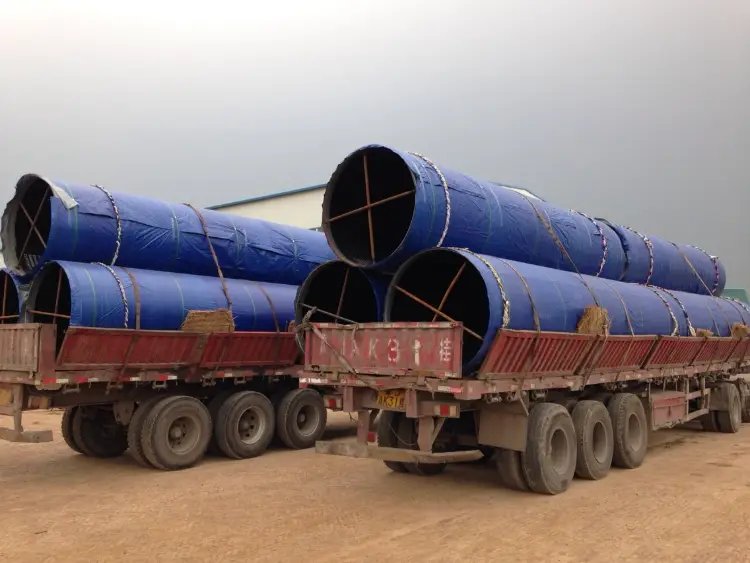
EN10219 S275J2H LSAW Pipe
EN10219 S275J2H LSAW Pipe: Comprehensive Material Data for Cold-Formed Structural Hollow Sections
In-depth material analysis of S275J2H cold-formed welded structural hollow section under EN10219, covering chemical composition, mechanical properties, physical data, equivalent grades and application guidance.
Cold forming followed by longitudinal submerged arc welding (LSAW), possible stress relief annealing
- Phone : +8618037372205
- Email : [email protected]
- WhatsApp: Contact via Whtsapp
- WeChat: +8618037372205
EN10219 S275J2H LSAW Pipe Introduction
S275J2H is a non-alloy structural steel grade for cold-formed welded hollow sections in accordance with European standard EN 10219-1. The designation S275 indicates a minimum yield strength of 275 MPa for thicknesses ≤16 mm, J2 guarantees a minimum impact energy of 27 J at -20°C, and H stands for hollow section. The material is typically supplied as circular, square or rectangular LSAW (Longitudinal Submerged Arc Welded) pipes. It offers a well-balanced combination of strength, ductility and low-temperature toughness, making it suitable for a wide range of structural and mechanical applications. The cold-forming process, combined with carefully controlled chemistry and heat treatment, ensures consistent mechanical properties and good weldability. Main characteristics include:
- Moderate yield and tensile strength for structural reliability
- Guaranteed impact properties at sub-zero temperatures
- Good formability and weldability for fabrication
- Compliance with strict European standards for hollow sections
EN10219 S275J2H LSAW Pipe Chemical composition
The chemical composition of S275J2H is controlled to ensure the required mechanical properties and weldability. The limits below are according to EN 10219-1 for non-alloy structural hollow sections. Elements like copper, nickel, chromium and molybdenum may be present as residuals but are not specified. The steel is aluminum-killed to achieve fine grain structure and improve toughness. The carbon equivalent value (CEV) is usually limited to max. 0.40 for good weldability.
| Element | Standard value (max unless otherwise stated) | Remarks |
|---|---|---|
| Carbon (C) | ≤ 0.20 | Affects strength and weldability; lower carbon improves toughness |
| Silicon (Si) | ≤ 0.55 | Deoxidizer; improves strength but excessive may reduce toughness |
| Manganese (Mn) | ≤ 1.50 | Enhances hardenability and strength; fine grain practice ensures uniform properties |
| Phosphorus (P) | ≤ 0.035 | Impurity; kept low for better toughness and resistance to embrittlement |
| Sulfur (S) | ≤ 0.035 | Impurity; low level reduces hot shortness and improves weldability |
| Aluminum (Al) | ≥ 0.020 (min) | Aluminum is added to bind nitrogen and achieve fine grain structure |
| Nitrogen (N) | Not specified, typically ≤ 0.014 | Controlled to avoid strain aging and ensure toughness at low temperature |
| Carbon equivalent (CEV) | ≤ 0.40 (typical) | Calculated from chemistry for weldability assessment; not a mandatory requirement in EN 10219-1 but often quoted |
EN10219 S275J2H LSAW Pipe Thermal and electrical physical properties
The following data are typical for low-carbon structural steels of this type and can be used for design calculations. Values may vary slightly depending on heat treatment and specific production route. Unless indicated otherwise, they apply at room temperature (20°C). These properties are not part of the mandatory certification requirements but are widely accepted for engineering.
| Property | Standard value | Unit | Test conditions |
|---|---|---|---|
| Density (ρ) | 7.85 | g/cm³ | At 20°C |
| Elastic modulus (E) | 210 | GPa | Ambient temperature |
| Shear modulus (G) | 80.8 | GPa | Calculated from E and Poisson's ratio |
| Poisson's ratio (ν) | 0.3 | - | In elastic range |
| Thermal expansion coefficient (α) | 12.0×10⁻⁶ | K⁻¹ | Between 20°C and 100°C |
| Thermal conductivity (λ) | ≈ 52 | W/(m·K) | At 20°C |
| Specific heat capacity (cₚ) | 470 | J/(kg·K) | At 20°C |
| Electrical resistivity (ρₑ) | 0.15×10⁻⁶ | Ω·m | At 20°C |
EN10219 S275J2H LSAW Pipe Mechanical properties
The following mechanical properties are based on the requirements of EN 10219-1 for S275J2H hollow sections. Testing is performed on samples taken from the base material, transverse to the weld (unless otherwise noted). Yield strength and tensile strength apply to the full wall thickness range up to 40 mm. Elongation values depend on the test piece orientation and are measured using a gauge length L₀ = 5.65√S₀. Impact toughness is verified by Charpy V-notch tests at -20°C.
| Property | Standard required value | Unit | Test conditions |
|---|---|---|---|
| Yield strength (ReH) | ≥ 275 | MPa | Nominal thickness ≤ 16 mm |
| Yield strength (ReH) | ≥ 265 | MPa | Nominal thickness 16 mm < t ≤ 40 mm |
| Tensile strength (Rm) | 410 – 560 | MPa | All thicknesses up to 40 mm |
| Elongation (A) – transverse | ≥ 21 | % | L₀ = 5.65√S₀, samples cut transverse to weld |
| Elongation (A) – longitudinal | ≥ 23 | % | L₀ = 5.65√S₀, samples cut parallel to tube axis |
| Impact energy (KV₂) – longitudinal | ≥ 27 | J | At -20°C, Charpy V-notch specimen |
| Impact energy (KV₂) – transverse | ≥ 27 | J | At -20°C, Charpy V-notch specimen |
EN10219 S275J2H LSAW Pipe Identical material standards and replaceable grades worldwide
| Country/Region | Standard | Grade | Remarks |
|---|---|---|---|
| Europe | EN 10219-1 | S275J2H | Base standard – cold-formed welded structural hollow sections |
| United Kingdom | BS EN 10219-1 | S275J2H | British adoption, identical technical requirements |
| Germany | DIN EN 10219-1 | S275J2H | German version, fully compatible |
| Italy | UNI EN 10219-1 | S275J2H | Italian implementation, no deviations |
| France | NF EN 10219-1 | S275J2H | French standard, same as EN |
| Poland | PN-EN 10219-1 | S275J2H | Polish adoption of EN |
EN10219 S275J2H LSAW Pipe Application Introduction
S275J2H LSAW pipes are widely employed in static and dynamic structural systems where reliable low-temperature toughness and moderate strength are required. Their hollow shape gives an excellent strength-to-weight ratio and torsional stiffness, making them ideal for columns, beams, trusses, and other load-bearing elements. The guaranteed impact properties at -20°C allow outdoor applications in cold climates without brittle fracture risk. Typical fields of use include:
- Commercial and industrial building frames
- Bridge construction and structural reinforcement
- Offshore topside structures and jacket legs
- Transmission towers and masts
- Piling and foundation elements
- Agricultural and heavy machinery components
Product Applications: Longitudinally submerged arc welded (LSAW) steel pipes, Structural columns and beams, Piling pipes for deep foundations, Lattice towers and masts, Bridge chords and cross bracing, Offshore jacket legs and deck support members, Material handling and crane booms
Processed into products: Welded columns and truss members, Rigid frame knees and end plates, Bearing piles and king piles, Steel pipe columns inside composite structures, Frame nodes and gusset plates, Tubular bracing and tension members, Transmission tower legs and antenna supports, Rotary kiln shells and mill pipes (structural part)
Application industries: Civil and structural engineering, Construction of high-rise buildings and warehouses, Bridge and infrastructure projects, Offshore oil & gas platforms, Wind energy and power transmission, Heavy equipment manufacturing
EN10219 S275J2H LSAW Pipe Similar or alternative materials with comparable properties
| Country/Region | Standard | Grade | Remarks |
|---|---|---|---|
| Europe | EN 10025-2 | S275J2 | Same strength and impact class but for flat products and sections; not a hollow section, but often used as base plate for welded structures |
| USA | ASTM A500 | Grade B | Cold-formed welded structural tubing with min yield 315 MPa (46 ksi); higher strength but not identical; often substituted when higher strength is acceptable |
| Japan | JIS G 3466 | STKR400 | Square/rectangular hollow sections; yield 245 MPa (min), lower strength; use only after engineering verification |
| International | ISO 630-2 | Fe430B | Structural steel for general construction; min yield 275 MPa, impact 27 J at -20°C; not specifically for hollow sections but comparable base material |
| China | GB/T 3091 | Q235B welded pipe | Lower yield strength (235 MPa); only suitable for less demanding applications with proper re-evaluation |
| Russia | GOST 19281 | St3sp (or similar) | Yield around 245–255 MPa; impact at -20°C; may be used with caution in non-critical structural hollow sections |
Notes:
S275J2H is generally used in as-welded condition. For applications requiring improved dimensional stability after cold forming, stress relief annealing at 580–620°C may be applied. All welding should follow established procedures (e.g., EN 1011-2) and use filler metals compatible with the base material to maintain toughness at low temperature. It is essential to verify the CEV when designing for high heat input welding to avoid hardening in the HAZ. The material can be galvanized without issues.
- Share



