
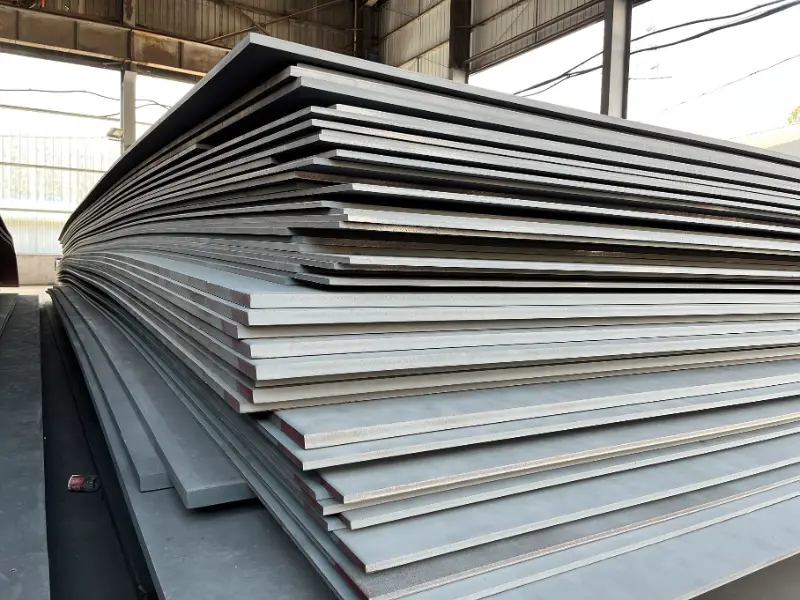
EN10219 S275J0H Hollow Section
EN10219 S275J0H Hollow Section | Cold-Formed Welded Structural Steel Tube
S275J0H is a cold-formed welded structural hollow section steel grade with minimum yield strength 275 MPa and 27 J impact energy at 0°C. Ideal for construction, bridges, and machinery.
Cold forming, welding, machining, hot-dip galvanizing, painting
- Phone : +8618037372205
- Email : [email protected]
- WhatsApp: Contact via Whtsapp
- WeChat: +8618037372205
EN10219 S275J0H Hollow Section Introduction
S275J0H is a structural steel grade specified in European standard EN 10219 for cold-formed welded structural hollow sections of non-alloy and fine grain steels. The designation 'S275' indicates a minimum yield strength of 275 MPa for thickness ≤16 mm, 'J0' ensures a Charpy impact energy of at least 27 J at 0°C, and 'H' denotes hollow section. This grade is widely used in building frames, bridges, offshore structures, and general engineering due to its good weldability, formability, and balanced strength-to-weight ratio. It is delivered in square (SHS), rectangular (RHS), and circular hollow section shapes, typically in the as-welded condition, with optional normalizing or stress-relieving treatments available upon agreement.
EN10219 S275J0H Hollow Section Chemical Composition
The ladle analysis limits for S275J0H according to EN 10219-1:2006 are specified for non-alloy structural steels. The maximum content of trace elements is controlled to ensure good weldability and toughness. Carbon equivalent value (CEV) is calculated as CEV = C + Mn/6 + (Cr+Mo+V)/5 + (Ni+Cu)/15 and shall not exceed 0.40% (typical for product thickness ≤40 mm).
| Element | Standard Value (max %) | Notes |
|---|---|---|
| Carbon (C) | 0.20 | Maximum |
| Manganese (Mn) | 1.50 | Maximum |
| Silicon (Si) | 0.55 | Maximum |
| Phosphorus (P) | 0.035 | Maximum |
| Sulfur (S) | 0.035 | Maximum |
| Nitrogen (N) | 0.009 | Maximum |
| Aluminum (Al)total | ≥0.020 | Minimum for fine grain practice |
| Copper (Cu) | 0.45 | Maximum |
| Chromium (Cr) | 0.30 | Maximum; part of CEV |
| Nickel (Ni) | 0.30 | Maximum; part of CEV |
| Molybdenum (Mo) | 0.10 | Maximum; part of CEV |
| Vanadium (V) | 0.05 | Maximum; part of CEV |
| Titanium (Ti) | 0.04 | Maximum |
| Niobium (Nb) | 0.05 | Maximum |
EN10219 S275J0H Hollow Section Thermal and Electrical Physical Properties
The following values are typical for non-alloy structural steel at room temperature unless noted. Actual properties may vary slightly with composition and processing. Data are based on S275 grade generic properties.
| Property | Typical Value | Unit | Test Condition / Remarks |
|---|---|---|---|
| Density (ρ) | 7850 | kg/m³ | At 20°C |
| Elastic Modulus (E) | 210 | GPa | At 20°C |
| Shear Modulus (G) | 81 | GPa | At 20°C |
| Poisson's Ratio (ν) | 0.3 | — | At 20°C |
| Thermal Expansion Coefficient (α) | 12.0 × 10⁻⁶ | K⁻¹ | Between 20°C and 100°C |
| Thermal Conductivity (λ) | 50 | W/(m·K) | At 20°C |
| Specific Heat Capacity (c) | 480 | J/(kg·K) | At 20°C |
| Electrical Resistivity (ρₑ) | 0.22 × 10⁻⁶ | Ω·m | At 20°C, typical for low-carbon steel |
EN10219 S275J0H Hollow Section Mechanical Properties
Mechanical properties vary with wall thickness t. The following values are minimum requirements according to EN 10219-1. Tensile testing is performed in the longitudinal direction for strip/weld and transverse for the finished section; elongation is measured on a gauge length of 5.65√S₀ (proportional). Impact energy is tested at 0°C (J0 quality).
| Property | Standard Requirement | Unit | Test Condition / Remarks |
|---|---|---|---|
| Yield Strength (ReH) | ≥275 | MPa | For wall thickness t ≤ 16 mm |
| Yield Strength (ReH) | ≥265 | MPa | For 16 mm < t ≤ 40 mm |
| Yield Strength (ReH) | ≥255 | MPa | For 40 mm < t ≤ 63 mm |
| Tensile Strength (Rm) | 410 – 560 | MPa | For t ≤ 3 mm (longitudinal) |
| Tensile Strength (Rm) | 410 – 560 | MPa | For 3 mm < t ≤ 100 mm (transverse) |
| Elongation (A) | ≥24 | % | For t ≤ 3 mm (longitudinal, L₀=80mm) |
| Elongation (A) | ≥22 | % | For 3 mm < t ≤ 40 mm (transverse, L₀=5.65√S₀) |
| Elongation (A) | ≥21 | % | For 40 mm < t ≤ 63 mm (transverse, L₀=5.65√S₀) |
| Bend Test (mandrel diameter) | d = 2a (t ≤ 16 mm) | — | 180° bend, a = specimen thickness |
| Bend Test (mandrel diameter) | d = 3a (t > 16 mm) | — | 180° bend, a = specimen thickness |
| Charpy Impact Energy (KV₂) | ≥27 | J | At 0°C, longitudinal test piece (V-notch) |
EN10219 S275J0H Hollow Section Directly Equivalent Material Standards and Replacement Grades
| Country/Region | Standard | Grade | Remarks |
|---|---|---|---|
| Europe | EN 10210 | S275J0H | Hot-finished structural hollow sections; same mechanical requirements |
| Europe | EN 10025-2 | S275J0 | Flat and long products; similar strength and impact class |
| USA | ASTM A500/A500M | Grade C | Cold-formed welded carbon steel hollow sections; approximate yield 345 MPa, higher strength |
| Japan | JIS G 3466 | STKR400 | Carbon steel square and rectangular tubes for general structure |
| China | GB/T 1591-2018 | Q275D | High-strength low-alloy structural steel, impact at -20°C |
EN10219 S275J0H Hollow Section Application Introduction
S275J0H hollow sections offer an excellent combination of strength, ductility, and toughness at 0°C, making them suitable for structural applications in temperate and cold climates. The material is readily welded and formed, and can be galvanized for corrosion protection. Typical uses include:
Product Applications: Steel building frames, Pedestrian bridges, Scaffolding, Crane lattice booms, Trailer chassis and frames, Support structures for solar panels and wind turbines
Processed into products: Hollow section columns and braces, Welded beam-to-column connections, Truss nodes and chords, Bollards and poles, Machine frames and supports
Application industries: Building and construction (columns, beams, trusses), Bridge engineering (structural frames, handrails), Offshore and marine (deck structures, handrails), Agricultural machinery (frames, implements), Transmission and telecommunication towers, General mechanical engineering
EN10219 S275J0H Hollow Section Similar or Substitute Material Recommendations
| Country/Region | Standard | Grade | Remarks |
|---|---|---|---|
| Europe | EN 10219 | S355J0H | Higher strength (yield ≥355 MPa), same impact class, widely used for structures |
| Europe | EN 10219 | S275JRH | Lower impact requirement (27J at +20°C vs 0°C), suitable for non-low-temperature service |
| USA | ASTM A500 | Grade B | Yield 315 MPa, tensile 400 MPa; similar weldability, common substitute |
| Worldwide | ISO 630 | E275 B | Structural steel plates, comparable yield and impact at 0°C |
Notes:
- For painted or galvanized structures, pre-treatment (shot blasting) is recommended to ensure adhesion.
- Cold-forming can reduce impact toughness; post-weld heat treatment may be specified for critical applications.
- All data are based on EN 10219-1:2006 and typical values; for exact design calculations refer to the relevant Eurocode (e.g., EN 1993-1-1).
- Share



