
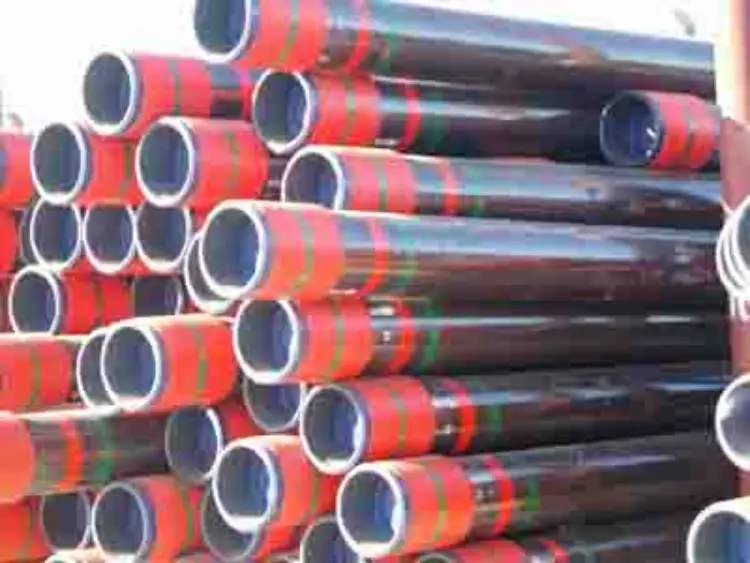
DIN 17400 1.4372 Stainless Steel Pipe
DIN 17400 1.4372 Stainless Steel Pipe: Austenitic Cr-Mn-Ni Steel for Deep Drawing
Comprehensive data for 1.4372 stainless steel pipe: chemical composition, mechanical and physical properties, international equivalents, and similar materials.
Hot‑formed, cold‑formed, welded, solution‑annealed (+AT), deep‑drawn, expanded
- Phone : +8618037372205
- Email : [email protected]
- WhatsApp: Contact via Whtsapp
- WeChat: +8618037372205
DIN 17400 1.4372 Stainless Steel Pipe Introduction
1.4372 (X8CrMnNi18-8-2) is an austenitic stainless steel grade defined under the former DIN 17400 standard for pipes (now integrated into EN 10088 and pressure‑purpose tube standards). It belongs to the chromium‑manganese‑nickel group, notable for its high manganese and low nickel content, providing a cost‑effective alternative to conventional Cr‑Ni austenitics while maintaining good ductility and formability.
Key characteristics include:
- Excellent deep‑drawing and cold‑forming capability
- Moderate corrosion resistance, suitable for mild to medium corrosive environments
- Non‑magnetic in the solution‑annealed condition
- Good weldability
- Supplied mainly as welded or seamless pipes in the solution‑annealed and descaled condition
DIN 17400 1.4372 Stainless Steel Pipe Chemical Composition according to EN 10088-1:2014 – Cast Analysis
The chemical composition of grade 1.4372 is controlled to achieve a stable austenitic structure with reduced nickel, replaced partly by manganese and nitrogen. Limits are according to EN 10088-1:2014, which supersedes DIN 17400 for the base analysis of stainless steel grades. All values are valid for the cast (ladle) analysis; product analysis tolerances apply per the standard.
| Element | Content (%) | Remarks |
|---|---|---|
| C (Carbon) | ≤ 0.10 | Control for weldability |
| Si (Silicon) | ≤ 1.00 | Improves fluidity and oxidation resistance |
| Mn (Manganese) | 6.50 – 9.00 | High Mn replaces Ni; stabilizes austenite |
| P (Phosphorus) | ≤ 0.060 | Residual element; higher than in standard Cr-Ni grades |
| S (Sulfur) | ≤ 0.015 | Controlled for hot workability |
| Cr (Chromium) | 16.0 – 19.0 | Key element for corrosion resistance |
| Ni (Nickel) | 1.50 – 2.50 | Low Ni content; primary alloying element |
| N (Nitrogen) | ≤ 0.20 | Strengthens austenite and enhances pitting resistance |
| Fe (Iron) | balance | Remainder |
DIN 17400 1.4372 Stainless Steel Pipe Physical and Thermal Properties at Room Temperature
Physical data represent typical values for wrought 1.4372 (X8CrMnNi18-8-2) in the solution‑annealed condition, primarily derived from EN 10088-1 and supplementary technical literature. They are valid for the temperature range 20–100 °C unless indicated otherwise. Density and modulus values are essential for design calculations of stainless steel pipe systems.
| Property | Typical Value | Unit | Test Condition / Remarks |
|---|---|---|---|
| Density (ρ) | 7.8 | kg/dm³ (g/cm³) | At 20 °C |
| Modulus of elasticity (E) | 200 | GPa | At 20 °C, dynamic method |
| Shear modulus (G) | 78 | GPa | Calculated; 20 °C |
| Poisson's ratio (ν) | 0.3 | – | At 20 °C, typical for austenitics |
| Mean coefficient of thermal expansion (α) | 16.0 (20–100 °C); 17.0 (20–200 °C); 18.0 (20–400 °C) | 10⁻⁶·K⁻¹ | Linear expansion; intermediate values per standard |
| Thermal conductivity (λ) | 15 | W/(m·K) | At 20 °C |
| Specific heat capacity (cp) | 500 | J/(kg·K) | At 20 °C |
| Electrical resistivity (ρe) | 0.75 | Ω·mm²/m (µΩ·m) | At 20 °C |
DIN 17400 1.4372 Stainless Steel Pipe Mechanical Properties at Room Temperature for Solution-Annealed Pipes
Mechanical properties are based on EN 10217-7 for welded tubes and EN 10216-5 for seamless tubes, representative of the pipe application specified in the former DIN 17400. Values apply to wall thickness ≤ 50 mm in the solution-annealed condition. Impact toughness (KV) is typical for austenitic grades and not a mandatory test requirement for pressure purposes in all conditions, but is often supplied when specified.
| Property | Required Value | Unit | Test Condition / Remarks |
|---|---|---|---|
| Yield strength (Rp0.2) | ≥ 260 | MPa | Transverse specimen; thickness ≤ 50 mm |
| Tensile strength (Rm) | 500 – 750 | MPa | Transverse specimen; room temperature |
| Elongation after fracture (A) | ≥ 35 (longitudinal) / ≥ 30 (transverse) | % | Proportional gauge length L0 = 5.65√S0 |
| Impact energy (KV) | ≥ 60 (longitudinal) | J | At 20 °C, V‑notch, typical but not mandatory for all sizes |
| Bend test | No cracks after bending through 180° | – | Diameter of mandrel = 3 × thickness; when required |
DIN 17400 1.4372 Stainless Steel Pipe Equivalent Material Standards and Designations with Identical Chemistry
| Country/Region | Standard | Designation | Remarks |
|---|---|---|---|
| European Union | EN 10088-1:2014 | X8CrMnNi18-8-2 (1.4372) | Full chemical identity; supersedes DIN 17400 |
| International (ISO) | ISO 4954-2:1993 | X8CrMnNi18-8-2 | For bright steel products; identical analysis |
| Germany | DIN 17440 (historical) | X8CrMnNi18-8-2 | Original grade for flat and bar products |
| United Kingdom | BS EN 10088-1 | X8CrMnNi18-8-2 (1.4372) | Adopted EN standard; fully equivalent |
DIN 17400 1.4372 Stainless Steel Pipe Application Introduction
Grade 1.4372 is tailored for deep‑drawing and cold‑forming operations where a combination of high ductility and moderate corrosion resistance is sufficient. Its lower nickel content renders it more economical than standard 18‑8 austenitic grades while retaining good weldability and a fully austenitic structure after annealing.
Typical industries and products:
Product Applications: Welded stainless steel pipes for general fluid transport, Seamless boiler and heat‑exchanger tubes, Deep‑drawn sinks and countertops, Automotive exhaust system components (low‑temperature zones), Hollow sections for furniture and structural trim, Expanded and perforated metal sheets
Processed into products: Pipe bends and fittings for low‑pressure water lines, Drawn cylindrical cups and holloware, Press‑formed brackets and clips, Thin‑walled header tanks, Decorative in‑car trim panels, Stainless steel flanges (machined from forged rings)
Application industries: Domestic and commercial kitchenware, Architectural and building construction, Automotive industry (trim, mouldings), Food processing (non‑critical non‑corrosive media), General mechanical engineering, Heat exchangers and condensers with low chloride media
DIN 17400 1.4372 Stainless Steel Pipe Materials with Similar Composition and Application Range
| Country/Region | Standard | Designation | Remarks |
|---|---|---|---|
| USA | ASTM A240 / A312 | UNS S20100 (201) | Higher Ni (3.5-5.5 %) and lower Mn; similar deep‑drawing properties; not chemically identical |
| USA | ASTM A240 / A312 | UNS S20200 (202) | Higher Mn and Ni; improved strength; substitution possible after evaluation |
| Japan | JIS G4304 / G4305 | SUS 201 | Similar to AISI 201; often used for kitchenware and trim; check specific service conditions |
| China | GB/T 20878 | 12Cr17Mn6Ni5N (similar to 1.4372) | Chinese grade with comparable Mn‑Ni balance; may require adjustments in welding |
Notes:
Important processing notes:
- Solution annealing must be followed by rapid cooling (water or air quench) to avoid chromium carbide precipitation and to maintain ductility.
- Welding consumables of matching composition or over‑alloyed with Ni (e.g., 1.4316 or 1.4370) are recommended to ensure weld metal toughness.
- In chloride‑containing environments, grade 1.4372 may undergo pitting and stress corrosion cracking; its corrosion resistance is inferior to that of standard 18‑8 Cr‑Ni stainless steels.
- Surface finishing (pickling, passivation) after fabrication is essential for optimal corrosion performance.
- All data provided are for information and based on standards that were current at the time of publication; always verify the latest edition of the relevant EN or ISO standards for critical applications.
- Share



