
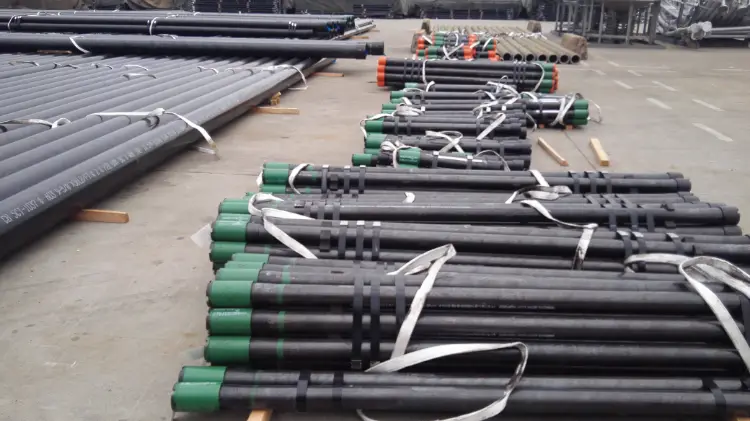
Corten B Weathering Steel Pipe
Corten B Weathering Steel Pipe - High-Strength & Atmospheric Corrosion Resistant
Comprehensive material data for Corten B weathering steel pipe: chemical composition, mechanical properties, thermal and electrical physical properties, international equivalent grades, and application guide for architects, engineers, and fabricators.
Hot rolling, cold forming, welding (with suitable low-alloy electrodes), bending, machining
- Phone : +8618037372205
- Email : [email protected]
- WhatsApp: Contact via Whtsapp
- WeChat: +8618037372205
Corten B Weathering Steel Pipe Introduction
Corten B is a high-strength, low-alloy structural steel with improved atmospheric corrosion resistance. It forms a dense, adherent protective rust-like oxide layer (patina) when exposed to alternating wet and dry cycles, eliminating the need for paint coating in many applications. Often supplied as hot-rolled coil, plate, or pipe, it complies with ASTM A588 Grade B and equivalents. Typical uses include bridges, building facades, sculptures, and railway vehicles where long-term durability and reduced maintenance are required.
Corten B Weathering Steel Pipe Chemical Composition
Typical chemical composition according to ASTM A588 Grade B. Elements are controlled to provide a balance of strength, weldability, and atmospheric corrosion resistance. Copper, chromium, and nickel are key for forming the protective patina. Vanadium is added for grain refinement and precipitation strengthening. The iron content is the remainder.
| Chemical Element | Standard Value (Weight %) | Remarks |
|---|---|---|
| Carbon (C) | ≤ 0.20 | Max |
| Manganese (Mn) | 0.75 – 1.35 | Range |
| Phosphorus (P) | ≤ 0.04 | Max |
| Sulfur (S) | ≤ 0.05 | Max |
| Silicon (Si) | 0.15 – 0.50 | Range |
| Nickel (Ni) | ≤ 0.50 | Max |
| Chromium (Cr) | 0.40 – 0.70 | Range |
| Copper (Cu) | 0.20 – 0.40 | Range |
| Vanadium (V) | 0.01 – 0.10 | Range |
| Iron (Fe) | Balance | Remainder |
Corten B Weathering Steel Pipe Thermal and Electrical Physical Properties
Representative physical properties for Corten B weathering steel at ambient temperature unless stated otherwise. These values are typical for low-alloy steels of similar composition and are suitable for design calculations.
| Property | Standard Requirement | Unit | Test Condition |
|---|---|---|---|
| Density (ρ) | 7.85 | g/cm³ | at 20°C |
| Elastic Modulus (E) | 200 – 210 | GPa | at 20°C |
| Shear Modulus (G) | 80 | GPa | at 20°C |
| Poisson's Ratio (ν) | 0.3 | – | elastic range |
| Thermal Expansion Coeff. (α) | 11.7 | 10⁻⁶/K | 20 – 100°C |
| Thermal Expansion Coeff. (α) | 12.5 | 10⁻⁶/K | 20 – 200°C |
| Thermal Conductivity (λ) | 42 – 50 | W/(m·K) | at 20°C |
| Specific Heat Capacity (cp) | 460 – 480 | J/(kg·K) | at 20°C |
| Electrical Resistivity (ρe) | 0.15 – 0.25 | μΩ·m | at 20°C |
Corten B Weathering Steel Pipe Mechanical Properties
Minimum mechanical properties according to ASTM A588 Grade B for plates, shapes, and bars (applicable to base material; pipe properties may vary according to ASTM A847 or specific pipe standards). Values are transverse direction for plates unless otherwise noted.
| Property | Standard Requirement | Unit | Test Condition |
|---|---|---|---|
| Yield Strength (ReH) | ≥ 345 | MPa | thickness ≤ 100 mm |
| Tensile Strength (Rm) | ≥ 485 | MPa | thickness ≤ 100 mm |
| Elongation (A) | ≥ 21 | % | gauge length 200 mm (8 in.) |
| Elongation (A) | ≥ 18 | % | gauge length 50 mm (2 in.) |
Corten B Weathering Steel Pipe Complete Equivalent Material Standards and Substitutable Grades
| Country/Region | Standard | Designation/Grade | Remarks |
|---|---|---|---|
| USA | ASTM A588/A588M | Grade B | Direct equivalent; commercially called Corten B |
| Europe | EN 10025-5 | S355J2W (1.8965) | Comparable chemistry and mechanical properties |
| Japan | JIS G3114 | SMA490AW | Similar weldable weather-resistant steel |
| China | GB/T 4171 | Q355NH | High-strength atmospheric corrosion-resistant steel |
Corten B Weathering Steel Pipe Application Introduction
Corten B weathering steel is widely used where long service life, reduced maintenance, and aesthetic appeal are desired. The stable rust-like patina acts as a durable barrier, eliminating the need for paint in many atmospheric environments. However, it is not recommended for continuously wet, submerged, or heavily polluted chloride-rich environments without additional protection.
Product Applications: Weathering steel pipes for structural and architectural frames, Bridge girders, trusses, and columns, Facade cladding and curtain wall panels, Planter boxes, screens, and decorative features, Exhaust stacks and industrial ducting, Rail wagons and truck bodies
Processed into products: Hollow structural sections (HSS) and pipe columns, Welded pipe manifolds and handrails, Bolted or welded structural connections, Outdoor furniture and lighting poles, Signage supports and trellises
Application industries: Civil engineering and bridge construction, Architecture and construction (building envelopes), Railway and rolling stock manufacturing, Shipping container and intermodal equipment, Industrial equipment and chimney stacks, Outdoor sculpture and landscape design
Corten B Weathering Steel Pipe Similar or Near-Equivalent Alternative Materials
| Country/Region | Standard | Designation/Grade | Remarks |
|---|---|---|---|
| USA | ASTM A588/A588M | Grade A | Slightly lower corrosion resistance; similar strength |
| USA | ASTM A242/A242M | Type 1 | Higher Cu content; used for thinner sections |
| Europe | EN 10025-5 | S355J0W | Similar, but impact test at 0°C instead of -20°C |
| Europe | EN 10025-5 | S355J2WP | Higher phosphorus for enhanced corrosion resistance in polluted air |
| Japan | JIS G3114 | SMA490BW | Slightly different chemistry with higher Mn and Cr |
| China | GB/T 4171 | Q295NH | Lower yield strength; alternative for less demanding applications |
Notes:
- Welding: Use low-alloy electrodes matching the base metal (e.g., AWS E80XX) to ensure joint corrosion resistance.
- Patina formation: Avoid prolonged dampness and ensure wet/dry cycling; initial runoff may cause staining on adjacent surfaces.
- Drainage and detailing: Design details must promote free drainage to prevent crevice corrosion.
- Painting: If painted for aesthetic reasons, the patina must be fully formed before coating, or the steel can be painted after blast cleaning.
- Share



