
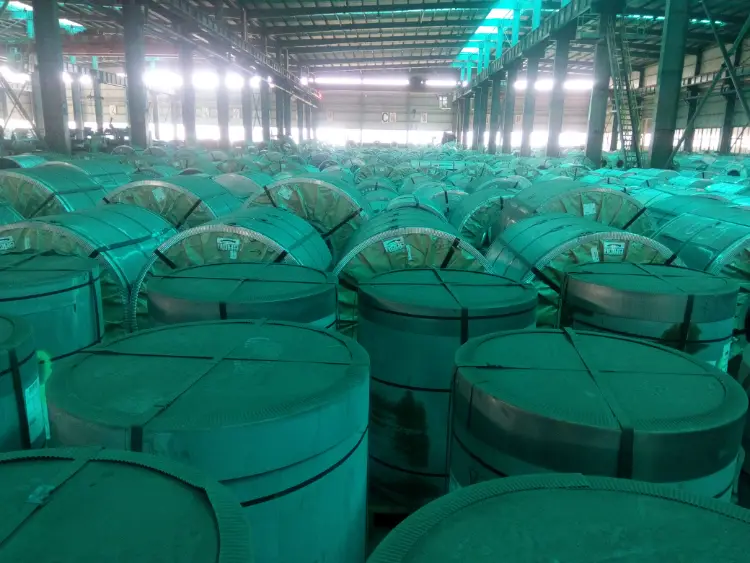
BV D420 Shipbuilding Steel Coil
BV D420 Shipbuilding Steel Coil – High Strength Low Temperature Toughness for Marine Structures
BV D420 is a high strength shipbuilding steel with minimum yield strength of 420 MPa and guaranteed -20°C impact toughness, certified by Bureau Veritas.
Hot rolling, thermo-mechanical controlled process (TMCP), normalizing rolling, cold forming after appropriate heat treatment, welding
- Phone : +8618037372205
- Email : [email protected]
- WhatsApp: Contact via Whtsapp
- WeChat: +8618037372205
BV D420 Shipbuilding Steel Coil Introduction
BV D420 is a high strength structural steel grade for shipbuilding, certified according to the Classification Society Bureau Veritas (BV). It combines a minimum yield strength of 420 MPa with D-grade notch toughness, meaning impact testing is performed at -20°C. The steel is supplied as hot-rolled coils or plates with normalizing rolling or controlled rolling, and can be delivered in thermo-mechanically controlled processed (TMCP) condition.
- Excellent weldability for heavy ship construction
- High resistance to brittle fracture in cold environments
- Compliant with BV Rules Part D, Chapter 2 – Materials
- Ideal for critical hull structures, decks and offshore components exposed to low service temperatures
Its balanced composition with microalloying elements ensures fine grain structure and high toughness, making it a preferred choice for modern marine engineering projects requiring lightweight design without sacrificing safety.
BV D420 Shipbuilding Steel Coil Chemical Composition
Typical chemical composition according to BV Rules for D420 grade. The steel is intended for fine grain practice with sufficient nitrogen binding elements. Microalloying additions of Nb, V, Ti are used to achieve the required strength while maintaining weldability and low temperature toughness.
- Carbon equivalent (CEV) typically controlled below 0.45% to ensure good weldability
- Strict limits on phosphorus and sulfur for high cleanness and resistance to lamellar tearing
| Element | Standard Value (max unless range given) | Notes |
|---|---|---|
| C | ≤0.18 | Heat analysis |
| Mn | 0.90 – 1.65 | Higher Mn may be used if CEV requirements are met |
| Si | ≤0.50 | Deoxidation |
| P | ≤0.025 | Strict for marine applications |
| S | ≤0.020 | Low sulfur for toughness |
| Al (total) | ≥0.015 | Fine grain practice |
| Nb | ≤0.05 | Microalloying |
| V | ≤0.10 | Microalloying |
| Ti | ≤0.05 | Grain refinement |
| Cr | ≤0.25 | Residual only |
| Ni | ≤0.50 | Cryogenic toughness improvement |
| Mo | ≤0.10 | Residual |
| Cu | ≤0.35 | Residual |
| CEV (Ceq) | ≤0.45 | Carbon equivalent for welding compatibility |
| Pcm | ≤0.24 | Cold cracking parameter (optional requirement) |
BV D420 Shipbuilding Steel Coil Thermal and Electrical Physical Properties
Typical physical data for BV D420 steel at room temperature and elevated temperatures. These values may vary with exact chemical composition and heat treatment but are representative for design calculations.
- Density is the standard for low-alloy steels
- Thermal expansion and conductivity are important for assessing welding distortion and heat transfer
- Electrical resistivity is comparable to other structural steels
| Property | Typical Value | Unit | Test Condition / Remarks |
|---|---|---|---|
| Density (ρ) | 7.80 | g/cm³ | At 20°C |
| Modulus of elasticity (E) | 205 | GPa | Room temperature |
| Shear modulus (G) | 80 | GPa | Calculated from E and Poisson ratio |
| Poisson's ratio (ν) | 0.30 | – | Room temperature |
| Coefficient of thermal expansion (α) | 12.0 × 10⁻⁶ | 1/K | 20 – 200°C; mean value |
| Thermal conductivity (λ) | 48 | W/(m·K) | At 20°C |
| Specific heat capacity (cp) | 460 | J/(kg·K) | At 20°C |
| Electrical resistivity (ρe) | 0.28 × 10⁻⁶ | Ω·m | At 20°C |
BV D420 Shipbuilding Steel Coil Mechanical Properties
Mechanical requirements for BV D420 steel plate and coil for thickness ranges commonly used in shipbuilding. All properties are verified in accordance with BV test procedures. Tensile and impact specimens are taken transverse to the rolling direction.
- Yield strength decreases slightly with increasing thickness
- Charpy V-notch impact test temperature at -20°C for D grade
- Bend test conducted on full thickness strips where possible
| Property | Required Value (min or range) | Unit | Test Condition |
|---|---|---|---|
| Yield strength (ReH) | ≥420 | MPa | For thickness t ≤ 100 mm |
| Tensile strength (Rm) | 530 – 680 | MPa | For thickness t ≤ 100 mm |
| Elongation after fracture (A) | ≥18 | % | Gauge length 5.65√S0; test specimen transverse |
| Charpy impact energy (KV2) | ≥34 (average), ≥24 (single value) | J | At -20°C, V-notch, transverse |
| Bend test (diameter a = thickness) | No cracks, 180° bending | – | Bend mandrel diameter d = 3a (for t ≤ 25 mm); for t > 25 mm d = 4a |
BV D420 Shipbuilding Steel Coil Exact Equivalent Materials – Direct Replacements
| Country/Region | Standard | Grade | Remarks |
|---|---|---|---|
| International (IACS) | Bureau Veritas Rules | D420 | Original grade; certified by BV |
| Europe | EN 10025-4 | S420M | Thermo-mechanical rolled; impact at -20°C (ML suffix for -50°C also acceptable but with higher toughness) |
| Norway | DNV Rules | D420 | DNV class equivalent designation |
| UK | Lloyd's Register Rules | D420 | LR grade equivalent |
| USA | ABS Rules | D420 | ABS grade equivalent; note that A131 EH40 is lower strength (390 MPa) and not a direct equivalent |
| China | CCS Rules | D420 | China Classification Society |
| Other IACS members | RINA, NK, RS, KR, etc. | D420 | Same grade designation across IACS societies |
BV D420 Shipbuilding Steel Coil Application Introduction
BV D420 steel coils and plates are designed for critical structural components in the shipbuilding and offshore sector where high strength and good low-temperature toughness are essential. The D420 grade is ideal for hull parts that require reduced weight without compromising safety, and where high resistance to brittle fracture at -20°C is required.
- Hull shell plates, deck plating, and bottom structures
- Longitudinal stiffeners, transverse frames, and bulkheads
- Offshore platform primary structures, decks, helidecks, and module support beams
- Replacements of part sections requiring high integrity under cyclic loading
Good weldability allows for efficient fabrication with conventional shipyard welding procedures. Typical fabricated products include large sub-assemblies that are erected into the vessel.
Product Applications: Cargo ship hull shells and internal members, Ice-strengthened vessels and polar class hulls, Deck houses and accommodation modules for offshore platforms, Transition pieces and foundation piles for offshore wind turbines, Pressure hulls for submarines and subsea equipment
Processed into products: Longitudinal and transverse stiffeners, Bilge keel and hull appendages, Watertight and weathertight doors frames, Deck coamings and hatch covers, Crane pedestals and winch foundations
Application industries: Shipbuilding (merchant vessels, naval ships, cruise ships), Offshore oil & gas (jack-up rigs, semi-submersibles, FPSOs), Marine renewable energy (wind turbine foundations, substations), Heavy civil engineering (bridge structures, lock gates)
BV D420 Shipbuilding Steel Coil Similar / Comparable Materials with Close Mechanical Properties
| Country/Region | Standard | Grade | Remarks |
|---|---|---|---|
| Europe | EN 10025-4 | S420ML | Yield 420 MPa, but impact at -50°C; superior low-temperature performance, can replace D420 with enhanced safety margin |
| Europe | EN 10225 | S420G2+M | Fixed offshore structures; similar strength but different certification scope |
| USA/International | ASTM A131 / BV Rules | EH40 | Shipbuilding steel with yield 390 MPa min; slightly lower strength, may be used after re-calculation of design; impact at -40°C |
| International | IACS UR W | DH40 / EH40 | Equivalent to EH40; yield 390 MPa, close but not identical tensile range |
| Japan | JIS G 3106 | SM460B/C | Yield approx 430-450 MPa; weldable structural steel for general structures, not specifically ship class approved |
Notes:
Certification: All deliveries must be accompanied by BV inspection certificates (3.2 certificate) according to EN 10204.
Weldability: CEV ≤ 0.45 ensures good weldability; preheat may be required for thicker sections depending on welding procedure specification.
Z-direction properties: On special request, through-thickness tensile testing to Z25/Z35 can be supplied to resist lamellar tearing.
Condition of supply: As-rolled, normalizing rolled, or TMCP, as agreed. Shot blasting and shop primer (zinc silicate) is common.
Dimensional tolerances: Compliant with EN 10029 for plates, EN 10051 for coils.
- Share



