
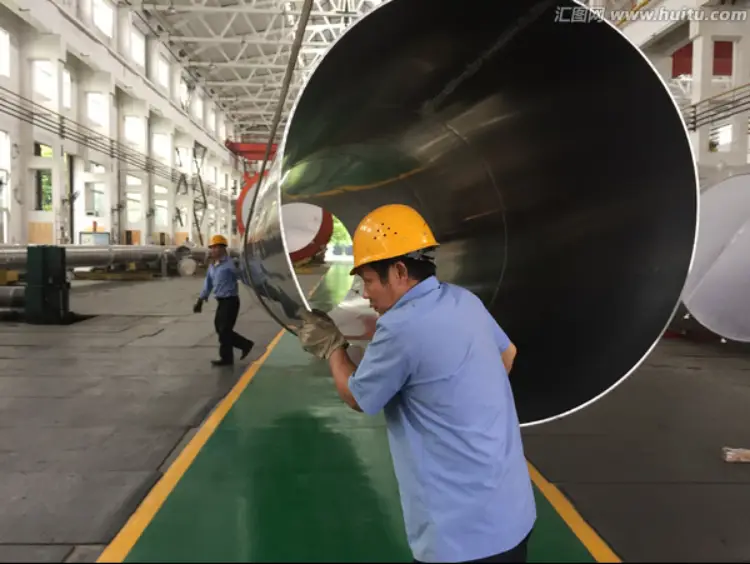
ASTM A511 MT 321 Stainless Steel Mechanical Tube
ASTM A511 MT 321 Stainless Steel Mechanical Tube | S32100 Data & Equivalents
Explore the chemical composition, mechanical and thermal properties, international equivalents, and application guide for ASTM A511 MT 321 stainless steel mechanical tube. Designed for high-temperature and corrosion-resistant seamless tubing.
Annealing, Cold Drawing, Cold Rolling, Machining, Welding, Bending
- Phone : +8618037372205
- Email : [email protected]
- WhatsApp: Contact via Whtsapp
- WeChat: +8618037372205
ASTM A511 MT 321 Stainless Steel Mechanical Tube Introduction
ASTM A511 MT 321 is an austenitic chromium-nickel stainless steel mechanical tube stabilized with titanium. This titanium addition effectively prevents intergranular corrosion caused by chromium carbide precipitation during exposure to temperatures in the range of 425–850°C (800–1575°F). The material is supplied in the annealed condition, offering excellent formability, weldability, and high-temperature strength. Key attributes include outstanding resistance to general corrosion and oxidation, making it suitable for demanding applications in the aerospace, chemical processing, and power generation industries. The seamless mechanical tube conforms to the rigorous standards of ASTM A511 for precision mechanical applications.
ASTM A511 MT 321 Stainless Steel Mechanical Tube Chemical Composition
The chemical composition for ASTM A511 MT 321 is derived from ASTM A240/A240M for grade UNS S32100. Titanium content is controlled to a minimum of 5×(C+N) to ensure stabilization against intergranular corrosion, with a maximum of 0.70%.
- Iron forms the balance.
- Trace elements are controlled to enhance toughness and corrosion resistance.
| Chemical Element | Specification Value (wt%) | Remarks |
|---|---|---|
| Carbon (C) | ≤0.08 | Critical for stabilization ratio |
| Manganese (Mn) | ≤2.00 | Improves hot workability |
| Silicon (Si) | ≤1.00 | Deoxidizer, enhances oxidation resistance |
| Phosphorus (P) | ≤0.045 | Controlled for ductility |
| Sulfur (S) | ≤0.030 | Improves machinability, limited for corrosion resistance |
| Chromium (Cr) | 17.00 – 19.00 | Primary element for corrosion and oxidation resistance |
| Nickel (Ni) | 9.00 – 12.00 | Stabilizes austenitic structure |
| Titanium (Ti) | ≤0.70 (min: 5×(C+N)) | Stabilization element; carbide former |
| Nitrogen (N) | ≤0.10 | Improves strength, limited for Ti ratio |
ASTM A511 MT 321 Stainless Steel Mechanical Tube Thermal and Electrical Physical Properties
Typical physical properties for 321 stainless steel (UNS S32100) in the annealed condition. These values are representative and may vary slightly depending on exact composition and processing. Useful for design calculations involving thermal expansion, heat transfer, and electromagnetic compatibility.
| Property | Typical Value | Unit | Test Condition / Temperature |
|---|---|---|---|
| Density (ρ) | 8.0 | g/cm³ | At 20°C (68°F) |
| Elastic Modulus (E) | 193 (28×10³) | GPa (ksi) | At 20°C, tension |
| Shear Modulus (G) | 78 (11.3×10³) | GPa (ksi) | At 20°C, torsion |
| Poisson's Ratio (ν) | 0.30 | – | At 20°C, elastic range |
| Thermal Expansion Coefficient (α) | 16.6 | µm/m·°C | 20–100°C (68–212°F) |
| Thermal Expansion Coefficient (α) | 18.0 | µm/m·°C | 20–500°C (68–932°F) |
| Thermal Conductivity (λ) | 16.1 | W/m·K | At 100°C (212°F) |
| Thermal Conductivity (λ) | 21.5 | W/m·K | At 500°C (932°F) |
| Specific Heat Capacity | 500 | J/kg·K | At 20°C |
| Electrical Resistivity (ρ_e) | 720 | nΩ·m | At 20°C |
ASTM A511 MT 321 Stainless Steel Mechanical Tube Mechanical Properties
The following values represent the minimum specified properties for ASTM A511 MT 321 seamless mechanical tubing in the annealed state. Elongation requirements may vary with wall thickness; the most common value for wall thickness ≤0.1875 in. (4.8 mm) is listed. Hardness values are maximum limits to ensure ductility and ease of fabrication.
| Property | Specification Value | Unit | Test Condition |
|---|---|---|---|
| Tensile Strength (Rm) | ≥ 75 (≥ 515) | ksi (MPa) | Room temperature, annealed |
| Yield Strength (ReH, 0.2% offset) | ≥ 30 (≥ 205) | ksi (MPa) | Room temperature, annealed |
| Elongation (A) | ≥ 35 | % | In 2 in. (50 mm) gauge, wall thickness ≤0.1875 in. |
| Brinell Hardness (HBW) | ≤ 192 | HBW | Annealed, 3000 kgf load |
| Rockwell B Hardness (HRBW) | ≤ 90 | HRB | Annealed, spherical indenter |
ASTM A511 MT 321 Stainless Steel Mechanical Tube Full Equivalent Material Standards and Substitution Grades
| Country/Region | Standard | Grade | Remarks |
|---|---|---|---|
| USA | ASTM A312/A312M | TP321 (UNS S32100) | Seamless pipe for high-temperature service |
| USA | ASTM A269/A269M | TP321 | Seamless and welded tubing for general service |
| USA | ASME SA-312 | TP321 | ASME equivalent for pressure piping |
| EU | EN 10216-5 | X6CrNiTi18-10 (1.4541) | Seamless steel tubes for pressure purposes |
| EU | EN 10028-7 | X6CrNiTi18-10 (1.4541) | Flat products for pressure vessels |
| Japan | JIS G3459 | SUS321TP | Stainless steel pipes for high-temperature service |
| China | GB/T 14976 | 06Cr18Ni11Ti (0Cr18Ni10Ti) | Seamless stainless steel pipe for fluid transport |
| International | ISO 9329-4 | X6CrNiTi18-10 (1.4541) | Seamless steel tubes for pressure purposes |
ASTM A511 MT 321 Stainless Steel Mechanical Tube Application Introduction
ASTM A511 MT 321 stainless steel mechanical tube is best suited for seamless precision tubing in environments requiring high-temperature oxidation resistance and protection against intergranular corrosion. Key application areas include:
- High-temperature exhaust systems
- Chemical and petrochemical process piping
- Heat exchangers and superheaters
- Aerospace engine components
Product Applications: Seamless mechanical tubing for hydraulic and instrumentation systems, High-temperature boiler and superheater tubes, Heat exchanger U-bend tubes, Aircraft exhaust manifolds and bellows, Corrosion-resistant fluid transport lines
Processed into products: Exhaust stacks and collectors for aircraft engines, Tube bundles in shell-and-tube heat exchangers, Thermocouple protection tubes, Expansion joints and flexible connectors, Pump shafts and valve stems for high-temperature service
Application industries: Aerospace, Chemical Processing, Oil & Gas (upstream and refining), Power Generation (conventional and nuclear), Automotive (exhaust and turbocharger systems), Food Processing (slightly acidic high-temp environments)
ASTM A511 MT 321 Stainless Steel Mechanical Tube Similar / Alternative Material Recommendations
| Country/Region | Standard | Grade | Remarks |
|---|---|---|---|
| USA | ASTM A269 | TP304 (S30400) | Non-stabilized, suitable for lower temperature applications; lower cost but susceptible to intergranular corrosion after welding or service above 425°C. |
| USA | ASTM A269 | TP316Ti (S31635) | Titanium-stabilized version of 316, offers higher pitting and crevice corrosion resistance due to molybdenum; ideal for chloride-containing environments. |
| USA | ASTM A269 | TP347 (S34700) | Stabilized with niobium (columbium); comparable high-temperature resistance; better for heavy section welding due to less titanium oxidation loss. |
| EU | EN 10216-5 | X6CrNiMoTi17-12-2 (1.4571) | Mo-bearing stabilized grade, similar to 316Ti; excellent resistance to reducing acids and seawater. |
| EU | EN 10216-5 | X6CrNiTi18-10 (1.4541) | Direct European equivalent; can be substituted without design changes when mechanical properties match. |
Notes:
- For welded applications, filler metal ER321 or ER347 is recommended to maintain stabilization. Post-weld annealing is not required for thicknesses <3 mm due to the titanium stabilization; however, stress relief may be beneficial.
- Excellent forming characteristics allow cold bending and flaring; intermediate annealing may be needed for severe deformation.
- Not recommended for highly corrosive environments containing chlorides above 50°C due to risk of stress corrosion cracking; consider 316Ti or duplex grades for such conditions.
- Titanium stabilization can cause formation of titanium carbonitrides, which may slightly affect surface finish in polished applications.
- Share



