
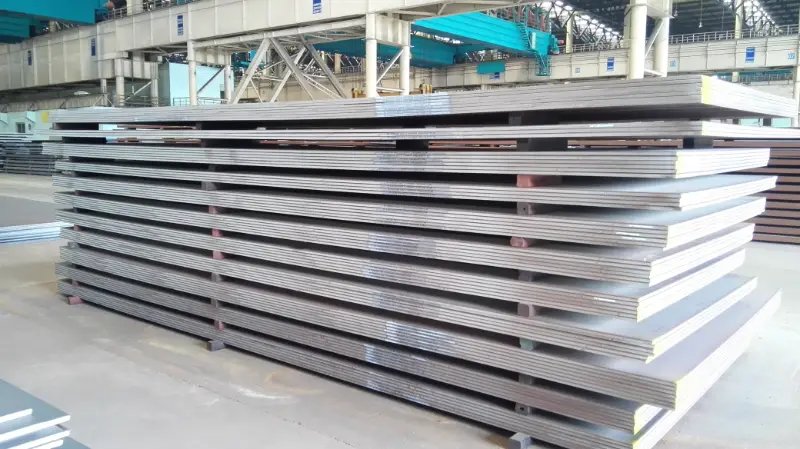
ASTM A511 MT 304L Stainless Steel Hollow Bar
ASTM A511 MT 304L Stainless Steel Hollow Bar: Premium Corrosion Resistance & Fabrication
Explore the detailed material properties of ASTM A511 MT 304L stainless steel pipe, a low-carbon austenitic grade offering superior corrosion resistance and weldability for mechanical applications.
Machining, Welding, Cold Drawing, Bending, Flaring
- Phone : +8618037372205
- Email : [email protected]
- WhatsApp: Contact via Whtsapp
- WeChat: +8618037372205
ASTM A511 MT 304L Stainless Steel Hollow Bar Introduction
ASTM A511 MT 304L is a low-carbon austenitic stainless steel grade supplied in the form of seamless mechanical tubing. The 'MT' prefix indicates the product is manufactured to mechanical tubing requirements, prioritizing precise dimensional tolerances and mechanical properties suitable for machined parts and structural components. The low carbon content (max 0.03%) minimizes carbide precipitation during welding, ensuring excellent resistance to intergranular corrosion in the as-welded condition even in thicknesses commonly encountered. This material combines good strength at ambient and elevated temperatures with outstanding corrosion resistance in a wide range of atmospheric, chemical, and food-processing environments, making it a versatile choice for demanding engineering applications.
ASTM A511 MT 304L Stainless Steel Hollow Bar Chemical Composition
The chemical composition of ASTM A511 MT 304L stainless steel is specifically controlled to ensure low carbon content for enhanced welding performance. A precise balance of Chromium and Nickel provides the characteristic austenitic structure and corrosion resistance.
- Carbon (C): Deliberately limited to a maximum of 0.03% to prevent intergranular corrosion after welding.
- Chromium (Cr): The primary element for passivation and corrosion resistance.
- Nickel (Ni): Stabilizes the austenitic phase, providing toughness and ductility.
| Element | Standard Value (%) | Remarks |
|---|---|---|
| Carbon (C) | ≤ 0.030 | Key characteristic for 'L' grade; prevents sensitization. |
| Manganese (Mn) | ≤ 2.00 | Improves hot working properties. |
| Phosphorus (P) | ≤ 0.045 | Residual element. |
| Sulfur (S) | ≤ 0.030 | Controlled for machinability. |
| Silicon (Si) | ≤ 1.00 | Deoxidizer. |
| Chromium (Cr) | 18.0 - 20.0 | Provides corrosion resistance. |
| Nickel (Ni) | 8.0 - 12.0 | Austenite stabilizer. |
| Nitrogen (N) | ≤ 0.10 | Incidental addition. |
ASTM A511 MT 304L Stainless Steel Hollow Bar Thermal and Electrical Physical Properties
The physical properties are critical for engineering calculations involving thermal expansion, heat transfer, and electromagnetic design. These values are typical for the 18-8 austenitic family at room temperature unless otherwise stated.
- Thermal Expansion: The coefficient of thermal expansion is notably higher than that of carbon steels, which must be considered in applications involving welding or fluctuating temperatures.
- Magnetic Permeability: In the annealed condition, it is essentially non-magnetic (µr ~ 1.02), a key property for many electrical and medical applications.
| Property | Typical Value | Unit | Test Condition |
|---|---|---|---|
| Density (ρ) | 8.0 | g/cm³ | At 20°C |
| Melting Range | 1400 - 1450 | °C | Approximate |
| Modulus of Elasticity (E) | 193 | GPa | Tension, at 20°C |
| Shear Modulus (G) | 77 | GPa | Calculated, at 20°C |
| Poisson's Ratio (ν) | 0.25 | - | At 20°C |
| Mean Thermal Expansion Coefficient (α) | 17.2 | 10⁻⁶/°C | 20 to 100°C |
| Mean Thermal Expansion Coefficient (α) | 17.8 | 10⁻⁶/°C | 20 to 300°C |
| Mean Thermal Expansion Coefficient (α) | 18.4 | 10⁻⁶/°C | 20 to 500°C |
| Thermal Conductivity (λ) | 15.0 | W/m·K | At 100°C |
| Thermal Conductivity (λ) | 16.2 | W/m·K | At 20°C |
| Thermal Conductivity (λ) | 21.5 | W/m·K | At 500°C |
| Specific Heat Capacity (cp) | 500 | J/kg·K | At 20°C |
| Electrical Resistivity (ρe) | 0.72 | Ω·mm²/m | At 20°C |
ASTM A511 MT 304L Stainless Steel Hollow Bar Mechanical Properties
Mechanical property requirements for ASTM A511 MT 304L are specified for the solution-annealed condition. The combination of high tensile strength with excellent ductility (elongation) makes this material ideal for cold forming and deep drawing processes.
- Hardness: The Rockwell B hardness limit ensures the material is sufficiently soft for machining and forming.
- Impact Toughness: Austenitic stainless steels like 304L exhibit excellent toughness at cryogenic temperatures, though not always a mandatory requirement for ASTM A511.
| Property | Standard Requirement Value | Unit | Test Condition |
|---|---|---|---|
| Tensile Strength (Rm) | ≥ 485 | MPa | Room Temperature, Longitudinal |
| Yield Strength (ReH, 0.2% offset) | ≥ 170 | MPa | Room Temperature, Longitudinal |
| Elongation (A) in 2 in. or 50 mm | ≥ 35 | % | Longitudinal Strip/Wall Section |
| Elongation (A) in 2 in. or 50 mm | ≥ 25 | % | Full Section Tubing (for specific wall thicknesses) |
| Hardness, Rockwell B (HRB) | ≤ 90 | HRB | As specified by ASTM A511 |
| Hardness, Brinell (HBW) | ≤ 201 | HBW | For reference only, per ASTM A511 |
ASTM A511 MT 304L Stainless Steel Hollow Bar Completely Equivalent Material Standards & Replaceable Grades
| Country/Region | Standard & Designation | Grade | Remarks |
|---|---|---|---|
| International | UNS Number | S30403 | Universal designation for 304L. |
| Europe | EN 10216-5 | 1.4307 (X2CrNi18-9) | Seamless stainless steel tubes for pressure purposes. |
| Europe | EN 10297-2 | 1.4307 | Seamless circular steel tubes for mechanical and general engineering purposes. |
| Japan | JIS G3459 | SUS304LTBS | Stainless steel pipes for machine and structural purposes. |
| China | GB/T 14976 | 022Cr19Ni10 | Seamless stainless steel pipes for fluid transport. |
| United Kingdom | BS 3605-1 | 304S12 (Obsolete, now 1.4307) | Historic UK standard, replaced by EN grades. |
ASTM A511 MT 304L Stainless Steel Hollow Bar Application Introduction
ASTM A511 MT 304L is a premier choice for manufacturing components that require a combination of excellent corrosion resistance, good machinability in the annealed state, and reliable weldability. Its hollow bar form is particularly economical for producing cylindrical parts with minimal material waste from boring. It is not recommended for applications with stagnant seawater or where it will be exposed to halide salts for prolonged periods due to susceptibility to stress corrosion cracking (SCC), where a duplex or 316L grade would be more suitable.
Product Applications: Seamless Heat Exchanger Tubes, Sanitary Tubing and Fittings, Brewing Kettles and Dairy Equipment, Structural Handrails and Balustrades, Chemical Injection Quills, High-Purity Gas Lines
Processed into products: Pump Shafts and Impellers, Valve Bodies and Stems, Hydraulic Fittings and Adapters, Bushings, Spacers, and Sleeves, Instrumentation Manifolds and Couplings, Flanges and Weld-neck Rings, Fasteners (Bolts, Nuts) for corrosive environments
Application industries: Food and Beverage Processing, Petrochemical and Chemical Processing, Pharmaceutical Manufacturing, Architectural and Structural Engineering, Automotive (Exhaust Manifolds, Trim), Water Treatment and Plumbing, Medical Device Manufacturing, Pulp and Paper Industry
ASTM A511 MT 304L Stainless Steel Hollow Bar Recommendations for Similar/Alternative Materials
| Country/Region | Standard & Designation | Grade | Remarks |
|---|---|---|---|
| USA / Global | ASTM A511 | MT 304 | Standard carbon version (max 0.08% C). Higher strength but may require post-weld annealing for corrosion resistance. Suitable for non-welded mechanical parts. |
| USA / Global | ASTM A511 | MT 316L | Molybdenum-alloyed grade for significantly better resistance to chlorides and aggressive chemicals. Slightly higher strength at elevated temperatures. |
| Europe | EN 10216-5 | 1.4306 (X2CrNi19-11) | Similar to 304L but with slightly higher nickel content (10-12%) for improved formability and corrosion resistance in some media. |
| Japan | JIS G3459 | SUS304TB | Direct equivalent to ASTM A511 MT 304. Choose if low carbon is not a strict requirement and post-weld annealing is planned. |
Notes:
Machining recommendations: The alloy tends to work harden, so rigid setups, sharp carbide tooling, and positive feeds are essential. Sulfur can be added to a specific '303' grade for greatly improved machinability, but at the cost of some corrosion resistance and weldability. For critical welded structures, filler metal AWS E/ER 308L is recommended. For post-weld cleaning, pickling and passivation are advised to restore the passive chromium oxide layer.
- Share



