
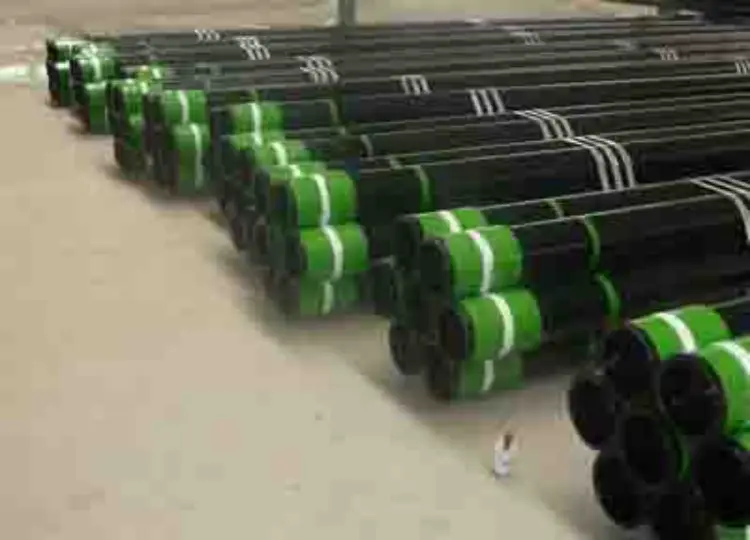
ASTM A312 TP321 Stainless Steel Pipe
ASTM A312 TP321 Stainless Steel Pipe: Composition, Mechanical & Thermal Properties, Equivalent Grades
Detailed technical data for ASTM A312 TP321 stainless steel pipe, including chemical composition, mechanical and thermal physical properties, full international equivalents, similar alloy comparisons, and typical applications in high-temperature and corrosive environments.
Welding, forming, machining, heat treatment (solution annealing), cold drawing, bending, flaring
- Phone : +8618037372205
- Email : [email protected]
- WhatsApp: Contact via Whtsapp
- WeChat: +8618037372205
ASTM A312 TP321 Stainless Steel Pipe Introduction
ASTM A312 TP321 is a titanium-stabilized austenitic stainless steel pipe grade (UNS S32100) designed for elevated temperature service and resistance to intergranular corrosion. The addition of titanium prevents chromium carbide precipitation during welding or exposure to temperatures in the 800–1500°F (427–816°C) range, making it suitable for applications where unstabilized 304 grades might suffer sensitization. It combines good mechanical strength at high temperatures, excellent formability, and weldability. Typically supplied in the solution-annealed condition, TP321 pipes are widely used in chemical, petrochemical, and power generation industries, especially for heater tubes, boiler components, and high-temperature piping.
ASTM A312 TP321 Stainless Steel Pipe Chemical Composition per ASTM A312 for TP321
The chemical requirements for TP321 pipes are governed by ASTM A312. Titanium is added as a stabilizing element in a proportion of at least five times the total carbon plus nitrogen content, but not exceeding 0.70%. This stabilization prevents intergranular corrosion. The composition ensures good weldability and high-temperature performance. Note: Values are maximum unless range or minimum is specified.
| Element | Standard Value (Weight %) | Remarks |
|---|---|---|
| Carbon (C) | 0.08 max | |
| Manganese (Mn) | 2.00 max | |
| Phosphorus (P) | 0.045 max | |
| Sulfur (S) | 0.030 max | |
| Silicon (Si) | 1.00 max | |
| Chromium (Cr) | 17.0 – 19.0 | |
| Nickel (Ni) | 9.0 – 12.0 | |
| Titanium (Ti) | 5 × (C+N) min; 0.70 max | Stabilizing element; N not explicitly limited in the grade but usually ≤0.10% |
ASTM A312 TP321 Stainless Steel Pipe Thermal and Electrical Physical Properties
Typical room-temperature and near-room temperature physical properties for TP321 stainless steel. These values are representative of the alloy in the solution-annealed condition and are not part of ASTM A312 requirements. They are useful for thermal and structural analysis. Note: Properties may vary with temperature and product form.
| Property | Typical Value | Unit | Test Condition |
|---|---|---|---|
| Density (ρ) | 7.90 (7900) | g/cm³ (kg/m³) | 20°C |
| Elastic Modulus (E) | 193 (28 × 10⁶) | GPa (psi) | Room temperature |
| Shear Modulus (G) | 77 (11.2 × 10⁶) | GPa (psi) | Room temperature, estimated |
| Poisson's Ratio (ν) | 0.27 – 0.30 | – | Room temperature |
| Thermal Expansion Coefficient (α) | 16.6 | µm/m·°C | 20–100°C |
| Thermal Conductivity (λ) | 16.2 | W/m·K | 100°C |
| Specific Heat Capacity (cₚ) | 500 | J/kg·K | 0–100°C |
| Electrical Resistivity (ρₑ) | 0.72 | μΩ·m | 20°C |
ASTM A312 TP321 Stainless Steel Pipe Mechanical Properties
Mechanical property requirements for TP321 pipe at room temperature, as specified in ASTM A312. These values apply to the solution-annealed condition. For longitudinal strip tests, elongation requirements may be adjusted for very thin walls. Note: The properties listed are minimum values unless noted otherwise.
| Property | Required Value | Unit | Test Condition |
|---|---|---|---|
| Tensile Strength (Rm) | 75 (515) | ksi (MPa) | Longitudinal; room temperature |
| Yield Strength (ReH, 0.2% offset) | 30 (205) | ksi (MPa) | Longitudinal; room temperature |
| Elongation (A) in 2 in. or 50 mm | 35 | % | Longitudinal; wall thickness ≥ ⁵⁄₁₆ in. (7.94 mm); for thinner walls, reduction per ASTM A312 |
ASTM A312 TP321 Stainless Steel Pipe Fully Equivalent Grades and Recommended Replacements
| Country/Region | Standard | Grade/Designation | Remarks |
|---|---|---|---|
| USA | ASTM A312 | TP321 (UNS S32100) | Original specification; seamless and welded pipe |
| Europe | EN 10216-5 / EN 10217-7 | 1.4541 (X6CrNiTi18-10) | Seamless/welded tube for pressure purposes; same Ti-stabilized grade |
| Japan | JIS G3459 | SUS321TP | Stainless steel pipes; chemistry and properties equivalent |
| China | GB/T 14976 / GB/T 13296 | 06Cr18Ni11Ti (06Cr18Ni11Ti) | Seamless stainless steel pipes for fluid transport; formerly 0Cr18Ni10Ti |
| Korea | KS D 3576 | STS321TP | Equivalent to JIS SUS321TP |
ASTM A312 TP321 Stainless Steel Pipe Application Introduction
TP321 stainless steel pipe is engineered for demanding high-temperature and corrosive environments where resistance to intergranular attack is critical. Its titanium stabilization allows continuous or intermittent service in the carbide precipitation range without significant loss of corrosion resistance. Typical applications include:
Product Applications: High-temperature piping systems, Process heaters and economizers, Shell-and-tube heat exchangers, Furnace tubes and boiler components, Steam lines and superheater headers, Welded structural hollow sections for elevated temperature
Processed into products: Seamless and welded pipe spools, Tube bundles for heat exchangers, Fittings (elbows, tees, reducers) machined from pipe or plate, Flanges compatible with TP321 piping (ASTM A182 F321), Furnace combustion chambers and mufflers, Instrumentation tubes and thermowells
Application industries: Oil & Gas (refinery piping, heat exchangers, pressure vessels), Chemical & Petrochemical (reactors, columns, distillation units, acid processing), Power Generation (boiler tubes, superheaters, reheaters, nuclear steam generators), Food Processing (high-temperature sanitary piping), Aerospace (exhaust manifolds, afterburner components), Pharmaceutical (high-purity process piping)
ASTM A312 TP321 Stainless Steel Pipe Similar or Alternative Alloy Recommendations
| Country/Region | Standard | Grade | Remarks |
|---|---|---|---|
| Global | ASTM A312 TP304 / EN 1.4301 / SUS304 | 304 (UNS S30400) | Similar base composition without Ti; may suffer intergranular corrosion after welding or elevated temperature exposure. Not recommended for service 425–860°C without stabilization. |
| Global | ASTM A312 TP304L / EN 1.4307 | 304L (UNS S30403) | Low-carbon version of 304; reduces sensitization risk in light-gauge welding but offers less high-temperature strength than 321. |
| Global | ASTM A312 TP347 / EN 1.4550 | 347 (UNS S34700) | Niobium (columbium)-stabilized austenitic stainless steel; similar intergranular corrosion resistance, slightly higher strength at elevated temperatures; may be chosen when Ti is not desired due to weldability concerns. |
| Global | ASTM A312 TP316 / EN 1.4401 | 316 (UNS S31600) | Molybdenum-bearing grade; better pitting and crevice corrosion resistance than 321, but not stabilized; less suitable for high-temperature corrosion in certain media. |
Notes:
Welding: TP321 is readily weldable by common arc processes (GTAW, SMAW) with ER347 or ER321 filler metals. Post-weld heat treatment is not required for most applications but may be performed for stress relief. Heat treatment: Solution annealing is essential to dissolve titanium carbides and restore maximum corrosion resistance. Forged or hot-formed parts should be re-annealed. Corrosion resistance: Excellent resistance to a wide range of organic and inorganic chemicals; performs well in oxidizing environments. Not recommended for strongly reducing acids without inhibitors. Dual certification: Many mills offer dual-certified 321/321H material, meeting the carbon content of 321H (0.04–0.10% C) for better high-temperature strength while still satisfying the minimum Ti requirement of plain 321.
- Share



