
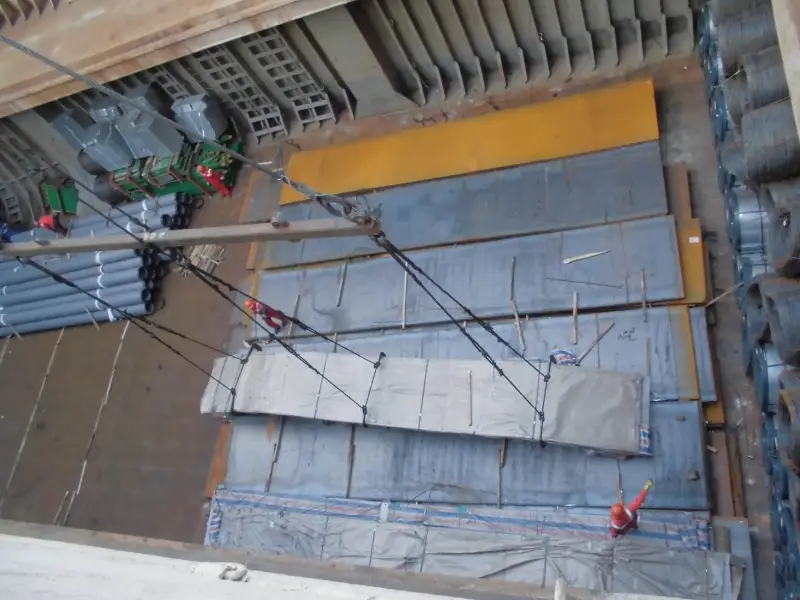
ASTM A240 410 (S41000) Stainless Steel
ASTM A240 410 (S41000) Stainless Steel: Martensitic Grade for High-Strength Applications
In-depth data sheet for ASTM A240 410 (UNS S41000) stainless steel, covering chemical composition, mechanical and thermal properties, international equivalents, and application guidance.
Hot rolling, cold rolling, annealing, quenching, tempering, solution treatment (for martensitic grades), machining
- Phone : +8618037372205
- Email : [email protected]
- WhatsApp: Contact via Whtsapp
- WeChat: +8618037372205
ASTM A240 410 Stainless Steel Introduction
ASTM A240 410 (UNS S41000) is a martensitic stainless steel widely used for its combination of high strength, hardness, and moderate corrosion resistance. It is a general-purpose 12% chromium alloy that responds to heat treatment, achieving a wide range of mechanical properties. This grade is often supplied in the annealed condition for best formability and is subsequently hardened by quenching and tempering for applications requiring wear resistance. Key attributes:
- Hardenable to high strength levels via heat treatment
- Good ductility and toughness in the annealed state
- Moderate corrosion resistance in mild environments
- Excellent machinability in the hardened and tempered condition
ASTM A240 410 Stainless Steel Chemical Composition
The following composition conforms to ASTM A240/A240M for grade 410 (UNS S41000). Values are ladle analysis limits. Note: Nickel may be present as a residual element up to 0.75%.
| Element | Standard Value | Remarks |
|---|---|---|
| Carbon (C) | 0.08~0.15 | Controls hardness and strength after heat treatment |
| Manganese (Mn) | ≤ 1.00 | Controls deoxidation and hot workability |
| Phosphorus (P) | ≤ 0.040 | Residual element |
| Sulfur (S) | ≤ 0.030 | Residual element |
| Silicon (Si) | ≤ 1.00 | Deoxidizer |
| Chromium (Cr) | 11.5~13.5 | Provides corrosion resistance and hardenability |
| Nickel (Ni) | ≤ 0.75 | Residual element; may improve toughness |
ASTM A240 410 Stainless Steel Thermal and Electrical Physical Properties
These typical physical properties are provided for engineering guidance. Actual values may vary with processing and heat treatment. The data are based on published literature for AISI 410 (S41000) stainless steel.
| Property | Standard Requirement Value | Unit | Test Condition |
|---|---|---|---|
| Density (ρ) | 7.7 | g/cm³ | Room temperature |
| Elastic Modulus (E) | 200 | GPa | Tension, room temperature |
| Shear Modulus (G) | 77 | GPa | Calculated from E and ν |
| Poisson's Ratio (ν) | 0.27~0.30 | — | Room temperature |
| Thermal Expansion (α) – 20~100°C | 10.3 | µm/m·°C | Linear expansion |
| Thermal Expansion (α) – 20~500°C | 11.4 | µm/m·°C | Linear expansion |
| Thermal Conductivity (λ) – 100°C | 24.9 | W/m·K | Steady-state |
| Thermal Conductivity (λ) – 500°C | 28.7 | W/m·K | Steady-state |
| Specific Heat Capacity – 0~100°C | 460 | J/kg·K | Average |
| Electrical Resistivity (ρ_e) | 0.57 | µΩ·m | Room temperature |
ASTM A240 410 Stainless Steel Mechanical Properties
These values are based on ASTM A240 requirements for annealed plate, sheet, and strip (thickness ≤ 200 mm). The properties can be significantly altered by heat treatment. Important: Hardened and tempered conditions will exhibit higher strength, lower ductility, and increased hardness.
| Property | Standard Requirement Value | Unit | Test Condition |
|---|---|---|---|
| Tensile Strength (Rm) | ≥ 485 (70) | MPa (ksi) | Room temperature, annealed |
| Yield Strength (ReH) – 0.2% offset | ≥ 275 (40) | MPa (ksi) | Room temperature, annealed |
| Elongation (A) – 50 mm gauge | ≥ 20 | % | Longitudinal specimen, annealed |
| Elongation (A) – 200 mm gauge | ≥ 18 | % | Longitudinal specimen, annealed |
| Hardness (Rockwell B) | ≤ 88 | HRB | Annealed condition |
| Hardness (Brinell) | ≤ 201 | HBW | Annealed condition |
ASTM A240 410 Stainless Steel Fully Equivalent Material Standards and Substitute Grades
| Country/Region | Standard | Grade | Remarks |
|---|---|---|---|
| International (ISO) | ISO 15510 | X12Cr13 | Exact equivalent for 410 |
| Europe (EU) | EN 10088-2 | 1.4006 | Same chemical and mechanical requirements |
| Japan | JIS G4304 | SUS410 | Direct equivalent |
| China | GB/T 3280 | 12Cr13 | Formerly 1Cr13 |
| Germany | DIN EN 10088-2 (old DIN 17440) | 1.4006 (X12Cr13) | Werkstoff number 1.4006 |
| UK | BS EN 10088-2 | 1.4006 | Identical to EN grade |
| France | NF EN 10088-2 | X12Cr13 | Identical to EN grade |
ASTM A240 410 Stainless Steel Application Introduction
ASTM A240 410 stainless steel is chosen when a combination of moderate corrosion resistance and high mechanical properties after heat treatment is needed. It is widely used in industries that require components capable of withstanding wear, stress, and mildly corrosive environments. Typical applications include:
- Steam turbines, gas turbines, and compressor parts
- Valves, valve seats, and pump shafts
- Cutlery, kitchen utensils, and surgical instruments
- Bolts, studs, and fasteners for moderately corrosive settings
- Petrochemical equipment components
Product Applications: Sheets and plates for pressure vessels and structural parts, Strips for stampings and bent parts, Pipes and tubes (manufactured per ASTM A731, A268, etc.) for fluid transport and heat exchangers, Forgings and bars for subsequent machining
Processed into products: Turbine blades and buckets, Valve bodies and discs, Pump impellers and shafts, Surgical instruments (forceps, scissors), Knife blades and cutting tools, Automotive exhaust components (light duty), Fasteners (bolts, nuts, studs) for mechanical engineering
Application industries: Power generation (steam and gas turbines), Oil and gas (valves, pump components), Food processing equipment, Cutlery and kitchenware, Medical instruments, General engineering and structural
ASTM A240 410 Stainless Steel Similar or Near-Equivalent Material Recommendations
| Country/Region | Standard | Grade | Remarks |
|---|---|---|---|
| USA | ASTM A276 (bars), AMS 5504 (sheet) | UNS S42000 (420) | Higher carbon, higher hardness after heat treatment, slightly better wear resistance |
| USA | ASTM A240 | UNS S43000 (430) | Ferritic stainless steel, non-hardenable by heat treatment, better corrosion resistance but lower strength |
| USA | ASTM A240 | UNS S41600 (416) | Martensitic free-machining grade (with sulfur added), similar corrosion resistance |
| Europe | EN 10088-2 | 1.4021 (X20Cr13) | Higher carbon variant (420 type), increased hardness capability |
Notes:
Heat treatment: Annealing: heat to 815-900°C, slow furnace cool to 600°C, then air cool. Hardening: austenitize at 925-1010°C, oil or air quench. Tempering: 200-370°C for maximum hardness; 370-600°C for balanced strength and toughness. Welding: Preheating at 200-300°C and post-weld heat treatment recommended to prevent cracking. Corrosion resistance: Best in mild atmospheres, fresh water, and some chemicals. Not suitable for severe corrosive environments like acids or chlorides without additional protection. Magnetism: Magnetic in all conditions.
- Share



