
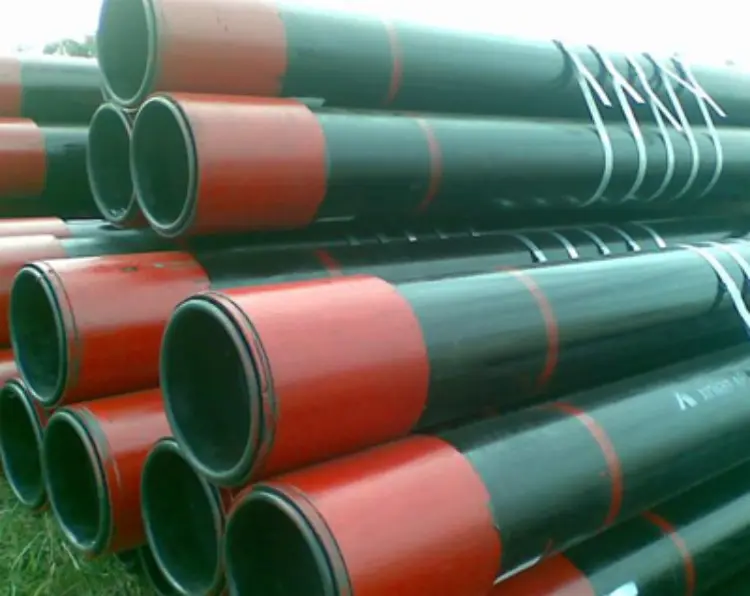
ASME SA312 TP321 Stainless Steel Pipe
ASME SA312 TP321 Stainless Steel Pipe: Composition, Properties & Applications
Comprehensive technical data for ASME SA312 TP321 stainless steel pipe including chemical composition, mechanical and physical properties, international equivalents, and typical applications in high-temperature and corrosive environments.
Hot working, cold working, welding, machining
- Phone : +8618037372205
- Email : [email protected]
- WhatsApp: Contact via Whtsapp
- WeChat: +8618037372205
ASME SA312 TP321 Stainless Steel Pipe Introduction
ASME SA312 TP321 is an austenitic chromium-nickel stainless steel pipe grade stabilized with titanium. It is widely used for high-temperature service and offers excellent resistance to intergranular corrosion after exposure to temperatures in the chromium carbide precipitation range (427–816°C). The addition of titanium prevents harmful chromium carbide formation during welding or elevated-temperature operation. This grade combines good mechanical strength, ductility, and oxidation resistance up to approximately 870°C. Typical product shapes include seamless and welded pipes intended for pressure-containing applications such as heat exchangers, boiler tubes, and chemical processing equipment. The material is generally supplied in the solution-annealed condition to ensure optimal corrosion resistance and mechanical properties.
ASME SA312 TP321 Stainless Steel Pipe Chemical Composition
The chemical composition conforms to ASME SA312 requirements for TP321. Titanium is added at a minimum of five times the carbon plus nitrogen content to stabilize the alloy and prevent intergranular corrosion. All values in weight percent.
| Element | Standard Value | Remarks |
|---|---|---|
| Carbon (C) | ≤ 0.08 | Max |
| Manganese (Mn) | ≤ 2.00 | Max |
| Phosphorus (P) | ≤ 0.045 | Max |
| Sulfur (S) | ≤ 0.030 | Max |
| Silicon (Si) | ≤ 1.00 | Max |
| Chromium (Cr) | 17.0 – 19.0 | Range |
| Nickel (Ni) | 9.0 – 12.0 | Range |
| Titanium (Ti) | 5 × (C+N) min ≤ 0.70 | Stabilizing element |
ASME SA312 TP321 Stainless Steel Pipe Thermal and Electrical Physical Properties
The following physical properties are typical for 321 stainless steel in the annealed condition. They are not specific to the SA312 pipe standard but are representative of the grade. Values may vary slightly depending on manufacturing process and final heat treatment.
| Property | Typical Value | Unit | Test Condition / Temperature |
|---|---|---|---|
| Density (ρ) | 8.03 | g/cm³ | 20°C |
| Elastic Modulus (E) | 193 | GPa | 20°C |
| Shear Modulus (G) | 77 | GPa | 20°C |
| Poisson's Ratio (ν) | 0.27 | — | 20°C |
| Thermal Expansion Coefficient (α) | 16.6 | 10⁻⁶/K | 20–100°C |
| Thermal Expansion Coefficient (α) | 17.2 | 10⁻⁶/K | 20–300°C |
| Thermal Expansion Coefficient (α) | 18.6 | 10⁻⁶/K | 20–500°C |
| Thermal Conductivity (λ) | 15.1 | W/m·K | 100°C |
| Thermal Conductivity (λ) | 18.6 | W/m·K | 500°C |
| Specific Heat Capacity | 500 | J/kg·K | 20°C |
| Electrical Resistivity (ρ_e) | 0.72 | µΩ·m | 20°C |
ASME SA312 TP321 Stainless Steel Pipe Mechanical Properties
Mechanical properties are determined at room temperature on solution-annealed specimens in accordance with ASME SA312. The values represent minimum requirements for longitudinal samples cut from finished pipe. Hardness is not specified in the standard but is provided as a typical value for reference.
| Property | Standard Requirement | Unit | Test Condition |
|---|---|---|---|
| Tensile Strength (Rm) | ≥ 515 | MPa | Room temperature |
| Yield Strength (ReH, 0.2% offset) | ≥ 205 | MPa | Room temperature |
| Elongation (A) | ≥ 35 | % | Gauge length 50 mm, longitudinal |
| Hardness | ≤ 90 HRB / 200 HBW | — | Typical (not mandatory in SA312) |
ASME SA312 TP321 Stainless Steel Pipe Fully Equivalent Material Standards and Substitute Grades
| Country/Region | Standard | Grade | Remarks |
|---|---|---|---|
| USA | ASME SA312 / ASTM A312 | TP321 | Original specification |
| European Union | EN 10216-5 | 1.4541 (X6CrNiTi18-10) | Seamless tube; titanium stabilized equivalent |
| Japan | JIS G3459 | SUS321TP | Stainless steel pipes for corrosion and heat resistance |
| China | GB/T 14976 | 0Cr18Ni11Ti | Stainless steel seamless tube; similar chemical and mechanical properties |
| International | ISO 9327 | X6CrNiTi18-10 | Steel forgings and rolled or forged bars; comparable to 321 |
ASME SA312 TP321 Stainless Steel Pipe Application Introduction
ASME SA312 TP321 pipes are ideal for applications requiring resistance to intergranular corrosion and sustained operation at temperatures up to 815°C (1500°F). The titanium stabilization allows the material to be used in the as-welded condition without post-weld heat treatment. Typical industries include petrochemical, power generation, aerospace, and food processing. The grade is commonly selected for components exposed to corrosive fluids, high-temperature steam, and flue gases.
Product Applications: Heat Exchanger Tubes and Shells, Boiler Tubes and Superheater Pipes, High-Temperature Steam Piping, Process Piping for Corrosive Fluids, Furnace Components and Radiant Tubes, Expansion Joints and Bellows
Processed into products: Pipe fittings (elbows, tees, reducers) made from SA403 TP321, Flanges (ASME B16.5, SA182 F321), Welded or seamless tube bundles for shell-and-tube exchangers, Thermowells and sensor protection tubes, Heavy-wall headers and manifolds for high-pressure steam
Application industries: Chemical and Petrochemical Processing, Oil and Gas Refining, Power Generation (boilers, superheaters), Aerospace (exhaust systems, engine components), Food and Beverage Equipment, Pharmaceutical Manufacturing
ASME SA312 TP321 Stainless Steel Pipe Similar / Alternative Materials Recommendation
| Country/Region | Standard | Grade | Remarks |
|---|---|---|---|
| USA | ASTM A312 | TP304 | Similar but without Ti; susceptible to intergranular corrosion after welding/high temp |
| USA | ASTM A312 | TP304L | Low-carbon variant of 304; better weld corrosion resistance but lower high-temp strength |
| USA | ASTM A312 | TP316L | Molybdenum-added grade; better pitting resistance but may be over-engineered for some 321 applications |
| EU | EN 10216-5 | 1.4301 (X5CrNi18-10) | Non-stabilized 304 equivalent; lower cost but less suited for sustained elevated temperature |
| EU | EN 10216-5 | 1.4404 (X2CrNiMo17-12-2) | Low-carbon 316L; good corrosion resistance, often used as upgrade from 321 for chloride environments |
Notes:
Welding of TP321 is readily performed by common fusion methods using ER321 (filler) and E321 (electrode). Preheating and post-weld heat treatment are generally not required. Heat treatment for solution annealing is typically performed at 1040–1120°C followed by rapid quenching. Machinability is slightly more difficult than standard 304 due to the titanium carbides, requiring sharp tools and adequate cooling. Double certification with TP304L/321 may sometimes be arranged, subject to chemical composition meeting both requirements.
- Share



