
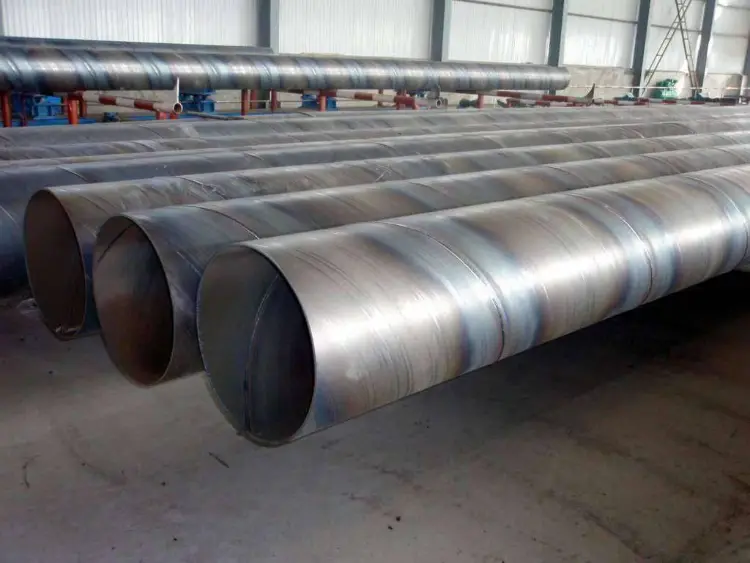
ASME SA213 T11 Boiler Steel Pipe
ASME SA213 T11 Boiler Steel Pipe | Chrome-Moly Alloy for High Temperature Service
Find complete material data for ASME SA213 T11 boiler pipe: chemical composition, tensile properties, thermal conductivity, equivalent grades, and typical applications.
Hot-finished or cold-finished, suitable for bending, coiling, flaring, welding, and post-weld heat treatment
- Phone : +8618037372205
- Email : [email protected]
- WhatsApp: Contact via Whtsapp
- WeChat: +8618037372205
ASME SA213 T11 Boiler Steel Pipe Introduction
ASME SA213 T11 is a seamless ferritic alloy steel tube with nominal composition 1.25% Chromium and 0.5% Molybdenum, widely used in boilers, superheaters, and heat exchangers for elevated temperature service. It offers excellent oxidation resistance up to 600°C (1112°F) and good creep strength, combined with satisfactory weldability and formability.
The material is supplied in the annealed or normalized and tempered condition to ensure a balanced microstructure of ferrite and bainite. SA213 T11 tubes conform to the ASME Boiler and Pressure Vessel Code, Section II, and are typically delivered in straight lengths or U-bends with plain or upset ends. Typical applications include power plant boilers, petrochemical refinery heaters, and high-pressure steam lines.
ASME SA213 T11 Boiler Steel Pipe Chemical Composition
The chemical requirements for ASME SA213 T11 are taken from the standard specification. The composition is balanced to provide high-temperature strength and oxidation resistance while maintaining good weldability. Trace elements may be present but are not intentionally added.
| Element | Content (%) | Remarks |
|---|---|---|
| Carbon (C) | 0.05 – 0.15 | Key strength contributor and carbide former |
| Manganese (Mn) | 0.30 – 0.60 | Deoxidizer; improves hot workability |
| Phosphorus (P) | ≤ 0.025 | Maximum allowable; higher levels promote embrittlement |
| Sulfur (S) | ≤ 0.025 | Maximum allowable; higher levels may cause hot shortness |
| Silicon (Si) | 0.50 – 1.00 | Deoxidizer; enhances oxidation resistance |
| Chromium (Cr) | 1.00 – 1.50 | Provides high-temperature strength and oxidation resistance |
| Molybdenum (Mo) | 0.44 – 0.65 | Enhances creep resistance and hardenability |
ASME SA213 T11 Boiler Steel Pipe Physical and Thermal Properties
The following data are typical values for 1.25Cr-0.5Mo steel in the annealed condition and are not specified in SA-213. They serve as a practical reference for design calculations. Properties may vary slightly with heat treatment and temperature.
| Property | Typical Value | Unit | Test Condition / Temperature |
|---|---|---|---|
| Density (ρ) | 7.85 | g/cm³ | 20°C |
| Modulus of Elasticity (E) | 210 | GPa | 20°C |
| Modulus of Elasticity (E) | 195 | GPa | 400°C |
| Shear Modulus (G) | 81 | GPa | 20°C |
| Poisson's Ratio (ν) | 0.29 | – | 20°C |
| Coefficient of Thermal Expansion (α) | 11.2 | 10⁻⁶ /K | 20 – 100°C |
| Coefficient of Thermal Expansion (α) | 12.0 | 10⁻⁶ /K | 20 – 200°C |
| Coefficient of Thermal Expansion (α) | 12.8 | 10⁻⁶ /K | 20 – 400°C |
| Coefficient of Thermal Expansion (α) | 13.3 | 10⁻⁶ /K | 20 – 500°C |
| Thermal Conductivity (λ) | 42.0 | W/m·K | 20°C |
| Thermal Conductivity (λ) | 38.5 | W/m·K | 100°C |
| Thermal Conductivity (λ) | 36.0 | W/m·K | 300°C |
| Thermal Conductivity (λ) | 33.0 | W/m·K | 500°C |
| Specific Heat Capacity (cp) | 460 | J/kg·K | 20°C |
| Specific Heat Capacity (cp) | 520 | J/kg·K | 400°C |
| Electrical Resistivity (ρₑ) | 0.48 | µΩ·m | 20°C |
ASME SA213 T11 Boiler Steel Pipe Mechanical Properties at Room Temperature
The following tensile properties are specified by ASME SA-213 for T11 tubes at room temperature. Elongation values vary depending on wall thickness or specimen geometry. Hardness values are not mandatory but are commonly specified as additional requirement (S3) in SA-213; typical Brinell hardness is around 150 HBW max in the annealed condition.
| Property | Required Value | Unit | Test Condition |
|---|---|---|---|
| Tensile Strength (Rm) | ≥ 415 (min.) | MPa | Room temperature, longitudinal specimen |
| Yield Strength (ReH) | ≥ 205 (min.) | MPa | Room temperature, offset 0.2% |
| Elongation (A) | ≥ 30 | % | Gauge length 2 in. (50 mm), wall thickness ≤ 0.3125 in. (7.94 mm), strip test or round specimen |
| Elongation (A) | ≥ 22 | % | Gauge length 2 in. (50 mm), wall thickness > 0.3125 in. (7.94 mm), strip test |
| Elongation (A) | ≥ 22 | % | Round specimen with gauge length = 4D or proportional dimensions |
| Brinell Hardness (HBW) | 130 - 170 (typical) | HBW | Optional requirement S3; max. 150 HBW commonly agreed |
ASME SA213 T11 Boiler Steel Pipe Fully Equivalent International Designations
| Country/Region | Standard / Specification | Designation / Grade | Remarks |
|---|---|---|---|
| Germany / EU | DIN 17175 (withdrawn) / EN 10216-2 | 13CrMo4-5 / 1.7335 | Seamless tubes for pressure purposes; chemically and mechanically identical. |
| Japan | JIS G3462 | STBA 22 | Alloy steel tubes for boiler and heat exchanger, same nominal chemistry. |
| China | GB/T 5310 | 15CrMoG | Seamless steel tubes for high-pressure boiler. Minor adjustments in Si and Mn but fully interchangeable. |
| France | NF A49-213 / EN 10216-2 | TU13C / 13CrMo4-5 | Same Cr-Mo grade, fully equivalent. |
| UK | BS 3059-2 (obsolete) / EN 10216-2 | 13CrMo4-5 | Historical BS grade matches T11. |
| Italy | UNI 5462 / EN 10216-2 | 14CrMo3 / 13CrMo4-5 | Equivalent alloy content. |
| Russia | GOST 20072 | 15ChM | Similar Cr-Mo steel; check exact tolerance for substitution. |
ASME SA213 T11 Boiler Steel Pipe Application Introduction
ASME SA213 T11 is primarily used for high-temperature service in power generation and petrochemical industries. The chromium-molybdenum composition provides a good balance of strength, oxidation resistance, and fabricability. The material is suitable for forming, bending, and welding and is typically supplied with plain or upset ends.
- Requires post-weld heat treatment (PWHT) to restore toughness and reduce residual stress.
- Maximum recommended service temperature is around 600°C (1112°F) continuously; short-term up to 650°C depending on oxidation limit.
- Resistance to hydrogen attack and sulfide corrosion is moderate; use appropriate NACE guidelines for sour service.
Product Applications: Superheater and reheater tube bundles, Economizer tubes, Boiler water wall panels, Oil refinery furnace tubes (radiant section), Steam header and connecting pipes
Processed into products: Bent tube sections (U-bends, serpentine coils), Welded tube-to-header joints, Expanded tube ends for tube sheets, Finned tubes (extruded or high-frequency welded fins), Formed inlet and outlet pigtails
Application industries: Power generation (thermal power plants, combined cycle plants), Petrochemical and refining (furnace tubes, catalytic reformers), Chemical processing (steam lines, process heaters), Industrial boiler manufacturing, Pressure vessel and heat exchanger fabrication
ASME SA213 T11 Boiler Steel Pipe Similar or Alternative Grades with Comparable Properties
| Country/Region | Standard / Specification | Designation / Grade | Remarks |
|---|---|---|---|
| USA | ASME SA213 | T12 | 1Cr-0.5Mo steel, lower creep strength but similar oxidation resistance. Slightly lower allowable stress. |
| USA | ASME SA213 | T22 | 2.25Cr-1Mo, higher high-temperature strength and corrosion resistance. Often used as an upgrade for higher temperatures. |
| USA | ASME SA213 | T5 | 5Cr-0.5Mo, higher chromium content for better corrosion in some environments, but lower toughness. |
| EU | EN 10216-2 | 10CrMo5-5 (1.7338) | 0.5Cr-0.5Mo type; not equivalent but sometimes used in lower temperature applications. |
| China | GB/T 5310 | 12Cr1MoVG | Higher chromium (1Cr-0.5Mo-V), offering improved creep resistance for supercritical boilers. |
Notes:
The data provided are based on ASME SA-213/SA-213M, latest edition. For specific projects, supplementary requirements (e.g., minimum hardness, nondestructive testing, special heat treatment) may be invoked by the purchaser. The physical property tables present typical engineering values and should be verified against certified material test reports or updated authoritative sources for critical design.
- Share



