
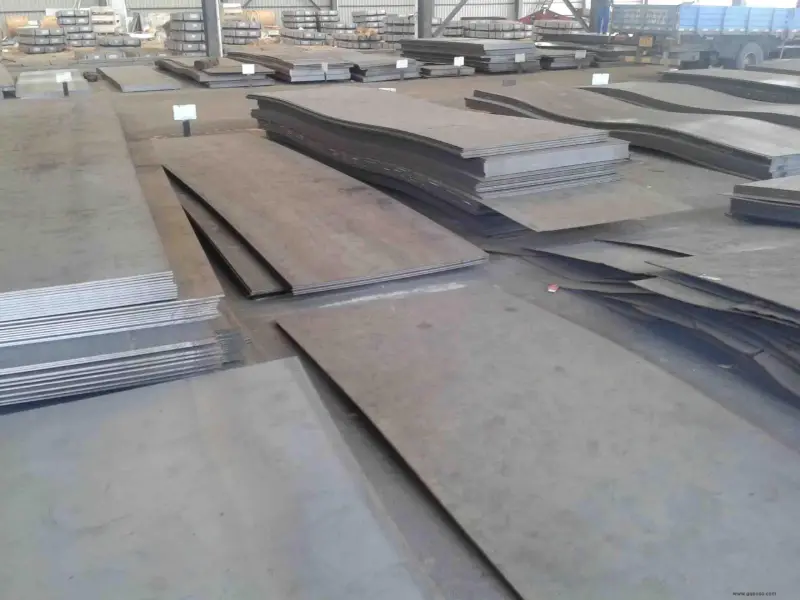
904L (N08904) Super Austenitic Stainless Steel Plate/Coil Material
904L (N08904) Super Austenitic Stainless Steel Plate/Coil - Ultimate Corrosion Resistance for Severe Environments
Explore the properties, chemical composition, mechanical and thermal data, equivalent grades and applications of 904L (UNS N08904) austenitic stainless steel plate and coil. Designed for sulfuric, phosphoric and chloride-rich environments.
Hot rolling, cold rolling, annealing, pickling, cutting, forming, welding
- Phone : +8618037372205
- Email : [email protected]
- WhatsApp: Contact via Whtsapp
- WeChat: +8618037372205
904L Super Austenitic Stainless Steel Plate/Coil Introduction
904L (UNS N08904) is a high-alloy, low-carbon, super austenitic stainless steel with additions of molybdenum and copper. It offers outstanding resistance to reducing acids such as sulfuric and phosphoric acid, and excellent resistance to pitting and crevice corrosion in chloride-containing media. The alloy's fully austenitic structure ensures high toughness and ductility, even at cryogenic temperatures. Key features:
- Excellent weldability with low carbon content minimizing intergranular corrosion risk
- Good formability and fabricability for plate, sheet and coil products
- Widely used in chemical processing, oil & gas, desalination, and pulp & paper industries
- Delivered annealed and pickled for optimal corrosion resistance
904L Super Austenitic Stainless Steel Plate/Coil Chemical Composition
The chemical composition of 904L is balanced to provide high corrosion resistance while maintaining an austenitic microstructure. Low carbon (max 0.020%) prevents sensitization during welding. Nickel, chromium, molybdenum and copper are added for acid resistance and pitting resistance.
- Values are maximum unless a range is shown.
- Iron constitutes the balance.
| Element | Standard Value (wt%) | Remarks |
|---|---|---|
| Carbon (C) | ≤ 0.020 | Low carbon grade |
| Manganese (Mn) | ≤ 2.00 | |
| Phosphorus (P) | ≤ 0.045 | |
| Sulfur (S) | ≤ 0.035 | |
| Silicon (Si) | ≤ 1.00 | |
| Chromium (Cr) | 19.0 – 23.0 | Key for passivation and corrosion resistance |
| Nickel (Ni) | 23.0 – 28.0 | Stabilizes austenite, enhances acid resistance |
| Molybdenum (Mo) | 4.0 – 5.0 | Increases pitting and crevice corrosion resistance |
| Copper (Cu) | 1.0 – 2.0 | Improves resistance to reducing acids |
| Nitrogen (N) | ≤ 0.10 | May be present |
| Iron (Fe) | Balance | Remainder |
904L Super Austenitic Stainless Steel Plate/Coil Physical Properties
Physical properties are influenced by composition and thermomechanical history. The fully austenitic microstructure gives 904L a low thermal conductivity and relatively high thermal expansion coefficient compared to carbon steel. Electrical resistivity is typical for high-nickel stainless steel.
| Property | Typical Value | Unit | Test Condition |
|---|---|---|---|
| Density | 7.95 | g/cm³ (0.287 lb/in³) | At 20°C (68°F) |
| Modulus of Elasticity (E) | 195 | GPa | Tension, at 20°C |
| Shear Modulus (G) | 75 | GPa | Calculated, at 20°C |
| Poisson's Ratio (ν) | 0.30 | – | At 20°C |
| Thermal Expansion Coefficient (α) | 15.3 | µm/m·°C (8.5 µin/in·°F) | 20–100°C (68–212°F) |
| Thermal Expansion Coefficient (α) | 16.5 | µm/m·°C (9.2 µin/in·°F) | 20–500°C (68–932°F) |
| Thermal Expansion Coefficient (α) | 17.5 | µm/m·°C (9.7 µin/in·°F) | 20–800°C (68–1472°F) |
| Thermal Conductivity (λ) | 12.9 | W/m·K (7.5 Btu·in/ft²·h·°F) | At 20°C |
| Thermal Conductivity (λ) | 14.7 | W/m·K (8.5 Btu·in/ft²·h·°F) | At 100°C |
| Thermal Conductivity (λ) | 19.0 | W/m·K (11.0 Btu·in/ft²·h·°F) | At 500°C |
| Specific Heat Capacity | 500 | J/kg·K (0.12 Btu/lb·°F) | At 20°C |
| Electrical Resistivity (ρ_e) | 0.85 | µΩ·m | At 20°C |
904L Super Austenitic Stainless Steel Plate/Coil Mechanical Properties
Mechanical properties are based on ASTM A240/ASME SA240 for plate and coil. The alloy is supplied in solution-annealed condition, exhibiting high ductility. Values may vary with product thickness and processing. Note: For plates < 3/16 in (4.76 mm), elongation requirements may be adjusted proportionally.
| Property | Standard Requirement | Unit | Test Condition |
|---|---|---|---|
| Yield Strength, 0.2% offset | ≥ 220 | MPa (ksi) | At room temperature, longitudinal |
| Ultimate Tensile Strength | ≥ 490 | MPa (ksi) | At room temperature, longitudinal |
| Elongation in 50 mm (2 in) | ≥ 35 | % | Thickness ≥ 4.76 mm (0.1875 in) |
| Hardness, Rockwell B (HRB) | ≤ 90 | HRB | Solution annealed |
| Hardness, Brinell (HBW) | ≤ 200 | HBW | Solution annealed (typical) |
| Modulus of Elasticity (Tension) | 195 | GPa (28.3 ×10⁶ psi) | Typical at room temperature |
904L Super Austenitic Stainless Steel Plate/Coil Completely Equivalent Material Standards and Alternative Grades
| Country / Region | Standard | Grade Designation | Remarks |
|---|---|---|---|
| USA | ASTM A240/A240M, ASME SA240 | UNS N08904 (904L) | Most widely used specification for plate/sheet/coil |
| Europe | EN 10088-2 | X1NiCrMoCu25-20-5 (1.4539) | Same chemical boundaries; interchangeble for corrosion service |
| International | ISO 15510 | X1NiCrMoCu25-20-5 | Harmonized with EN and ASTM |
| Japan | JIS G4304 | SUS 890L | Close match; verify Mo & Cu ranges |
| China | GB/T 3280 | 019Cr19Ni22Mo5Cu2 (similar to S39042) | Approximate equivalent; check composition for exact match |
904L Super Austenitic Stainless Steel Plate/Coil Application Introduction
904L excels in environments where conventional stainless steels (e.g., 316L) fail due to pitting, crevice corrosion or stress corrosion cracking. Its high copper content promotes resistance to sulfuric and phosphoric acids. Typical applications involve both welded and seamless components operating at moderate temperatures. Caution: Avoid exposure to hot concentrated alkali and strong oxidizing acids such as nitric acid above 70%.
Product Applications: Storage tanks and vessels, Heat exchangers (shell-and-tube, plate), Piping, tubing and fittings, Reactor vessels, Evaporators, Distillation columns
Processed into products: Flanges and gasket seating surfaces, Valve bodies and trim, Pump shafts and impellers, Weld neck and blind flanges, Tube sheets, Expansion bellows, Seawater-cooled condenser tubes, Scrubber internals and mist eliminators
Application industries: Chemical and petrochemical processing, Oil and gas (offshore, downhole, refining), Pharmaceutical and food processing equipment, Pulp and paper (bleach plants, digesters), Desalination and water treatment, Pollution control (flue gas desulfurization, scrubbers), Marine engineering
904L Super Austenitic Stainless Steel Plate/Coil Similar or Near-Equivalent Corrosion-Resistant Alloys
| Country / Region | Standard | Grade Designation | Remarks |
|---|---|---|---|
| USA | ASTM A240 | UNS N08020 (Alloy 20) | Lower Mo (2-3%), Ni (32-38%), stronger in sulfuric acid but less pitting resistance |
| USA | ASTM A240 | UNS S31254 (254 SMO) | Higher Mo (6-7%), better pitting resistance but less formable and more expensive |
| Europe | EN 10088-2 | 1.4529 (X1NiCrMoCuN25-20-7) | Super austenitic with 6Mo, similar but optimized for higher corrosion severity |
| Japan | JIS G4304 | SUS 312L | Lower alloy, cannot replace 904L in severe acid conditions |
| Global | – | Duplex 2205 (S32205) | Higher strength, lower nickel, good chloride SCC resistance but not for strong reducing acids |
Notes:
Welding: Use ERNiCrMo-3 (Inconel 625) or ERNiCrMo-4 (C-276) filler metals. Maintain low heat input (≤1.5 kJ/mm) and interpass temperature ≤150°C. Post-weld annealing is usually not required for corrosion resistance if proper procedures are followed. Magnetism: Solution-annealed 904L is non-magnetic. Cold working can induce a slight magnetic response. Forms: Available in plate thicknesses up to 50 mm (2 in) and coil widths up to 2000 mm (80 in). Surface finishes according to ASTM A480/A480M.
- Share



