
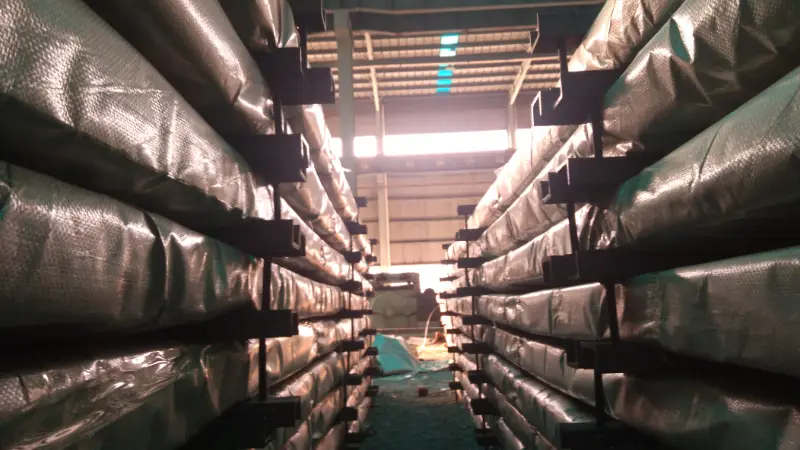
X39CrMo17-1 (1.4122) Stainless Steel
X39CrMo17-1 (1.4122) Stainless Steel - High Hardness Martensitic Grade with Enhanced Corrosion Resistance
X39CrMo17-1 is a martensitic stainless steel with molybdenum addition, offering high hardness after heat treatment and improved corrosion resistance. Ideal for cutlery, medical instruments, and wear-resistant components.
Hot rolling, cold rolling, annealing, quenching and tempering, machining (in annealed condition), polishing
- Phone : +8618037372205
- Email : [email protected]
- WhatsApp: Contact via Whtsapp
- WeChat: +8618037372205
X39CrMo17-1 Stainless Steel Introduction
X39CrMo17-1 (1.4122) is a martensitic, corrosion-resisting stainless steel defined in EN 10088-1. The addition of molybdenum provides better pitting and crevice corrosion resistance compared to standard Cr17 grades. It can be hardened by quenching and tempering to achieve a wide range of mechanical properties. In the hardened condition, it exhibits high strength, good wear resistance, and moderate toughness. The alloy is primarily supplied as plate, sheet, and coil, and is often used in applications requiring a combination of corrosion resistance and high hardness, such as cutting tools, surgical instruments, and pump parts.
X39CrMo17-1 Stainless Steel Chemical Composition
Chemical composition limits according to EN 10088-1 for grade X39CrMo17-1 (1.4122). The controlled molybdenum content enhances corrosion resistance, while chromium provides oxidation resistance and supports hardenability.
| Chemical Element | Standard Value | Remarks |
|---|---|---|
| Carbon (C) | 0.33 – 0.45 | permissible range |
| Silicon (Si) | ≤ 1.00 | max. |
| Manganese (Mn) | ≤ 1.50 | max. |
| Phosphorus (P) | ≤ 0.040 | max. |
| Sulfur (S) | ≤ 0.030 | max. |
| Chromium (Cr) | 15.50 – 17.50 | nominal range |
| Molybdenum (Mo) | 0.80 – 1.30 | nominal range |
| Nickel (Ni) | ≤ 1.00 | max. |
X39CrMo17-1 Stainless Steel Physical Properties
Typical physical properties for X39CrMo17-1 at room temperature and elevated temperatures. Data are representative for the hardened and tempered condition and are based on published material datasheets from stainless steel producers.
| Property | Standard Value | Unit | Test Condition |
|---|---|---|---|
| Density (ρ) | 7.7 | g/cm³ | 20°C |
| Modulus of Elasticity (E) | 215 | GPa | 20°C |
| Shear Modulus (G) | approx. 83 | GPa | 20°C, calculated from E and ν |
| Poisson's Ratio (ν) | 0.30 | – | 20°C |
| Thermal Expansion Coefficient (α) | 10.5 | 10⁻⁶·K⁻¹ | 20 – 100°C |
| Thermal Expansion Coefficient (α) | 10.5 | 10⁻⁶·K⁻¹ | 20 – 200°C |
| Thermal Expansion Coefficient (α) | 11.0 | 10⁻⁶·K⁻¹ | 20 – 300°C |
| Thermal Expansion Coefficient (α) | 11.5 | 10⁻⁶·K⁻¹ | 20 – 400°C |
| Thermal Expansion Coefficient (α) | 12.0 | 10⁻⁶·K⁻¹ | 20 – 500°C |
| Thermal Conductivity (λ) | 15 | W·m⁻¹·K⁻¹ | 20°C |
| Specific Heat Capacity (cp) | 460 | J·kg⁻¹·K⁻¹ | 20°C |
| Electrical Resistivity (ρe) | 0.60 | µΩ·m | 20°C |
X39CrMo17-1 Stainless Steel Mechanical Properties
Mechanical properties for sheet/plate according to EN 10088-2 in the quenched and tempered (+QT) conditions. Properties depend on tempering temperature and product thickness. Values below are for longitudinal specimens from plate/sheet ≤ 75 mm thickness. Impact energy is reported on ISO V-notch specimens.
| Property | Standard Requirement | Unit | Test Condition |
|---|---|---|---|
| Tensile Strength (Rm) | 800 – 1000 | MPa | +QT550, plate/sheet ≤ 75 mm |
| Yield Strength (Rp0.2) | ≥ 600 | MPa | +QT550 |
| Elongation (A) | ≥ 12 | % | +QT550, gauge length 5.65√So |
| Impact Energy (KV) | ≥ 20 | J | +QT550, longitudinal, 20°C |
| Hardness | ≈ 260 – 320 | HBW | +QT550, typical range |
| Tensile Strength (Rm) | 900 – 1100 | MPa | +QT650 |
| Yield Strength (Rp0.2) | ≥ 500 | MPa | +QT650 |
| Elongation (A) | ≥ 14 | % | +QT650 |
| Tensile Strength (Rm) | 750 – 950 | MPa | +QT750 |
| Yield Strength (Rp0.2) | ≥ 400 | MPa | +QT750 |
| Elongation (A) | ≥ 16 | % | +QT750 |
| Hardness in Annealed Condition | ≤ 280 | HBW | +A, maximum value |
X39CrMo17-1 Stainless Steel Fully Equivalent Material Standards and Substitute Grades
| Country/Region | Standard | Designation | Remarks |
|---|---|---|---|
| European Union | EN 10088-1 | X39CrMo17-1 (1.4122) | Original designation |
| International | ISO 15510 | X39CrMo17-1 (1.4122) | Identically adopted |
X39CrMo17-1 Stainless Steel Application Introduction
- X39CrMo17-1 is used where martensitic stainless steel with improved corrosion resistance is required.
- Its molybdenum content imparts better resistance to chlorides and mild acids than Mo-free 17% Cr grades.
- Typical hardness after hardening and tempering can range from approximately 35 HRC to 50 HRC depending on tempering temperature, providing a good balance of wear resistance and toughness.
- In the annealed condition, the steel is soft enough for extensive machining and forming operations.
Product Applications: Martensitic stainless steel precision strips for medical blades, Hardened and tempered plate for pump casings, Bright annealed strip for stamped cutlery, Hot-rolled plate for valve bodies, Cold-rolled coil for bearing parts
Processed into products: Surgical scalpels and forceps, Industrial knives and shear blades, Pump shafts and wear rings, Valve seats and stems, Corrosion-resistant ball bearings, Food slicer disks, Mould cores for corrosive plastic processing
Application industries: Medical technology (surgical instruments, scissors, clamps), Cutlery and kitchen utensils (high-quality knives, forks), Food processing equipment (hygienic parts, cutting blades), Pumps and valves (shafts, spindles, sealing surfaces), Plastic moulds (corrosion-resistant mould inserts), Bearings and mechanical components in mildly corrosive environments
X39CrMo17-1 Stainless Steel Similar / Alternative Material Recommendations
| Country/Region | Standard | Designation | Remarks |
|---|---|---|---|
| USA | ASTM A240 / A276 | 440A (UNS S44002) | Higher carbon (0.60-0.75%), lower Mo (≤0.75); higher hardness attainable but lower corrosion resistance |
| USA | ASTM A240 / A276 | 440C (UNS S44004) | Much higher carbon (0.95-1.20%), max. Mo 0.75; excellent wear resistance, inferior toughness |
| Japan | JIS G4304 / G4303 | SUS440A | Similar to AISI 440A, carbon 0.60-0.75%, Mo not specified |
| China | GB/T 1220 / GB/T 3280 | 68Cr17 (formerly 7Cr17) | Carbon 0.60-0.75%, no intentional Mo addition; lower corrosion resistance |
| Germany | EN 10088-1 | X90CrMoV18 (1.4112) | Higher carbon (~0.90%), Vanadium added; used for high-hardness blades |
Notes:
- Hardening: austenitize at 1000–1050°C followed by oil or air quenching; tempering temperature between 150°C and 300°C for maximum hardness, or 550–750°C for high toughness with reduced strength.
- Magnetic behavior: martensitic structure is ferromagnetic.
- Weldability: not generally recommended for welding due to high hardenability and risk of cold cracking; if necessary, preheating and post-weld heat treatment are essential.
- Corrosion resistance is best in the hardened and polished condition; avoid prolonged exposure to reducing acids.
- Share



