
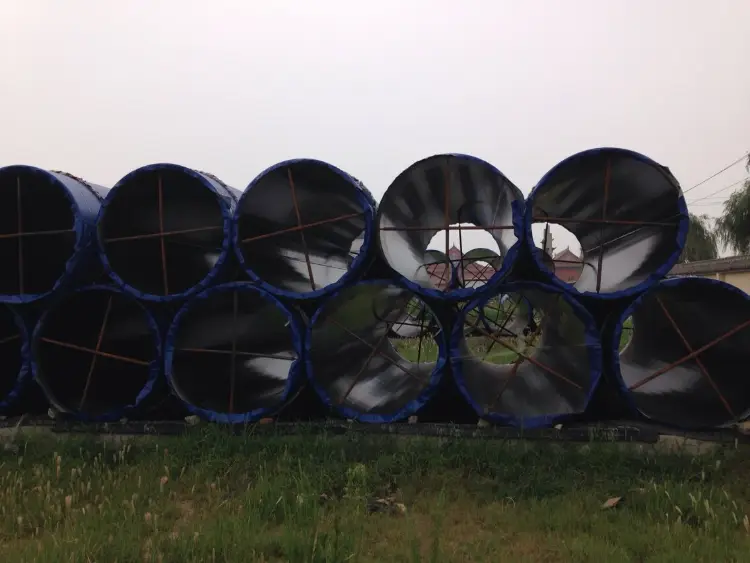
Q/TDGG0040 09MnNiD Low-Temperature Steel Pipe
Q/TDGG0040 09MnNiD Low-Temperature Steel Pipe: Chemical, Mechanical & Physical Properties
Comprehensive data sheet for 09MnNiD low-temperature steel pipe per Q/TDGG0040, including chemical composition, mechanical properties, and physical performance.
Welding, Bending, Cutting, Cold Forming, Normalizing, Stress Relieving
- Phone : +8618037372205
- Email : [email protected]
- WhatsApp: Contact via Whtsapp
- WeChat: +8618037372205
Q/TDGG0040 09MnNiD Low-Temperature Steel Pipe Introduction
09MnNiD is a low-alloy ferritic steel specifically designed for low-temperature service, typically down to -45°C to -70°C. Manufactured according to the enterprise standard Q/TDGG0040, it is primarily used for seamless or welded pipes in pressure vessels and cryogenic piping systems. The material is characterized by its fine grain structure, achieved through controlled rolling or normalizing heat treatments, which provides an excellent combination of strength and toughness at sub-zero temperatures. Key features include:
- Good ductility and notch toughness at low temperatures.
- Excellent weldability with appropriate low-hydrogen welding consumables.
- Cost-effective alternative to austenitic stainless steels for moderate cryogenic applications.
Q/TDGG0040 09MnNiD Low-Temperature Steel Pipe Chemical Composition
The chemical composition of 09MnNiD is carefully balanced to ensure low-temperature toughness. Elements like Ni are added to improve notch toughness, while Mn and Si contribute to strength and deoxidation. Strict limits on impurities such as S and P are critical for maintaining ductility.
| Element | Typical Value (%) | Remarks |
|---|---|---|
| Carbon (C) | ≤ 0.12 | Core hardenability element |
| Silicon (Si) | 0.15 ~ 0.50 | Deoxidizer and strength contributor |
| Manganese (Mn) | 1.20 ~ 1.60 | Strength and toughness enhancer |
| Phosphorus (P) | ≤ 0.015 | Controlled impurity for toughness |
| Sulfur (S) | ≤ 0.010 | Controlled impurity for ductility |
| Nickel (Ni) | 0.30 ~ 0.80 | Improves low-temperature toughness |
| Chromium (Cr) | ≤ 0.30 | Residual or optional element |
| Molybdenum (Mo) | ≤ 0.10 | Residual or optional element |
| Copper (Cu) | ≤ 0.25 | Residual element |
| Vanadium (V) | ≤ 0.05 | Grain refiner |
| Niobium (Nb) | ≤ 0.05 | Optional grain refiner |
| Aluminum (Al) | ≥ 0.015 | Guarantee for fine grain practice |
Q/TDGG0040 09MnNiD Low-Temperature Steel Pipe Physical, Thermal & Electrical Properties
Physical properties are estimated for this steel grade. Thermal conductivity (λ) is adequate for heat exchange applications, while the coefficient of thermal expansion (α) is typical for carbon-manganese steels, important for design considerations with dissimilar metal joints.
| Property | Standard Required Value | Unit | Test Condition |
|---|---|---|---|
| Density (ρ) | 7.85 | kg/dm³ | at +20 °C |
| Elastic Modulus (E) | 206 | GPa | at +20 °C |
| Elastic Modulus (E) | 200 | GPa | at +100 °C |
| Shear Modulus (G) | 81 | GPa | at +20 °C (Approx.) |
| Poisson's Ratio (ν) | 0.27 | - | at +20 °C (Approx.) |
| Thermal Expansion (α) | 12.0 | 10⁻⁶/K | between 20 °C and 100 °C |
| Thermal Expansion (α) | 12.6 | 10⁻⁶/K | between 20 °C and 200 °C |
| Thermal Conductivity (λ) | 37.5 | W/(m·K) | at +20 °C |
| Thermal Conductivity (λ) | 36.5 | W/(m·K) | at +100 °C |
| Specific Heat Capacity (Cp) | 480 | J/(kg·K) | at +20 °C |
| Electrical Resistivity (ρ_e) | 0.25 | Ω·mm²/m | at +20 °C |
Q/TDGG0040 09MnNiD Low-Temperature Steel Pipe Mechanical Properties
Mechanical properties are verified at room temperature and design low temperature. The high Yield Strength (ReH) and Tensile Strength (Rm) allow for lighter designs, while the guaranteed Low-Temperature Impact Energy (KV) ensures safety against brittle fracture. Elongation (A) confirms sufficient formability.
| Property | Standard Required Value | Unit | Test Condition |
|---|---|---|---|
| Tensile Strength (Rm) | 440 ~ 590 | MPa | Room Temperature, Transverse |
| Yield Strength (ReH) | ≥ 280 | MPa | Room Temperature, Transverse |
| Tensile Strength (Rm) | ≥ 440 | MPa | Minimum requirement |
| Elongation (A) | ≥ 22 | % | Gauge length 50 mm, circular cross-section |
| Impact Energy (KV2) | ≥ 47 | J | Test at -70 °C, Longitudinal, 10x10 mm specimen |
| Impact Energy (KV2) | ≥ 27 | J | Test at -70 °C, Transverse, 5x10 mm subsize specimen (if wall thickness <10mm) |
| Bend Test (Mandrel Diameter) | D = 4a | - | Bend angle 180°, a = specimen thickness, No cracks |
Q/TDGG0040 09MnNiD Low-Temperature Steel Pipe Fully Equivalent Material Standards & Substitutable Grades
| Country/Region | Standard | Grade | Remarks |
|---|---|---|---|
| China | Q/TDGG0040 | 09MnNiD | Original enterprise standard, optimized for low-temperature pipes. |
Q/TDGG0040 09MnNiD Low-Temperature Steel Pipe Application Introduction
09MnNiD pipe is engineered for reliable performance in environments where temperatures drop as low as -70°C. Its balance of high strength and superior toughness makes it suitable for manufacturing critical pressure-boundary components. Preheating and post-weld heat treatment (PWHT) procedures should be strictly followed to maintain joint integrity.
Product Applications: LNG storage tank piping, Low-temperature heat exchangers, Ethylene cracker unit piping, Cryogenic valve bodies, Spiral wound heat exchanger shells
Processed into products: Cryogenic pipe spools, Pressure vessel nozzles, Welded pipe bends and elbows, Reducers and tees for low-temperature lines, Flanges (via forging adaptation)
Application industries: Petrochemical industry (Ethylene, Synthetic Ammonia plants), Coal chemical industry (Low-temperature methanol wash units), Natural gas liquefaction and storage, Cryogenic pressure vessel manufacturing, Offshore platform piping systems
Q/TDGG0040 09MnNiD Low-Temperature Steel Pipe Near/Similar Alternative Material Recommendations
| Country/Region | Standard | Grade | Remarks |
|---|---|---|---|
| China | GB/T 3531 | 09MnNiDR | Identical chemical basis, specified for pressure vessel plates, indicating similar composition but certified for plates rather than pipes. |
| EU | EN 10216-4 | P215NL | Comparable low-temperature seamless pipe steel with similar strength level, though only guaranteed to -45°C, making 09MnNiD superior for lower temperatures. |
| USA | ASTM A333 / A333M | Grade 3 | Seamless and welded steel pipe for low-temperature service, uses Mn-Ni approach for similar toughness levels, requiring careful assessment of design temperature matching. |
| International | ISO 9329-4 | PL26 | Seamless steel tubes for pressure purposes with specified low-temperature properties, offering a close match in tensile strength and cryogenic toughness. |
Notes:
Welding: Low-hydrogen welding processes (GTAW, SMAW with basic electrodes) are mandatory. Preheat temperature should be maintained above 100°C depending on wall thickness. Heat Treatment: Stress relieving, if required by code, should be performed at 580°C-620°C. Cooling must be slow and uniform in still air. Testing: 100% Non-Destructive Testing (UT or RT) is typically required for pressure parts to ensure zero defects.
- Share



