
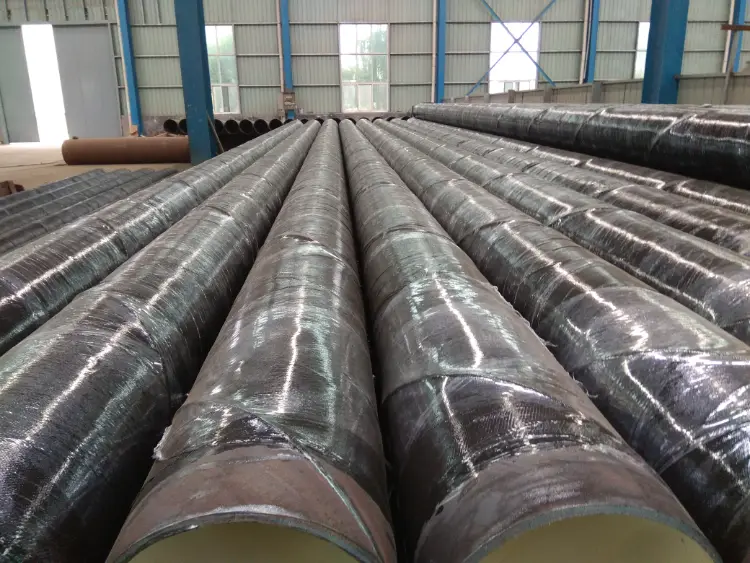
L360 PSL1 LSAW Pipe Guide
L360 PSL1 LSAW Pipe Guide: GB/T 9711-2011 Data & Equivalents
Complete analysis of L360 PSL1 LSAW pipe per GB/T 9711-2011, including chemical composition, mechanical and physical properties, international equivalents, and application guide.
Hot rolling, thermomechanical controlled processing (TMCP), normalizing (as agreed), LSAW welding
- Phone : +8618037372205
- Email : [email protected]
- WhatsApp: Contact via Whtsapp
- WeChat: +8618037372205
L360 PSL1 LSAW Pipe Guide Introduction
L360 PSL1 LSAW pipe under GB/T 9711-2011 is a carbon-manganese longitudinal submerged arc welded steel pipe for petroleum and natural gas pipeline transportation systems. It meets PSL1 (Product Specification Level 1) requirements, offering a minimum yield strength of 360 MPa. The alloy is designed for moderate-strength line pipe service with good weldability and toughness. Key characteristics include controlled carbon content, manganese up to 1.40%, and low sulfur/phosphorus levels to ensure reliable performance in transporting oil, gas, and water under pressure. LSAW manufacturing provides larger diameter and thicker wall capabilities compared to ERW pipes, making it suitable for mainline transmission projects.
L360 PSL1 LSAW Pipe Guide Chemical Composition
Chemical requirements for L360 PSL1 pipe according to GB/T 9711-2011. The values represent maximum limits unless a range is indicated. The steel is carbon-manganese base with optional microalloying elements (niobium, vanadium, titanium) for grain refinement and strength. Phosphorus and sulfur are strictly controlled to enhance toughness and weldability. Carbon equivalent (CEIIW) is typically limited to 0.43% for this grade to ensure good field weldability.
| Element | Standard Value (max, %) | Remarks |
|---|---|---|
| Carbon (C) | 0.28 | Heat analysis |
| Silicon (Si) | 0.45 | Heat analysis |
| Manganese (Mn) | 1.40 | Heat analysis |
| Phosphorus (P) | 0.030 | Heat analysis |
| Sulfur (S) | 0.030 | Heat analysis |
| Vanadium (V) | 0.05 | Heat analysis; may be added singly or in combination |
| Niobium (Nb) | 0.05 | Heat analysis; may be added singly or in combination |
| Titanium (Ti) | 0.04 | Heat analysis; may be added singly or in combination |
| Undissolved elements (Cr, Ni, Cu, Mo) | Each typically ≤ 0.30 | Residual elements; not specifically limited in PSL1, but controlled by manufacturer for performance |
L360 PSL1 LSAW Pipe Guide Thermal and Electrical Physical Properties
Typical physical properties for carbon-manganese steel similar to L360. These are not part of the pipe standard but are provided for design calculations. Values are measured at room temperature unless noted otherwise. Thermal expansion and conductivity influence pipeline stress analysis, while resistivity and modulus are needed for cathodic protection and structural modelling.
| Property | Typical Value | Unit | Test Condition |
|---|---|---|---|
| Density (ρ) | 7.85 | g/cm³ | Room temperature |
| Elastic Modulus (E) | 205 | GPa | Room temperature |
| Shear Modulus (G) | 80 | GPa | Calculated |
| Poisson's Ratio (ν) | 0.30 | - | Room temperature |
| Thermal Expansion Coefficient (α) | 11.7 | 10⁻⁶/K | 20–100 °C |
| Thermal Conductivity (λ) | 50 | W/(m·K) | Room temperature |
| Specific Heat Capacity | 480 | J/(kg·K) | Room temperature |
| Electrical Resistivity (ρ_e) | 15 | μΩ·cm | Room temperature |
L360 PSL1 LSAW Pipe Guide Mechanical Properties
Tensile properties for L360 PSL1 LSAW pipe body as per GB/T 9711-2011. Testing is performed on transverse strip specimens at room temperature. Elongation values depend on wall thickness; the value given is for a longitudinal guided bend test is not required for PSL1. Impact testing (Charpy V-notch) is not mandated by PSL1 unless supplementary requirements are specified. Bend testing is a manufacturing process test rather than a mechanical property requirement.
| Property | Standard Required Value | Unit | Test Condition |
|---|---|---|---|
| Yield Strength (Rt0.5) | 360 – 530 | MPa | Transverse strip specimen, room temperature |
| Tensile Strength (Rm) | 460 – 760 | MPa | Transverse strip specimen, room temperature |
| Elongation (A) | ≥ 21 (for t ≤ 15 mm, gauge length 50 mm) | % | Transverse full‑thickness specimen; exact minimum calculated per standard formula based on wall thickness and Rm/Rt0.5 ratio |
L360 PSL1 LSAW Pipe Guide Exact Equivalent Grades & Replaceable Standards
| Country/Region | Standard | Grade | Remarks |
|---|---|---|---|
| International | ISO 3183 | L360 PSL1 | Identical technical content to GB/T 9711-2011 |
| USA | API 5L | X52 PSL1 | Fully equivalent; same strength level and PSL1 requirements |
| Canada | CSA Z245.1 | Gr. 359 Cat I (X52) | Comparable; PSL1 category mirrors API 5L |
L360 PSL1 LSAW Pipe Guide Application Introduction
L360 PSL1 LSAW pipe is widely used in oil and gas transportation systems. Its moderate strength and reliable weldability make it a cost‑effective choice for long‑distance land and shallow water pipelines. The LSAW process allows production of large‑diameter, thick‑wall pipes (OD typically 406–1626 mm, wall thickness up to 65 mm) required for high‑pressure, high‑flow trunk lines.
Product Applications: Onshore transmission pipelines (oil, natural gas, refined products), Offshore risers and flowlines (sweet service, non‑sour applications), Compressor station and metering piping, Structural bracing for industrial platforms
Processed into products: Straight pipe segments (LSAW welded), Induction bends (hot induction bent from L360 pipe), Tees, reducers, and caps (fabricated from L360 steel plate or pipe), Flanges and connectors (when forged from compatible L360 billets), Pipe piles and foundation casings (secondary application)
Application industries: Oil & gas upstream (gathering and transmission), Midstream pipeline projects (cross‑country lines), Refinery and petrochemical piping, Urban gas distribution networks (large‑diameter mains), Water and slurry transport (less common but acceptable)
L360 PSL1 LSAW Pipe Guide Similar or Comparable Substitute Grades
| Country/Region | Standard | Grade | Remarks |
|---|---|---|---|
| China | GB/T 9711-2011 | L360M / L360N (PSL2) | Higher specification level with mandatory toughness and tighter chemistry; can replace PSL1 where higher reliability is required |
| China | GB/T 9711-2011 | L415 (X60) PSL1 | Higher strength (415 MPa yield); may replace L360 if design allows reduced wall thickness |
| China | GB/T 9711-2011 | L290 (X42) PSL1 | Lower strength; suitable substitute for less demanding applications with adequate wall thickness adjustment |
| Europe | EN 10208-2 | L360NB | PSL2 grade with normalizing delivery; often selected for sour service or low-temperature conditions; slightly higher material cost |
Notes:
PSL1 order requires only the basic tests (tensile, dimensional, hydrostatic). Additional tests such as Charpy impact, DWTT, or hardness are subject to supplementary agreement. For sour or low‑temperature service, consider L360 PSL2 (L360N or L360M) with tighter chemistry and mandatory toughness. The maximum carbon equivalent (CEIIW) of 0.43% may be specified for weldability control. All data are derived from GB/T 9711-2011 and common industrial practices.
- Share



