
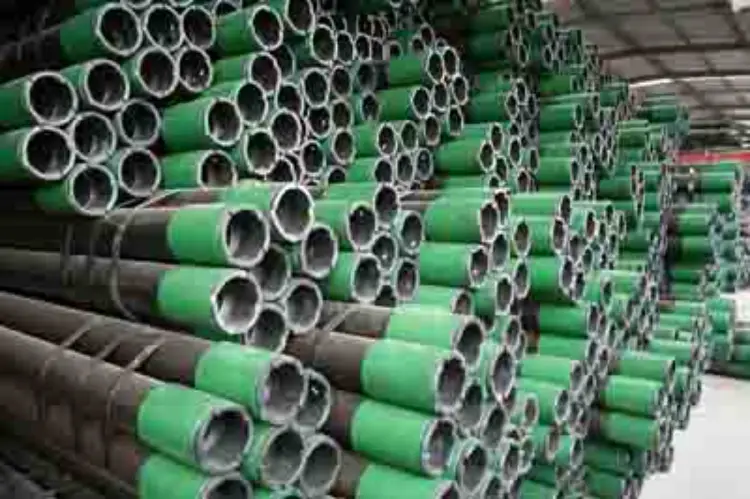
EN10025-2 S275JR SSAW Pipe
EN10025-2 S275JR SSAW Pipe: Structural Steel Properties and Global Equivalents
Comprehensive material data for S275JR steel used in spiral submerged arc welded (SSAW) pipes, including chemical composition, mechanical and physical properties, international equivalents, and application guidelines.
Spiral submerged arc welding (SSAW), forming, machining, hot-rolling, cold forming, welding
- Phone : +8618037372205
- Email : [email protected]
- WhatsApp: Contact via Whtsapp
- WeChat: +8618037372205
EN10025-2 S275JR SSAW Pipe Introduction
S275JR is a non-alloy structural steel grade defined in EN10025-2, widely used for its excellent combination of strength, weldability, and formability. With a minimum yield strength of 275 MPa for thinner sections, it is ideal for general structural applications. The JR quality designation guarantees a minimum Charpy impact energy of 27 J at +20°C, ensuring reliable toughness in ambient conditions. When fabricated into SSAW (spiral submerged arc welded) pipes, the hot-rolled steel strip is formed into a helical shape and welded, producing large-diameter pipes used in piling, water pipelines, and structural columns. Its carbon equivalent value (CEV) typically remains below 0.35 for thicknesses up to 30 mm, making it easy to weld without preheating. The steel is supplied in the as-rolled or normalized condition, offering versatility for fabrication and construction projects.
EN10025-2 S275JR SSAW Pipe Chemical Composition
Chemical requirements as per EN10025-2:2004, Table 2, for thickness ≤ 40 mm. The steel is fully killed and fine-grained, with controlled levels of phosphorus and sulfur to ensure good weldability and toughness. Manganese content can be increased to ≤ 1.60 % for flat products by agreement.
| Element | Standard Value (%) | Remarks |
|---|---|---|
| Carbon (C) | ≤ 0.21 | For nominal thickness ≤ 40 mm; ≤ 0.22 for > 40 mm |
| Silicon (Si) | ≤ 0.55 | Typical range 0.15–0.35 for killed steel |
| Manganese (Mn) | ≤ 1.50 | Flat products may be ≤ 1.60 upon agreement |
| Phosphorus (P) | ≤ 0.035 | Maximum |
| Sulfur (S) | ≤ 0.035 | Maximum |
| Nitrogen (N) | ≤ 0.012 | For thickness ≤ 150 mm |
EN10025-2 S275JR SSAW Pipe Thermal and Electrical Physical Properties
These are typical physical properties for low-carbon structural steel at room temperature unless otherwise stated. Values are representative for S275JR and other similar non-alloy steels. Thermal expansion and conductivity vary with temperature; values at 20°C are provided.
| Property | Typical Value | Unit | Test Condition |
|---|---|---|---|
| Density (ρ) | 7.85 | g/cm³ | At 20°C |
| Modulus of elasticity (E) | 210 | GPa | At 20°C |
| Shear modulus (G) | 81 | GPa | At 20°C |
| Poisson's ratio (ν) | 0.3 | – | At 20°C |
| Thermal expansion coefficient (α) | 11.1 | 10−⁸/K | 20–100°C |
| Thermal conductivity (λ) | 50 | W/(m·K) | At 20°C |
| Specific heat capacity (cp) | 460 | J/(kg·K) | At 20°C |
| Electrical resistivity (ρe) | 0.18 | µΩ·m | At 20°C |
EN10025-2 S275JR SSAW Pipe Mechanical Properties
Mechanical properties as specified in EN10025-2:2004, valid at ambient temperature in the as-rolled condition. The values depend on product thickness. Impact tests are performed on Charpy V-notch specimens taken transverse to the rolling direction at +20°C.
| Property | Standard Value | Unit | Test Condition |
|---|---|---|---|
| Yield strength (ReH) | ≥ 275 | MPa | For thickness ≤ 16 mm |
| Yield strength (ReH) | ≥ 265 | MPa | For thickness > 16 mm ≤ 40 mm |
| Tensile strength (Rm) | 410 – 560 | MPa | For thickness 3–100 mm |
| Elongation after fracture (A) | ≥ 21 | % | Longitudinal, gauge length 5.65√S0, thickness ≤ 40 mm |
| Bend test (180°) | Mandrel diameter = 1.0t | – | For thickness ≤ 16 mm |
| Bend test (180°) | Mandrel diameter = 1.5t | – | For thickness > 16 mm ≤ 100 mm |
| Impact energy (KV2, +20°C) | ≥ 27 (average), ≥ 20 (individual) | J | Transverse test pieces, quality JR |
EN10025-2 S275JR SSAW Pipe Fully Equivalent Standards and Replaceable Grades
| Country/Region | Standard | Grade | Remarks |
|---|---|---|---|
| European Union | EN 10025-2 | S275JR | The same grade, fully compliant. |
| International | ISO 630-2 | S275JR | Identical technical requirements to EN10025-2. |
| China | GB/T 700 | Q275B | Yield strength 275 MPa min, impact 27J at +20°C, equivalent. |
| USA | ASTM A36 | A36 (with impact test addition) | ASTM A36 has min yield 250 MPa; when specified with Charpy V-notch at 20°C (27J min), it becomes practically equivalent. |
| Japan | JIS G3101 | SS400 | Similar application; yield 245 MPa min; no mandatory impact test, but can be ordered with impact requirement. |
EN10025-2 S275JR SSAW Pipe Application Introduction
S275JR steel in the form of SSAW pipes is a highly versatile and cost-effective solution for many construction and industrial projects. Its balanced mechanical properties allow it to be used in welded structures, pipelines, and civil engineering components. Adequate toughness at ambient temperature makes it suitable for static and dynamic loads in non-safety-critical applications.
Product Applications: Spiral submerged arc welded (SSAW) pipes (large diameter), Structural hollow sections and tubes, Welded beams and columns, Pipe piles and foundation elements, Water transmission mains, Culverts and drainage systems
Processed into products: Piling pipes for foundation support, Bridge structural beams and arches, Transmission line towers and masts, Building frame columns and trusses, Culvert liners and drainage pipes, Steel scaffolding tubes, Storage tank shells (non-pressurized), Railway platform shelters, Road side safety barriers
Application industries: Civil and structural engineering, Water and wastewater treatment, Oil and gas (low-pressure and structural applications), Infrastructure (bridges, tunnels, retaining walls), Industrial buildings and warehouses, Agricultural equipment and structures
EN10025-2 S275JR SSAW Pipe Similar or Alternative Materials
| Country/Region | Standard | Grade | Remarks |
|---|---|---|---|
| European Union | EN 10025-2 | S235JR | Lower strength (min yield 235 MPa), for lighter structural applications; same weldability. |
| European Union | EN 10025-2 | S355JR | Higher strength (min yield 355 MPa), for heavier loaded structures; similar toughness. |
| USA | ASTM A572 | Grade 50 | Minimum yield strength 345 MPa, commonly used as a stronger alternative. |
| China | GB/T 1591 | Q355B | Min yield 355 MPa, Charpy impact 27J at +20°C, widely used in construction. |
Notes:
S275JR exhibits excellent weldability and can be joined using all conventional arc welding methods (SMAW, GMAW, FCAW, SAW). No preheating is generally needed for thicknesses below 30 mm provided the CEV is ≤ 0.35. For SSAW pipe production, the steel strip is formed cold and then welded with submerged arc, followed by possible sizing and straightening. Post-weld heat treatment (PWHT) is typically not required for wall thicknesses < 25 mm, but thicker walls may benefit from stress relieving to reduce residual welding stresses. The base material is suitable for galvanizing and painting. Always verify specific project requirements with the supplier, especially for impact test temperature and Z-quality (through-thickness properties) if needed.
- Share



