
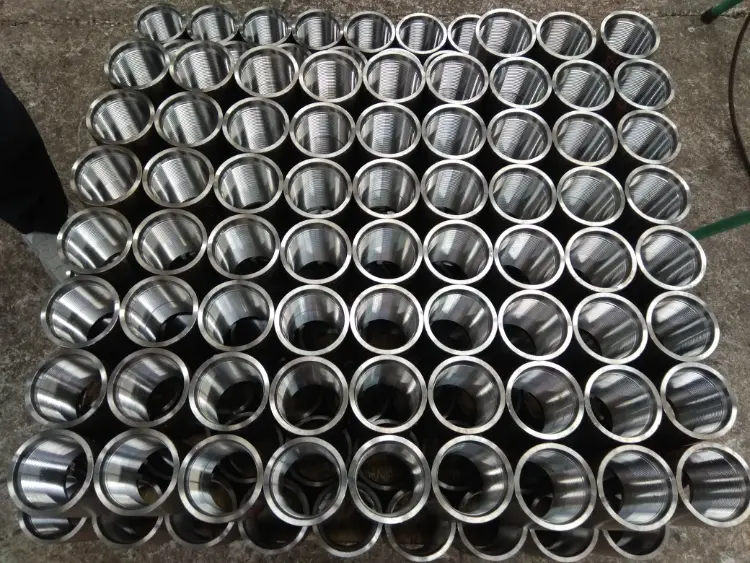
EN 10219 S355NLH SSAW Pipe
EN 10219 S355NLH SSAW Pipe: Low-Temperature Structural Hollow Section Steel Analysis
Comprehensive material data for EN 10219 S355NLH spiral submerged arc welded (SSAW) pipe, including chemical composition, mechanical and physical properties, equivalents, and applications.
Cold forming followed by spiral submerged arc welding (SSAW); suitable for hot-dip galvanizing, machining, cutting, bending, and further mechanical treatment
- Phone : +8618037372205
- Email : [email protected]
- WhatsApp: Contact via Whtsapp
- WeChat: +8618037372205
EN 10219 S355NLH SSAW Pipe Introduction
S355NLH is a thermomechanically rolled fine-grain structural steel for cold-formed welded hollow sections specified in EN 10219. The designation indicates: S = structural steel, 355 = minimum yield strength of 355 MPa for thickness ≤ 16 mm, N = normalized or normalized rolled delivery condition, L = minimum impact energy of 27 J at -50 °C, H = hollow section. This SSAW (spiral submerged arc welded) pipe offers excellent low-temperature toughness, good weldability, and high strength-to-weight ratio, making it suitable for demanding structural applications in cold climates, offshore structures, and heavy-duty frameworks.
EN 10219 S355NLH SSAW Pipe Chemical Composition
Chemical composition limits according to EN 10219-2 for grade S355NLH, ladle analysis. The steel is fully killed and fine-grain treated (Al or Ti). Maximum carbon equivalent (CEV) is 0.43 for thickness ≤ 30 mm. The composition ensures good weldability and low-temperature toughness.
| Element | Standard Value (min–max %) | Remarks |
|---|---|---|
| Carbon (C) | ≤ 0.18 | Maximum |
| Silicon (Si) | ≤ 0.50 | Maximum |
| Manganese (Mn) | 0.90 – 1.65 | Range |
| Phosphorus (P) | ≤ 0.025 | Maximum |
| Sulfur (S) | ≤ 0.020 | Maximum |
| Aluminium (Al) total | ≥ 0.020 | Minimum; fully killed steel |
| Niobium (Nb) | ≤ 0.05 | Maximum |
| Vanadium (V) | ≤ 0.12 | Maximum |
| Titanium (Ti) | ≤ 0.05 | Maximum |
| Chromium (Cr) | ≤ 0.30 | Maximum |
| Nickel (Ni) | ≤ 0.50 | Maximum |
| Molybdenum (Mo) | ≤ 0.10 | Maximum |
| Copper (Cu) | ≤ 0.35 | Maximum |
| Nitrogen (N) | ≤ 0.015 | Maximum |
| CEV | ≤ 0.43 | Carbon equivalent value, for t ≤ 30 mm |
EN 10219 S355NLH SSAW Pipe Thermal and Electrical Physical Properties
Typical physical properties for structural steel grade S355NLH at ambient temperature. Values are for general guidance; slight variations may occur based on exact composition and manufacturing process. Electrical resistivity and thermal conductivity are provided for room temperature.
| Property | Typical Value | Unit | Test Condition |
|---|---|---|---|
| Density (ρ) | 7850 | kg/m³ | 20 °C |
| Elastic modulus (E) | 210 | GPa | 20 °C, static |
| Shear modulus (G) | 81 | GPa | 20 °C, calculated from E and ν |
| Poisson's ratio (ν) | 0.3 | — | 20 °C |
| Thermal expansion coefficient (α) | 12 × 10⁻⁶ | K⁻¹ | 20–100 °C |
| Thermal conductivity (λ) | ~ 50 | W/(m·K) | 20 °C |
| Specific heat capacity (cp) | ~ 460 | J/(kg·K) | 20 °C |
| Electrical resistivity (ρₑ) | ~ 0.25 × 10⁻⁶ | Ω·m | 20 °C |
EN 10219 S355NLH SSAW Pipe Mechanical Properties
Mechanical properties at room temperature as required by EN 10219-2 for S355NLH. Test specimens are taken from the finished hollow section (longitudinal direction). For thickness > 16 mm, yield strength decreases. Impact tests use Charpy V-notch specimens at -50 °C. Elongation measured on gauge length 5.65√S₀.
| Property | Standard Required Value | Unit | Test Condition |
|---|---|---|---|
| Yield strength (ReH) | ≥ 355 | MPa | Thickness ≤ 16 mm, longitudinal |
| Yield strength (ReH) | ≥ 345 | MPa | 16 < thickness ≤ 40 mm |
| Yield strength (ReH) | ≥ 335 | MPa | 40 < thickness ≤ 63 mm |
| Yield strength (ReH) | ≥ 325 | MPa | 63 < thickness ≤ 80 mm |
| Yield strength (ReH) | ≥ 315 | MPa | 80 < thickness ≤ 100 mm |
| Tensile strength (Rm) | 470 – 630 | MPa | Thickness ≤ 100 mm |
| Elongation (A) | ≥ 22 | % | Longitudinal, gauge length 5.65√S₀; minimum for t ≤ 40 mm |
| Elongation (A) | ≥ 21 | % | 40 < t ≤ 63 mm |
| Elongation (A) | ≥ 20 | % | 63 < t ≤ 100 mm |
| Impact energy (KV) | ≥ 27 | J | -50 °C, Charpy V-notch, longitudinal, average of 3 tests; single min 70% of average |
| Bend test | No cracks | — | Mandrel diameter: see standard (e.g., 3t for S355, t = thickness) |
EN 10219 S355NLH SSAW Pipe Full Equivalent Standards and Replaceable Grades
| Country/Region | Standard | Grade | Remarks |
|---|---|---|---|
| Europe | EN 10219-1 | S355NLH | Original standard; cold-formed welded hollow section, low-temperature impact -50 °C |
| International | ISO 4950-2 | E 355 DD | High yield strength flat steel products; comparable but limited to plates |
| Japan | JIS G 3466 | STKR490 | Carbon steel square and rectangular tubes; comparable if Charpy at low temperature is met (not guaranteed) |
| USA | ASTM A572 / A572M | Grade 50 | High-strength low-alloy structural steel; similar strength but impact temperature only -18 °C (unless specified) |
| USA | ASTM A501 / A501M | Grade B | Hot-formed welded carbon steel tubing; limited low-temperature capability |
| China | GB/T 1591 | Q355D | D-grade requires -20 °C impact; not fully equivalent to -50 °C |
EN 10219 S355NLH SSAW Pipe Application Introduction
S355NLH SSAW pipe is ideally suited for large-diameter structural tubular applications requiring guaranteed toughness at subzero temperatures. Its weldability, combined with spiral welding, allows cost-effective production of big pipes. It is widely used in offshore and onshore structures, heavy lifting equipment, and cold-environment infrastructure.
Product Applications: Spiral welded steel pipes (SSAW) from 219 mm to over 3000 mm diameter, Structural tubular columns and beams, Offshore wind turbine monopiles and transition pieces, Jacket legs and braces for offshore platforms, Truss girders for bridges and roofs, Crane lattice booms and mast sections, Hydraulic cylinder bodies for extreme conditions
Processed into products: Welded pipe segments, Stiffened cylindrical shells, Joints and nodes (with casting or fabrication), Pre-fabricated tubular modules, Spiral welded casings, Bent elbows and reducers, Pile sleeves and connectors
Application industries: Marine and offshore engineering (platforms, jackets), Bridge construction (arch ribs, trusses, pylons), Civil engineering (stadium roofs, airport terminals, exhibition halls), Wind energy (tower and foundation structures), Mining and heavy machinery (booms, frames), Transport (railway vehicles, truck chassis), Agricultural equipment (sprayer booms, cultivators), Piling and foundation engineering
EN 10219 S355NLH SSAW Pipe Similar / Closely Related Substitute Materials
| Country/Region | Standard | Grade | Remarks |
|---|---|---|---|
| Europe | EN 10219-1 | S355J2H | Similar strength but minimum impact temperature -20 °C (J2); use only where low temperature is not critical |
| Europe | EN 10219-1 | S355K2H | Similar strength with impact -20 °C but optional 40 J; not equivalent to -50 °C |
| Europe | EN 10219-1 | S355MLH | Thermomechanical rolled (M) with -50 °C impact; strength and toughness similar to S355NLH, slightly different delivery condition |
| Europe | EN 10219-1 | S460NLH | Higher strength (460 MPa yield) with -50 °C impact; may be considered if weight reduction is needed |
| Europe | EN 10025-3 | S355NL | Normalized structural steel plate; same low-temperature grade but for open sections, not hollow sections |
| USA | ASTM A709 / A709M | 50W | Bridge steel with comparable strength but Charpy at -34 °C; not quite -50 °C |
Notes:
For SSAW pipes, the manufacturing process should comply with EN 10219-2 dimensional tolerances. The welding wire/flux used for spiral welding must be compatible with the base metal and tested to ensure the joint strength meets requirements. Supplementary non-destructive testing (ultrasonic or radiographic) is often specified. The material is also suitable for hot-dip galvanizing if the silicon content is below 0.04% or 0.15–0.25% to avoid brittlement. When welding thick sections, preheat may be required based on CEV and thickness. Availability in other hollow section shapes (CHS, SHS, RHS) is common but SSAW is typically for circular pipes.
- Share



