
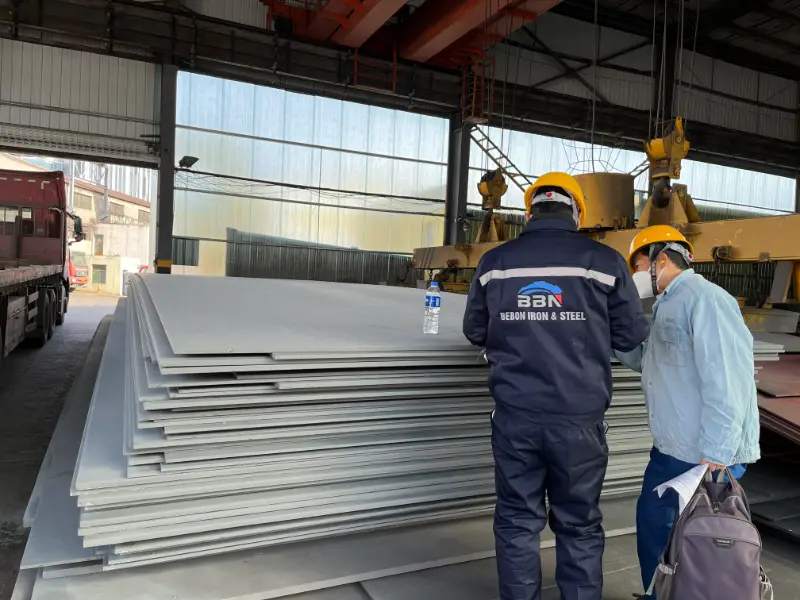
ASTM A242 Type 2 Weathering Steel Plates Material
ASTM A242 Type 2 Weathering Steel Plates: High-Strength, Corrosion-Resistant Corten Alternative
Explore ASTM A242 Type 2 weathering steel plates—a high-strength low-alloy structural steel with improved atmospheric corrosion resistance through phosphorus alloying. Ideal for bridge, building, and outdoor sculptural applications.
Hot rolling, cold forming, welding, machining, bending
- Phone : +8618037372205
- Email : [email protected]
- WhatsApp: Contact via Whtsapp
- WeChat: +8618037372205
ASTM A242 Type 2 Weathering Steel Plates Introduction
ASTM A242 Type 2 is a high-strength low-alloy structural steel designed for enhanced atmospheric corrosion resistance. This 'weatherproof' steel, often referred to as corten or weathering steel, utilizes a deliberate addition of phosphorus (0.07–0.15%) to develop a protective patina when exposed to the environment. Compared to unalloyed carbon steel, it provides approximately twice the corrosion resistance, significantly reducing maintenance requirements. Type 2 is distinguished from Type 1 by its controlled phosphorus content, while still maintaining a minimum copper content of 0.20%. The material exhibits a minimum yield strength of 345 MPa (50 ksi) and tensile strength of 485 MPa (70 ksi) for thicknesses up to 19 mm, making it suitable for welded, bolted, or riveted structures in bridges, buildings, and architectural aesthetics. It is typically supplied in the as-rolled condition and can be formed, machined, and welded with standard practices.
ASTM A242 Type 2 Weathering Steel Plates Chemical Composition
The chemical composition of ASTM A242 Type 2 steel is designed to promote a dense, adherent oxide layer when exposed to alternating wet and dry conditions. Phosphorus (0.07–0.15%) is the key alloying element that enhances corrosion resistance, while copper (≥0.20%) provides additional protection. Low carbon content ensures good weldability and toughness.
| Element | Standard Value (%) | Remarks |
|---|---|---|
| Carbon (C) | 0.15 max | Limits heat-affected zone hardening |
| Manganese (Mn) | 1.00 max | Deoxidizer and strength contributor |
| Phosphorus (P) | 0.07–0.15 | Essential for weathering performance |
| Sulfur (S) | 0.05 max | Kept low for ductility |
| Copper (Cu) | 0.20 min | Synergistic corrosion resistance with phosphorus |
ASTM A242 Type 2 Weathering Steel Plates Thermal and Electrical Physical Properties
The physical properties of ASTM A242 Type 2 are representative of low-alloy steels. The thermal expansion coefficient is comparable to carbon steel, facilitating compatibility with other structural components. Thermal conductivity allows effective heat dissipation in exposed applications.
| Property | Typical Value | Unit | Test Condition |
|---|---|---|---|
| Density (ρ) | 7.85 | g/cm³ | At 20 °C |
| Modulus of Elasticity (E) | 200 | GPa | At 20 °C |
| Shear Modulus (G) | 80 | GPa | At 20 °C (calculated) |
| Poisson's Ratio (ν) | 0.3 | – | At 20 °C |
| Thermal Expansion Coefficient (α) | 12.0 | 10⁻⁶/K | 20–100 °C |
| Thermal Expansion Coefficient (α) | 12.5 | 10⁻⁶/K | 20–200 °C |
| Thermal Expansion Coefficient (α) | 13.0 | 10⁻⁶/K | 20–300 °C |
| Thermal Conductivity (λ) | 50 | W/(m·K) | At 20 °C |
| Specific Heat Capacity (c) | 460 | J/(kg·K) | At 20 °C |
| Electrical Resistivity (ρ_e) | 0.25 | µΩ·m | At 20 °C (approximate) |
ASTM A242 Type 2 Weathering Steel Plates Mechanical Properties
Tensile properties are guaranteed by the standard. For plates and bars up to 19 mm (¾ in.) thickness, the minimum yield strength is 345 MPa and tensile strength 485 MPa. These values decrease for thicker sections. Elongation requirements ensure adequate formability and ductility.
| Property | Standard Requirement | Unit | Test Condition |
|---|---|---|---|
| Yield Strength (ReH) | 345 min | MPa | Thickness ≤ 19 mm |
| Yield Strength (ReH) | 315 min | MPa | 19 mm < t ≤ 38 mm |
| Yield Strength (ReH) | 290 min | MPa | 38 mm < t ≤ 102 mm |
| Tensile Strength (Rm) | 485 min | MPa | Thickness ≤ 19 mm |
| Tensile Strength (Rm) | 460 min | MPa | 19 mm < t ≤ 38 mm |
| Tensile Strength (Rm) | 435 min | MPa | 38 mm < t ≤ 102 mm |
| Elongation (A) in 200 mm (8 in.) | 18 min | % | Thickness ≤ 19 mm |
| Elongation (A) in 200 mm (8 in.) | 18 min | % | 19 mm < t ≤ 38 mm |
| Elongation (A) in 50 mm (2 in.) | 21 min | % | Thickness ≤ 19 mm |
| Elongation (A) in 50 mm (2 in.) | 21 min | % | 19 mm < t ≤ 38 mm |
ASTM A242 Type 2 Weathering Steel Plates Complete Equivalent Material Standards and Substitutable Grades
| Country/Region | Standard | Grade | Remarks |
|---|---|---|---|
| Europe | EN 10025-5 | S355J0WP | High-phosphorus weathering steel; closest match |
| Japan | JIS G3125 | SPA-H | Similar corrosion resistance; slight composition differences |
| International | ISO 4952 | S355W | W for weathering; may require supplementary P requirements |
| China | GB/T 4171 | Q355GNH | High-phosphorus type; equivalent yield strength |
ASTM A242 Type 2 Weathering Steel Plates Application Introduction
ASTM A242 Type 2 is ideally suited for unpainted structural and architectural applications where long-term durability and reduced life-cycle costs are desired. Its self-protecting patina eliminates the need for painting in many environments, but design detailing must ensure proper drainage and avoid crevice corrosion. It is commonly used in welded, bolted, and riveted construction.
Product Applications: Weather-resistant bridge girders and trusses, Façade panels and cladding, Roofing and siding sheets, Intermodal containers, Road and pedestrian bridges, Overhead sign structures, Lighting poles and masts
Processed into products: Bridge bearing plates, Welded box columns, Bolted splice connections, Structural channels and angles, Corner brackets for containers, Perforated screens, Bent plates for architectural features
Application industries: Civil engineering and infrastructure, Architecture and construction, Transportation (rail, marine, automotive), Energy (transmission towers, pole structures), Art and sculpture
ASTM A242 Type 2 Weathering Steel Plates Close/Substitute Material Recommendations
| Country/Region | Standard | Grade | Remarks |
|---|---|---|---|
| United States | ASTM A588/A588M | Grade A, Grade B | Higher Cu-Cr-Ni alloy; similar strength, improved toughness |
| United States | ASTM A606/A606M | Type 4 | Light gauge HR sheet; comparable weathering characteristics |
| Europe | EN 10025-5 | S355J2W+N | Low phosphorus type; better weldability, slightly reduced corrosion rate |
| India | IS 11587 | WR50C | Contains Cu-Cr; equivalent strength |
Notes:
Welding: Suitable for all common welding processes using low-hydrogen electrodes with minimum yield strength of 50 ksi (345 MPa). Preheating is generally not required for thin sections. Forming: Can be cold- or hot-formed; a minimum bend radius of 2t is recommended for thicknesses up to 19 mm. Corrosion: The protective rust layer (patina) takes 6–18 months to develop under alternating wet/dry cycles. Avoid prolonged wetting and contact with dissimilar metals to prevent galvanic corrosion. Certification: Typically supplied with mill test certificates according to EN 10204 type 3.1 or ASTM A6/A6M requirements.
- Share



